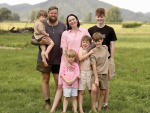
One young couple is proving farm ownership is still within reach for young Kiwis.
Through sacrifice, calculated risk and disciplined budgeting, Robert and Krystal Whitaker were able to buy their first farm in their 30s.
The couple are in their first year of milking 245 cows on their 88.5 hectare (75ha effective) farm at Maihiihi, east of Otorohanga in Waikato.
One such risk that ultimately paid off was their decision to purchase residential property individually in 2018, soon after they met, using their existing savings.
“We both bought houses close to where we were living then. Rob’s was in Tirau and mine was in Te Puke,” says Krystal, 31.
“We rented them out for five years, managed them ourselves, and made a really good profit.”
After this period, they avoided any potential tax under the bright-line property rule, choosing to sell the properties and use the cash to purchase their farm.
“We made around $200,000 in capital gains alone on each property by the time we sold. We had strong deposits, and since there were no opportunities to buy livestock at the time, we chose property. It was something we could manage ourselves, with fairly low risk and better time management,” Rob says.
They had previously purchased their herd using the equity in their properties to 50:50 sharemilk 310 cows on Innes and Mandy Semmens’s farm in Matamata.
“It seems unrealistic now, but when we bought our cows, our interest rate on them was 2.8%. We were paying next to no interest and managed to pay them off within the first year,” Krystal says.
The timing worked out well – they made and cashed in on these investments just before interest rates surged after the Covid-19 pandemic. And having been owned by the previous sharemilker, the herd was well established.
Rob takes pride in his stockmanship. The herd's low somatic cell count enabled him to be selective when culling and selling surplus stock. The stock sales also contributed to the farm deposit, as they reduced the number of cows by 65, leaving 245 currently milking.
Rob says they couldn’t have achieved all this without the guidance of those they met along the way, including farmers on a similar progression trajectory, whether through contract milking or sharemilking, often from groups like New Zealand Young Farmers or at DairyNZ events, as well as the encouragement and advice from their parents.
Some of these are friends Rob made when he moved to New Zealand from the United Kingdom 15 years ago, and had remained in touch with.
“We surrounded ourselves with people who think similar to us,” he says.
He credits their farming mentors, who have always been happy to offer advice, including Dave and Sue Fish, Sir Henry van der Heyden, Martin and Judith Bennett and Innes and Mandy Semmens.
“We’ve been lucky that we’ve come across so many good people that taught us skills along the way,” he says.
“We’ve had vast experience with different farming systems, and we appreciate how open the sector is to sharing knowledge and being transparent.”
“There aren’t many other industries where you can go to someone’s house and they’ll tell you everything about how they got to where they are,” Krystal adds.
Some of these are friends Rob made when he moved to New Zealand from the United Kingdom 15 years ago, and had remained in touch with.
“We surrounded ourselves with people who think similar to us,” he says.
He credits their farming mentors, who have always been happy to offer advice, including Dave and Sue Fish, Sir Henry van der Heyden, Martin and Judith Bennett and Innes and Mandy Semmens.
“We’ve been lucky that we’ve come across so many good people that taught us skills along the way,” he says.
“We’ve had vast experience with different farming systems, and we appreciate how open the sector is to sharing knowledge and being transparent.”
“There aren’t many other industries where you can go to someone’s house and they’ll tell you everything about how they got to where they are,” Krystal adds.