India FTA Removes 33% Tariff on NZ Sheepmeat
New Zealand’s red meat sector has welcomed the India-New Zealand Free Trade Agreement taking effect, which removes India’s 33% tariff on New Zealand sheepmeat.
 increase font size
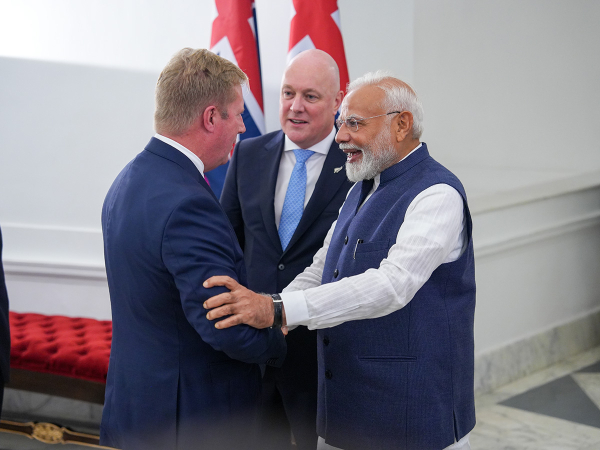 Trade and Agriculture Minister Todd McClay, New Zealand Prime Minister Christopher Luxon and Indian Prime Minister Narendra Modi.
OPINION: Trade Minister Todd McClay and the trade negotiator in government have presented Kiwis with an amazing gift for 2026 - a long awaited and critical free trade deal with India.
It offers reduced tariffs on meat and wool, horticulture and forestry. It will enable NZ to reclaim a huge amount of the market share for lamb it lost when Australia got its FTA with India two years ago. As well as trade, the FTA brings with it a special political relationship with India like we have with China, the UK, the EU and the Gulf States.
This is a great achievement by McClay, Prime Minister Christopher Luxon and the negotiating team led by MFAT's Vangelis Vitalis - arguably one of the greatest NZ trade negotiators of all time.
But no FTA has ever been perfect, and it was no surprise that the dairy industry received minimal gain in the deal. This is because the dairy industry in India comprises 80 million dairy farmers - mostly with very small holdings but with immense political power. Remember also that India has 300 million cows and buffalos and produces about a quarter of the world's milk.
So, the question that is being asked around the traps is why is Winston Peters saying he'll vote against ratifying the FTA when it comes before parliament later in the year?
And why has the main opposition party, Labour, hinted it will vote for the FTA? Does Peters seriously believe he could have got a better deal for dairy, or is it the clause on immigration that is his main concern? Others have said, given more time, a better deal could have been struck. Most experts reject this argument.
Even Dairy Companies Association of NZ (DCANZ) who represent the dairy exporting companies, while expressing disappointed at the FTA, have praised team McClay for their work and politely urged them to address the trade challenges that dairy faces and that could well happen.
Come on you detractors - at least we have a deal!
New Zealand’s red meat sector has welcomed the India-New Zealand Free Trade Agreement taking effect, which removes India’s 33% tariff on New Zealand sheepmeat.

More than 95 per cent of New Zealand’s forestry and wood exports to India can now enter tariff free as the New Zealand-India Free Trade Agreement comes into force today.
Zespri has welcomed the entry into force of the India-New Zealand Free Trade Agreement today, calling it a significant milestone that will support long-term growth in one of the world’s largest and fastest-growing consumer markets.
As part of its Election 2026 coverage, Rural News asked political parties how they would help pull the arable sector out of the doldrums. Here's what they said:
Food and fibre exports have returned a billion- dollar bonus to the country.



Federated Farmers has welcomed new rural policies released by ACT, saying they align closely with its own election priorities.

Rural Contractors NZ says proposed changes to land transport rules for agricultural vehicles are a welcome response by the Government to out of date regulations which have seen members hit with huge fines.
Alliance is calling for final applications for its 2027 Graduate Programme, with applications closing on Sunday 25 October.
Decades piloting planes has ensured vet and farmer David Hayes is focused on safety. So, after a serious accident while welding on farm, he is sharing his experience so others can learn from it.
Canterbury milk processor, Synlait Milk has confirmed Leon Fung as its chief executive officer.
OPINION: Making it easier to collect rainwater and use it to grow crops and livestock is a no brainer.