Feds Back National’s 19 Farming National Standards
National’s pledge to introduce 19 new national standards shows the party is serious about getting Wellington out of farming, Federated Farmers says.
 increase font size
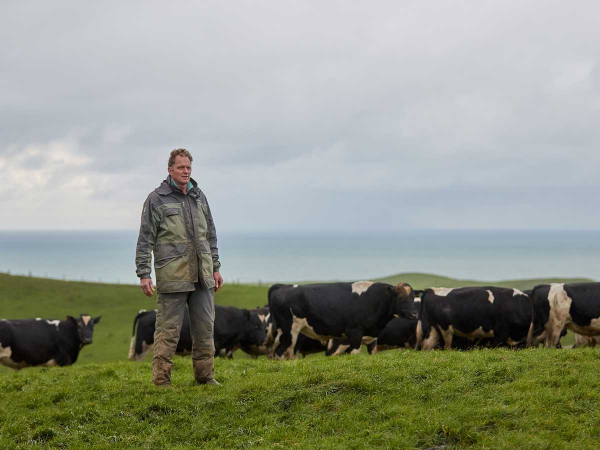 John Jackson.
National's long-held position in Port Waikato is under threat from a new party, according to John Jackson.
OPINION: In the Port Waikato electorate, north of me, there’s quite a stir.
It seems National’s long-held tenure is under threat due to the inception of Heartland NZ and its candidate Mark Ball.
There’s certainly an increase in signage and heightened publicity than one would consider the norm – and if you dig a little deeper, one can see why.
Ball has name recognition. He was a former mayor of Franklin before the district was divided between the Auckland “super city” and the Waikato District Council. In fact, Ball was so popular that his share of the mayoral votes in the 2004 election was greater than all the other participants combined.
Once upon a time, all our parliamentary representatives were chosen by their constituents as upstanding citizens, with a proven track record and life experience to boot. Hence policy, while not necessarily being desired, might at least be “thought through” and practicable. I point this out in comparison to the ideological, theory-driven, inexperienced capability of many MPs today.
Most of you will be going: ‘Heartland who?’ Well, it turns out there has been some thought go into this as well.
According to the Heartland NZ Party spokesman Brendan Balle, contrary to the claims made on Wikipedia, the party is not financially supported by richlisters the Mowbray family, nor is it a designated National support party – as some commentators have suggested.
Heartland claims to be centrist, prepared to work with whoever is in power, and its policy – above all policies – is to ‘moderate or enhance policy with the provinces in mind’.
Their claimed point of difference lies in assessing how every policy might impact the provinces, which as we know has been incapably displayed by governments of late.
In 2008, the then Minister for Agriculture Jim Anderton released a guide for politicians to consider when developing policy called ‘’Rural Proof your Policy”. The idea was to give consideration in policy to the impact on rural communities.
It has obviously gained little traction. Even then, rural communities were considered to be only 14 % of the population – as opposed to the 86% classed as urban – and yet covered 95 % of the land area. It’s only deteriorated further since then.
Which politicians are going to consider the impact on such a small voting sector? None! No wonder we’ve had no traction.
That’s why the delineation needs to be provincial and why the support needs to be too!
Why only the Port Waikato seat? Channelling your energy with purpose is likely to be a lot more successful than trying to spread it countrywide.
Heartland’s policy is to encourage constituents to vote for whichever colour they desire, but to vote Ball as their preferred candidate.
Presuming Heartland NZ doesn’t register more than 5% share of the party vote, but takes the electorate, Ball’s seat may be in addition to the 120 seats nationally. This will increase the number of seats in Parliament, and so too the majority required to govern.
Moreover, Heartland NZ maintains if it can prove this is achievable, watch out for more quality candidates in regional seats for future elections.
It will be interesting to watch from over the boundary. I wish them well. Regional New Zealand, our people, our regionally-based industry and agriculture desperately need a constructive voice right now.
• John Jackson completed a Bachelor of Agricultural Commerce at Lincoln University and read Social Studies at Oxford (Philosophy, Politics, Economics). He farms sheep and beef at Te Akau, North Waikato.
National’s pledge to introduce 19 new national standards shows the party is serious about getting Wellington out of farming, Federated Farmers says.

Farmer-owned fertiliser company, Ballance Agri Nutrients is welcoming National’s plan to negotiate security agreements with key supplier countries to protect New Zealand-bound products from export restrictions and greater supply chain certainty.
With a general election under five weeks away, Rural News is asking major political parties about their policies and positions on key issues facing the primary sector. We will run their responses to each question over the next four weeks. The ACT Party and the Greens didn't respond in time.
National’s much-touted free trade deal with India featured in the Rural Issues Debate at Mystery Creek, Hamilton on Wednesday night.
Minister of Conservation Hon Tama Potaka has appointed Susan O'Regan as Chair of the Queen Elizabeth II National Trust (QEII) for a three-year term.


National’s pledge to introduce 19 new national standards shows the party is serious about getting Wellington out of farming, Federated Farmers says.
The National Party’s policies to make it easier to grow fresh vegetables, secure reliable water and energy and simplify farm planning are practical changes that will give growers the confidence to invest, according to Horticulture New Zealand (HortNZ).
Fonterra Co-operative Group chief financial officer Andrew Murray has resigned to take up a role outside the dairy giant.
A major move is about to get underway to improve the quality and viability of dairy beef and cattle in NZ.
Veterinarians say changes to the code of welfare for dairy cattle provides a positive foundation for improved cattle welfare across the country.
Today, 15 October, is the International Day of Rural Women, which recognises rural women’s contribution to farming, communities and the environment.