OPINION: The Winter Solstice has passed, the nights are drawing out and National Fieldays has been and gone – hooray to all three.
If you hadn’t realised it from months of television and radio advertising, Fieldays was celebrating 50 years since it began at the Te Rapa racecourse in 1968. And while interesting, it hardly warranted so much attention compared to Massey Ferguson having clocked up 60 years and Gallagher Group 80 years.
Numbers attending were down, but the Fieldays marketing machine claimed an above-average result based on the last five years. It neglected to mention that the 130,866 attendees included 25,000 exhibitor staff, 1000 media people and, of course, the entire school population of Hamilton and district on the Friday.
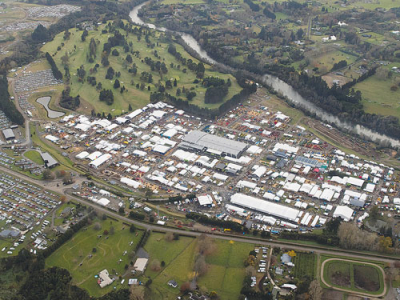
It was a positive event, despite the shadow of Mycoplasma bovis, but one must wonder – given the theme ‘The Future of Farming’ – how it will all develop. The site has obvious limitations (oh the traffic); and the visitor numbers… hmmm.
Priority must be given to showcasing New Zealand agriculture and the bridging of town and country, ahead of ‘innovation, education and internationalisation’ -- whatever the latter means. It is hard to believe that visiting townies would have left Fieldays this year knowing more about agriculture.
The absence of livestock, in a country that is essentially pastoral, must be seen as the biggest failing, given Agriculture Minister Damien O’Connor’s plea that farmers earn their social licence by showing Joe Public the good things happening onfarm.
Fieldays sales figures reported in 2017 suggested the event was responsible for generating $538 million of business; but nobody in the supply industries can tell you who responded to the University of Waikato’s survey or how much business still would have eventuated had Fieldays never existed.
It was plain to see, during the four days, that retail giants Bunnings, Swanndri and Skellerup were doing great business. But a walk along the machinery lines after 2.30pm showed few eager buyers were about. Exhibitors reckon the cost of attending the event is making some companies baulk: Silver Fern Farms, Alliance, Beef + Lamb NZ, Miraka, Tatua and NuFarm didn’t feel a need to attend.
Notice too that although most sites (excluding the retail area west of the pavilion) were agricultural, motor or commercial, none was shown in the post-event photographs sent to news media.
By contrast, the pictures that turned up were promoting the lightweight, ‘in-house’ promotion Rural Catch (13 photos) and the lacklustre Education Hub.
A disconnect is evident between the Fieldays society and the exhibitors, who get no guarantee they will be assigned the same site from year to year. Yet the event rests on their participation.
Meanwhile, over-the-top safety inductions are delivered by those who have no idea to people who deal daily with large lumps of machinery; and an innovations event allows entry to a quad modified to carry seven people – profoundly stupid and dangerous!
Fieldays-style events worldwide have had to change. Most have gone back to their roots, demonstrating modern agriculture to urbanites, showcasing and offering tastings of local food, and allowing the city dwellers to get close to animals and to the farmers making it all happen on the land from day to day. Any such event needs to simultaneously demonstrate best practice and latest technology to farmers and rural people, even to the extent of the working machinery demonstrations seen at the Grassland UK event or Agritechnica in Germany.
Memories of visiting the gargantuan Irish Ploughing Match that dwarfs Fieldays (320,000 visitors over three days) bring to mind the old adage, ‘doing the same thing and expecting a different result is a form of insanity’.
It’s time for a rethink of what Fieldays is really all about.