Less facetime costing NZ exporters
One of the biggest problems that Covid-19 is causing NZ is that it's stopping politicians and business people having face-to-face contact with their counterparts in our major markets.
 increase font size

US CATTLE producers are risking a lucrative export industry by dragging their heels on cattle identification (ID) and traceability systems compared with other beef exporting countries and beef importers.
Kansas State University economist Glynn Tonsor says the implications of his study are particularly troubling. US cattle prices are at record highs because of soaring beef exports, but Tonsor says the comparative disadvantage over cattle ID puts these and future export gains at risk.
He says while US consumers have largely trusted US beef producers and have not pushed for cattle ID, that could change quickly.
The beef industry should consider this before a lack of ID and traceability costs business at home and abroad, Tonsor says.
"As major meat importing and exporting countries adopt mandatory animal and meat tracking systems, the US risks becoming less competitive and risks losing market access."
To offset costs of expanding cattle and swine traceability programmes (assuming a participation rate of 20% of production) an increase in beef exports of 1% (8.85 million kg) and pork exports of 0.5% (9.84 million kg would be required. The US exported 63.5 million kg and 117 million kg of beef and pork to South Korea, respectively, in 2009.
"Thus, the costs of expanding traceability could be easily offset by gaining access, or not losing access, to a single country," Tonsor says. "The costs of implementing a 100% participation traceability system in the beef and pork industries could be offset by increasing beef exports by 29.5% (259 million kg) and pork exports by 3.4% (63 million kg)."
In other words, to make full traceability investment economically viable, the US would need to gain (or avoid the loss of) market access to one country such as Mexico for beef or South Korea for pork. "Given the increasing role of international trade in livestock and meat industries, these findings warrant serious consideration by US industry leaders and policymakers."
He points to 2003, when the US exported US$3.14 billion of beef and veal products, but this crashed to US$550 million in 2004 following the discovery of a single US cow infected with bovine spongiform encephalopathy (BSE).
The BSE discovery closed most export markets to US beef for at least part of 2004, but by 2010 total US exports of beef and variety meats climbed back to 83% of their pre-BSE level.
"Cattle traceability, or lack thereof, could... impact market access to particular export destinations," Tonsor says. "Effective cattle traceability would likely re-open closed markets more quickly and is also likely to help the US retain market access to a particular import country.... Similarly, if an import country imposes traceability as a necessary condition for beef imports, only products that are traceable would have access."
Of the world's eight largest exporters, Tonsor says, six have adopted mandatory cattle animal identification and traceability systems.
One of the biggest problems that Covid-19 is causing NZ is that it's stopping politicians and business people having face-to-face contact with their counterparts in our major markets.



The primary sector is leading New Zealand's economic recovery, according to economist and researcher Cameron Bagrie.
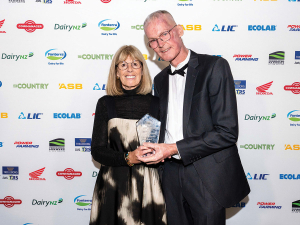
Dairy industry leader Jim van der Poel didn't make much of the invitation he received to the recent New Zealand Dairy Industry Awards in Rotorua.
Farmers around the country are going public big time, demanding their local district, city and regional councils come up with amalgamation plans that meet the needs of rural communities and don't allow urban councils to dominate.
The battle for the rural vote is on and parties are securing high profile names to try and bolster their chances at the general election.
Horticulture New Zealand says proposed changes to the Plant Variety Rights Act 2022 will drive innovation, investment and long-term productivity.
More than 1200 exhibitors will showcase their products and services at next month’s National Fieldays, with sites nearly sold out.