Mark Hooper Joins NZPork Board as Independent Director
Rural leader Mark Hooper has been appointed as an independent director to the NZPork board, bringing extensive farming, governance and advocacy experience to the role.
 increase font size

THE UNITED States’ red meat juggernaut is on a roll, setting export records for pork, beef and lamb in volume and value in 2011.
Latest data from the US Meat Export Federation (USMEF) shows their combined value topped NZ$13.9 billion (US$11.5 billion).
Lamb exports hit 18,343t worth US$30.08 million, smashing the previous record set in 2006 when 13,934t valued at US$27.8 million was shipped. Compared to 2010, volume was up 72%, and value 46%.
Beef exports finished the year at 1.287 million tonnes valued at US$5.42 billion, shading the 2003 volume record of 1.274mt and easily surpassing the 2010 value record of US$4.08 billion.
Export volume was up 21% on 2010, with value up 33%.
Meanwhile pork exports totaled 2.255mt valued at US$6.11 billion, breaking the previous volume record of 2.052mt and shattering the value record of US$4.88 billion, both set in 2008. Year-on-year, volume was up 18% and value 28%.
“It is extremely gratifying to see all red meat exports reaching new heights, even with the various trade obstacles we still face across the world,” says USMEF president and chief executive Philip Seng, who believes the best is yet to come.
“Demand for US red meat has never been stronger and we are well-positioned to build on this success. Real opportunities exist for further growth and USMEF fully intends to capitalise on this strong momentum.”
The export return for each steer and heifer slaughtered was a record US$206.37 in 2011, up more than a third from US$153.09 in 2010. Beef exports equated to 14% of total production.
“We have greatly diversified our beef export destinations and by doing so we have eclipsed the level of exports we had prior to BSE,” Seng says. “By building new markets and steadily reclaiming the market share we lost in Asia due to BSE, we were able to approach the US$5.5 billion mark in 2011 – that’s one-third higher than the 2010 record, and a very significant achievement for the US beef industry.”
Exports to Japan surged 27% to 158,646t, while South Korea’s take grew 37% to 154,019t as the US took significant market share from Australia.
But Canada was the leading value market for US beef, up 41% to US$1.03 billion in 2011 as volume rose 25% on 2010 to 191,047t. Mexico took 4% more at 256,938t with the value up 20% to US$985.3 million.
Beef exports to the Middle East hit new highs with volume up 30% to 175,181t while Russia took 27% more at 72,797t.
Lamb exports benefitted from strong results in Mexico, Canada and the southeastern Caribbean. USMEF says other emerging markets showing promise for US lamb include Jordan, the United Arab Emirates, Panama and Costa Rica.
“While the industry is not large in size, US lamb has tremendous potential internationally,” Seng says.
“Chefs and other industry leaders around the world appreciate the quality of US lamb and recognise it as a premium product, so we have some wonderful opportunities for growth.”
Rural leader Mark Hooper has been appointed as an independent director to the NZPork board, bringing extensive farming, governance and advocacy experience to the role.

Chinese beef trade quotas and a looming suspension of Brazilian beef imports into the European Union are expected to reshape global beef trade flows over the remainder of 2026, with implications for New Zealand exporters, according to Rabobank's Q3 Global Beef Quarterly report.
As the cost-of-living crisis continues to put pressure on household grocery budgets, new figures show pork remains one of the most affordable fresh meat options for New Zealand families.
New Zealand consumers are paying more for beef mince than ever before, with the average retail price now sitting above $24 per kilogram, according to Rabobank.
Bovine Viral Diarrhoea (BVD) is sometimes viewed as a dairy industry issue, but the reality is that the disease can have serious consequences for beef breeding herds as well.

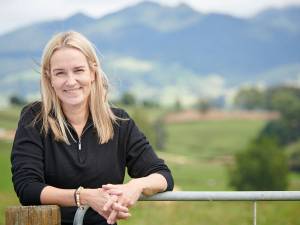
Minister of Conservation Hon Tama Potaka has appointed Susan O'Regan as Chair of the Queen Elizabeth II National Trust (QEII) for a three-year term.
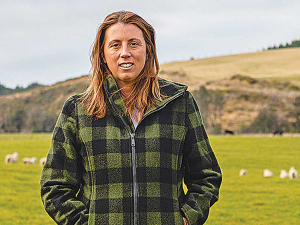
Red meat farmers are welcoming Labour’s plan to review the Emissions Trading Scheme and not to campaign on pricing agricultural emissions.
Where any worker in the kiwifruit industry is mistreated, we expect the authorities to take action.
Mid Canterbury Federated Farmers arable chair, Bevan Lill, said Beef + Lamb NZ data indicated that for the last six years, the average arable return on investment was about 0.8% while inflation ran about 4% - so the average arable farm was going backwards at about 3% a year.
Seed and grain companies share the concerns of arable farmers about the viability of their sector, says Seed and Grain New Zealand chief executive Dr Sarah Clark.
The New Zealand Institute of Forestry (NZIF) says unnecessary changes to New Zealand’s Emissions Trading Scheme (NZ ETS) will seriously erode investor confidence and result in significant reductions in forest planting rates.