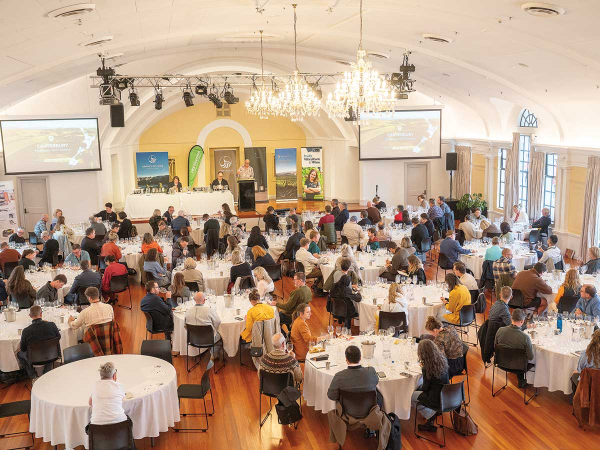
“Who decides what quality is? How do we know it when we see it?” Julia Harding MW’s opening question set the tone for the third Aotearoa Chardonnay Symposium held in Te Matau-a-Māui in September. Across two days in Hastings, delegates examined quality in Chardonnay, how it is understood, perceived, discussed and communicated, in the vineyard, in the winery and in the glass.
Julia, senior editor at Jancisrobinson.com for over 20 years, was the keynote speaker. Her skill at distilling complex and original ideas was on show in the two sessions that bookended the programme, which she called “the Julia sandwich”. She began with “What is quality in Chardonnay and how do we judge it?” and closed with “So, what is quality?” Both raised as many questions as they answered and elicited enthusiastic audience discussion.
Julia illustrated her sessions with a thoughtful (and delicious) selection of overseas wines, many of which are unavailable in New Zealand and were donated by their producers. While positive about the quality of New Zealand Chardonnay, Julia flagged a sobering issue – too many wine drinkers are still completely unaware of our wines, echoing comments about Pinot at Pinot Noir New Zealand 2025 in Christchurch.
The research sessions built upon topics generated from previous symposia surveys. Dr Chandré Honeth of Eastern Institute of Technology presented on the effects of leaf removal, and Braden Crosby of Bragato Research Institute, working with EIT and Hawke’s Bay wineries, presented on the impact of yield on quality. Both prompted numerous questions as the audience probed the finer points and practical applications of the research trials. Delegates were also asked to nominate topics for future EIT and BRI research, the results for which will be reported at the next symposium in 2028.
The winery case studies covered the personal and the practical. Michael Brajkovich MW of Kumeu River Wines and Warren Gibson of Bilancia presented on day one; Helen Masters of Ata Rangi and Virginia Willcock of Vasse Felix in Margaret River on day two. The sessions were detailed and insightful, respectively covering premium Chardonnay winemaking, regionality, phenolic management and style, and understanding the Gingin clone and its influence on Margaret River style. “Making wine is all consuming,” Helen observed in her session. “You just have to trust the fruit. Winemaking is then about keeping it as simple as possible.” If you remove yourself from the discussion, she said, “you can stand behind the place and the fruit, and there is so much power in that.”
I joined Dave Brookes of The Halliday Wine Companion and Stephen Wong MW of The Real Review in a panel discussion looking at how wine writers discuss quality and how consumers perceive it. How to communicate quality, whether as producers or through proxies such as writers, distributors, sommeliers and podcasters or influencers, was a thread that ran through both days.
The symposium’s strong manaakitanga was on display as delegates gathered for two BYO evenings of shared wine, food, discussion and laughter. Regional culinary treats included the infamous Hastings Meatballs, which made an appearance for day two’s morning tea.
The theme running through almost all sessions was people – developing your own approach, making the best wine you can from your site, having the confidence (or not) in it, then finding your people and communicating your wines and story to them. Helen pointed out that wine is ultimately a deeply personal thing involving human connections, commenting that when selling wines, you have to stand up and talk to people. “I can only do that with something I love, something I feel connected to.” Asked how to balance self-expression in winemaking with consumer demand, Virginia answered emphatically: “You don’t! You just make bloody good wine, and you find your people.”