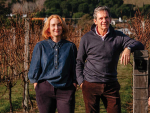
One Vineyard, Three Chardonnays, One Charity Auction
When Kate Lattey and Koldo Santamaria planted their dream vineyard in 2020, they knew they wanted to work with winemakers who shared their passion for wine “and expressing what the land can say”.




 increase font size
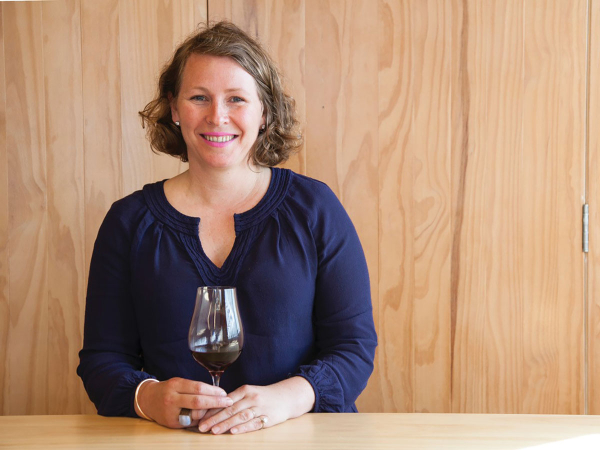 Emma Jenkins MW
“The first conviction we need as wine drinkers,” Andrew Jefford once wrote, “is to spend less time thinking about grape varieties, and pay more attention to the places wines come from and the cultures in which they come into being. All the grape variety does is present a spectrum of opportunities.”
He goes further: focus only on variety and you end up chasing a perfect model of that variety, against which everything different falls short. In fact, the difference is the point.
That difference has a name, though increasingly one used so liberally that it’s at risk of losing its meaning. “Sense of place” is trotted out so reflexively that it has almost begun to function as a platitude rather than an actual concept or argument. At its most rigorous, a sense of place is what the philosopher Sir Roger Scruton meant when he called a good wine “a somewhere, not an anywhere”, marked by a specific place and year, impossible to have come from elsewhere. Randall Grahm put it more bluntly, denoting wines that are made, and wines that are expressed.
What might a wine that is made rather than expressed look like? It could be a commodity blend engineered to a price point and designed to be identical year-onyear, or it might be an overly ambitious, heavily crafted wine. These are precisely the wines most likely to reach for the phrase – prestige wines are no less capable than commodity wines in deploying it cynically – as if writing it on a back label might conjure up what’s missing in reality. The problem is that once you attach it to everything, it joins ‘artisan’ and ‘authentic’ in the graveyard of words that once did real work only to become decorative or performative.
That corrosion matters because place is the one quality a wine possesses that cannot be manufactured or replicated elsewhere. Winemakers move on and vintages pass, while varieties can be planted anywhere with sufficient optimism. But place simply is. That inability to be replicated is what gives it its weight. Place has long been the basis for conferring legitimacy on Old World traditions, though of course a Bannockburn Pinot Noir or Hawke’s Bay Syrah has just as much claim to a sense of place as a Gevrey-Chambertin or Hermitage. The concept belongs to geography rather than legacy.
As for whether consumers need to understand any of this, perhaps they don’t, or not consciously anyway. People respond to wines that move them without always knowing why. But the industry certainly does need to understand it – and more importantly, wines do need to express it. That’s why Jefford is right to ask us to look more carefully. If a “sense of place” comes to mean everything and therefore nothing, we let go of the most distinctive thing wine possesses.
When Kate Lattey and Koldo Santamaria planted their dream vineyard in 2020, they knew they wanted to work with winemakers who shared their passion for wine “and expressing what the land can say”.
Having founded three wineries, sold two, and put the 21st vintage of Wild Irishman into barrel, Central Otago winemaking pioneer Alan Brady could choose to put his feet up.
One of Australia's most decorated winemakers will speak at the Aotearoa New Zealand Chardonnay Symposium in Hawke's Bay this September.
As we begin the 2026/27 financial year, the New Zealand Winegrowers Brand team remains focused on investing where we can deliver the greatest value for members.
The 26th Great Wine Capitals International Annual Conference will be held in Hawke's Bay from 18 - 22 October, in a landmark moment for New Zealand's wine and tourism industries.



OPINION: The months ahead are important for New Zealand Winegrowers.
OPINION: New Zealand's soils and climate make our wine industry extraordinary. But it is the people behind the vines and…
The third Aotearoa New Zealand Chardonnay Symposium will be underway in Hastings, Hawke's Bay, on 17-18 September.
One of Australia's most decorated winemakers will speak at the Aotearoa New Zealand Chardonnay Symposium in Hawke's Bay this September.
In early May, New Zealand Winegrowers delivered a webinar for members, providing a commercial view of New Zealand wine in…



