Mastering Wine: Is Frictionless Wine Costing Us Diversity?
OPINION: When I was little, I had a book of short stories set in a futuristic world.




 increase font size
 Keeping things exciting, Te Whare Ra is trialing an egg innovation from Tīra for “a very special parcel of 2026 Sauvignon Blanc,” says Anna Flowerday. “Jason has given some input on the design and so we are really eggcited to get to trial this.”
OPINION: Wow, the world is a pretty terrible place right now.
I doubt I need to spell out details – take your pick. Closer to home life feels - and is - tough for many. So it might seem a strange time to talk about fun. But there’s a strong case that even – especially – in times like these, maintaining a sense of fun is more important than ever.
Dutch historian Johan Huizinga argued that play doesn’t follow culture, it precedes it. Humans didn’t invent games after we built civilization - we built it partly through games and fun. Fun isn’t the reward for serious activity; it’s often how serious things get discovered. This is something wine forgets periodically, and feels in danger of doing so again now.
Fun helps us experiment. Fun tolerates failure when seriousness often can’t. Fun includes winemakers who play around trying weird things - unusual grapes, unconventional methods, novel packaging. Some fail, but some become movements. Fun is generous and welcoming.
When a subject becomes sufficiently serious, the implicit message is that you need credentials, special language or knowledge to enjoy it. Wine has done this to itself repeatedly and the cost is real, handing market share to craft beer, cocktails, even cannabis, all of which better communicate permission to enjoy without understanding. And without fun, it’s hard to enjoy the thing core to wine’s very existence: there’s evidence that anxiety and self-consciousness suppress sensory pleasure. Someone worried about choosing the wrong wine or saying the wrong thing is probably going to drink less, not more.
Wine is an interesting lens through which to contemplate fun because it contains a clear contradiction. Wine is complex and serious in its craft, production and terroir, yet that complexity was never the original point of drinking it. But somehow seriousness has attached itself to wine like barnacles to a ship’s hull.
This has provoked a necessary reaction - natural wine, orange wine, pét-nat – and whatever their flaws, part of their energy and success has come from people deciding to have fun again, to make wine that feels like it was made by humans for other humans. Fun is therefore also risk tolerance. The winemakers who inspire others are just as often the renegades as the classicists.
OPINION: When I was little, I had a book of short stories set in a futuristic world.
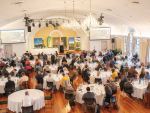
“Who decides what quality is? How do we know it when we see it?” Julia Harding MW’s opening question set the tone for the third Aotearoa Chardonnay Symposium held in Te Matau-a-Māui in September. Across two days in Hastings, delegates examined quality in Chardonnay, how it is understood, perceived, discussed and communicated, in the vineyard, in the winery and in the glass.
“The first conviction we need as wine drinkers,” Andrew Jefford once wrote, “is to spend less time thinking about grape varieties, and pay more attention to the places wines come from and the cultures in which they come into being. All the grape variety does is present a spectrum of opportunities.”
One of Australia's most decorated winemakers will speak at the Aotearoa New Zealand Chardonnay Symposium in Hawke's Bay this September.
OPINION: People often want to know what the best part of undertaking my Master of Wine was.


OPINION: As I approach three months in my role as New Zealand Winegrowers Chief Executive, one message has come through…

OPINION: The United States wine market has changed forever, and companies cannot use same old playbook, said Erin Kirschenmann at…
One of Australia's most decorated winemakers will speak at the Aotearoa New Zealand Chardonnay Symposium in Hawke's Bay this September.
The third Aotearoa New Zealand Chardonnay Symposium will be underway in Hastings, Hawke's Bay, on 17-18 September.
Vintage 2026 yielded excellent fruit for most New Zealand wine regions.