Fonterra FY26 Results: $9.69 Milk Price, $3.4bn Profit
Fonterra has unveiled its annual results for the 2026 financial year, posting $27 billion in revenue and close to $20 billion returned to New Zealand farmer owners and unit holders.
 increase font size
 DairyNZ board chair Michael Spaans.
Few farmers will be surprised to know that the 2015-16 season was the most challenging year yet for them.
Figures released at DairyNZ’s annual meeting in Ashburton last week show the 2015-16 milk price of $3.90/kgMS was the lowest in ten years and it hit farmers who last season were on average operating at a break-even cost of $5.25/kgMS.
DairyNZ board chair Michael Spaans says despite an obvious shortfall in farm income, last season farmers worked to cut their costs of production.
“Our data shows farmers have become more efficient and fine-tuned their farm management – so much so, that in August we revised the average farm’s break-even cost down to $5.05/kgMS for 2016-17,” Spaans told the meeting.
“This is a rare positive from a period of low milk prices, and farmers should be immensely proud of it. Farmers’ ability to sharpen their pencils and remain focused is the key to maintaining our industry’s international competitiveness.”
The 2015-16 challenges were compounded by the low milk price in 2014-15. With no significant retrospective payments from the previous season, many farmers in 2015-16 increased debt to cover costs.
The previous 2014-15 season had been somewhat buffered by the $8.40/kgMS price of 2013-14.
Nationally, dairy farmers produced 1.862 billion kgMS, worth $8b in 2015-16.
The industry’s milk production benefited the NZ economy by $12.2b from dairy exports in 2015-16 and provided around 35,000 full-time jobs on-farm and a further 14,500 jobs in milk processing and wholesaling.
DairyNZ chief executive Tim Mackle says 2015-16 was another busy year for DairyNZ, which spends in the industry the $67m levy it gets from farmers, plus extra government and commercial cash.
“Spending farmers’ money in a wide range of programmes is designed to deliver direct benefits for farmers and the industry as a whole,” says Mackle.
“While each year we focus on supporting farmers through immediate issues such as managing the low milk price, we also maintain our long-term work in research, environmental management and our workforce.”
This coming year, $16m will be spent on farm profit, biosecurity and product integrity. Environmental work will receive $12m.
Fonterra has unveiled its annual results for the 2026 financial year, posting $27 billion in revenue and close to $20 billion returned to New Zealand farmer owners and unit holders.
The first major update to the Dairy Cattle Code of Welfare in more than a decade has been released, marking what DairyNZ describes as an important step in ensuring animal welfare standards continue to evolve alongside scientific evidence and on-farm realities.
Fonterra Co-operative Group has confirmed the independently assessed candidates standing for election to its board in 2026.
Fonterra has revised its Farmgate Milk Price forecast for the 2026/27 season, lifting the midpoint and narrowing the range on the back of improving global dairy commodity prices.
Outgoing Fonterra Co-operative Council chair John Stevenson says that it has been a privilege to represent the co-op's farmer shareholders.


Federated Farmers says it welcomes Labour's commitment to reviewing the Sharemilking Agreements Act, calling on other major parties to do the same.
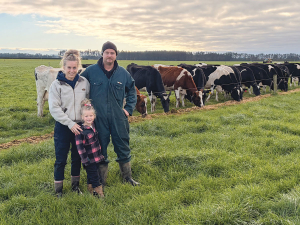
For Canterbury dairy farmers Sian Meijer and Rick Wobben, wearable technology has become one of their most valuable on-farm tools - helping manage 1850 cows across an expansive, high-performing dairy operation while improving efficiency, mating outcomes and day-to-day decision making.
Fonterra has unveiled its annual results for the 2026 financial year, posting $27 billion in revenue and close to $20 billion returned to New Zealand farmer owners and unit holders.
The first major update to the Dairy Cattle Code of Welfare in more than a decade has been released, marking what DairyNZ describes as an important step in ensuring animal welfare standards continue to evolve alongside scientific evidence and on-farm realities.
Ravensdown shareholders have elected Jane Montgomery and Kate Acland to the Ravensdown Board for three-year terms, following a closely contested director election.
Federated Farmers says new legislation replacing the Resource Management Act will cut red tape, unlock investment and help grow New Zealand's export-led economy, after the Planning Bill and Natural Environment Bill passed their third reading in Parliament yesterday.