Research shows farm ownership a viable goal
Buying a farm is challenging but still achievable according to research recently carried out by Smaller Milk and Supply Herds (SMASH).
 increase font size
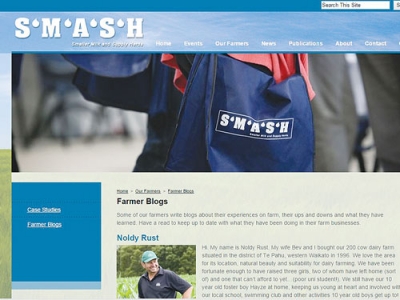 SMASH blog on Wordpress.
Just before Christmas, Smaller Milk and Supply Herds (SMASH) initiated a novel way for farmers to share their experiences and knowledge – blogging.
Farmers gain much from going to events and talking with other farmers, or chewing the fat over the fence with the neighbour, but sometimes they don’t have time to get off the farm. Reading the blogs and sharing comments on-line opens up a new way of connecting with other farmers.
For the four new farmer bloggers, Noldy Rust, John van der Goes, Brian Frost and Trent Guy, the process has put them on a steep learning curve. As Rust says, “It can be hard work sitting down each month and creating a new blog entry, but it’s rewarding when you see the finished product on-line, and realise there are a lot of people getting benefit from reading it”.
To date the blogs have covered topics as diverse as growing tall fescue, the trials of combating mastitis, dealing with effluent council compliance and getting cows in calf. But it is not all about the technicalities of running a farm; it also gives people the chance to share the ups and downs of farming life, from coping with the weather to fitting in a well-deserved break over Christmas.
There is the chance to learn from other people’s successes, and failures, and the bloggers have an honest and open approach to sharing both, as can be seen in the following snippet from Trent Guy’s latest blog entry:
“Unfortunately after my little Christmas getaway I came back to a rapidly rising SCC and after stripping the herd and pulling eight clinical mastitis cows out we still saw little change in the bulk SCC.
“So we needed a plan. We talked to our local vets and we decided do a machine check, bring our next herd test forward and then look at the high SCC cows. The plan was implemented and LIC was called to see if it could be done ASAP. Fortunately they could do one in three days, which luckily for me happened to be when my father was coming to visit… yeah, free labour! A machine check was done, revealing that the shed was running perfectly.
“So the three days rocked around quickly and we got the herd test out of the way. Then the waiting game.
“So we got the results and they weren’t too flash: there were 30 cows in the millionaires club – not a club we want to have cows in. We then decided to pull the top 60 cows out on SCC and run them as a separate herd, thus hopefully reducing any spread to otherwise healthy cows and to monitor the 60 cows and take further action as needed.”
The SMASH team hopes the blog readership will continue to rise, and more bloggers will sign up.
Find the SMASH blog at https://smallerherds.wordpress.com/
• Louise Hanlon is a SMASH committee member.
Buying a farm is challenging but still achievable according to research recently carried out by Smaller Milk and Supply Herds (SMASH).
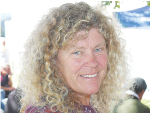
Anna Kalma is Smaller Milk and Supply Herds (SMASH’s) national coordinator and has seen it all in her time on the national committee.
Smaller Milk and Supply Herds (SMASH) needs your help.
A top farm accountant says in the present downturn, it's vital that farmers take heed of all the good advice on offer.
Michael Kiernan's lucerne crop was a godsend in the dry Southland summer this season.


National’s pledge to introduce 19 new national standards shows the party is serious about getting Wellington out of farming, Federated Farmers says.
The National Party’s policies to make it easier to grow fresh vegetables, secure reliable water and energy and simplify farm planning are practical changes that will give growers the confidence to invest, according to Horticulture New Zealand (HortNZ).
Fonterra Co-operative Group chief financial officer Andrew Murray has resigned to take up a role outside the dairy giant.
A major move is about to get underway to improve the quality and viability of dairy beef and cattle in NZ.
Veterinarians say changes to the code of welfare for dairy cattle provides a positive foundation for improved cattle welfare across the country.
Today, 15 October, is the International Day of Rural Women, which recognises rural women’s contribution to farming, communities and the environment.