New Dairy Holdings CEO Backs Self-Contained Model
Running a tight and self-contained ship is the key to the success of the country's largest dairy farmer, says Blair Robinson, the new man at the helm of Dairy Holdings.
 increase font size
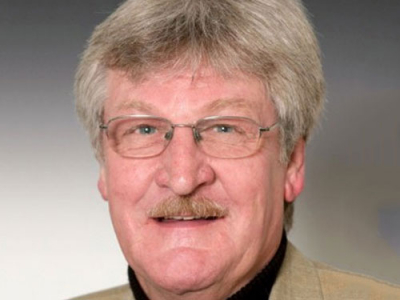 Professor Frank Griffin.
Going for eradication of the cattle disease Mycoplasma bovis is “absolutely” the sensible choice, says Professor Frank Griffin, founder of the Otago veterinary diseases laboratory Disease Research Ltd.
“It looks like it’s a single-source infection and it looks like there’s a direct link between all the affected properties. Good animal control and good diagnostics should allow them to establish within a couple of years if it’s really feasible to eradicate the disease,” Griffin told Rural News.
“It gives you the two options really: try eradication and then if it doesn’t work move to a control.”
Griffin says DRL had been involved in early discussions with MPI, which will need outside diagnostic laboratory support in any long-term management programme.
However, he concedes that M.bovis will be a real challenge.
“The problem, really, is that the scientific basis for controlling the infection is not really well described. The diagnostic tests are not good, which means you don’t have a high level of confidence that when an animal [tests] positive it is truly positive or when it is negative it is truly negative.”
Griffin explains that antibody tests are not specific because there are other mycoplasmas that cross-react.
“Normally we use the cell wall proteins as markers for the bug, but because [Mycoplasma bovis] doesn’t have a cell wall and just has a membrane around it, that means the only markers you have are things inside the cell that we call the cytoplasmic antigens. They tend to be more cross-reactive between different species of organisms.
“Equally if you look at a molecular technique like a pcr technique that looks at the genes of the bug, it’s very good if you happen to get the right tissue. But they’re not quite sure which tissue to sample. They think possibly tonsillar tissue is best.”
Griffin says it’s very difficult to sample tonsils.
“The eradication approach will allow them to find out a lot more about the testing, then if they are forced into a control programme long term they at least will have better technologies to manage the infection.”
He says the basic technology exists but will need research and refinement.
“We live in a world of constant improvement. You don’t just want to get something to work, you want to find out how to make it work better or cheaper or faster or whatever else. It’s a constant learning platform where you’re trying to refine and improve things all the time.”
Griffin was speaking as DRL moves to strengthen its position as a commercial player in the dairy industry, having forged an agreement with CRV Ambreed to become its preferred technical and diagnostic services provider.
Running a tight and self-contained ship is the key to the success of the country's largest dairy farmer, says Blair Robinson, the new man at the helm of Dairy Holdings.
OPINION: It's no surprise that "world-class biosecurity" continues to dominate as the top priority for agribusiness leaders, holding the number one spot for the 16th consecutive year in KPMG's latest agribusiness report.
Compensation assistance for farmers impacted by Mycoplama bovis is being wound up.
New Zealand's world-first Mycoplasma bovis eradication programme is making great strides but this isn't the time for complacency, says Ospri.
A national pest management plan to eradicate Mycoplasma bovis (M. bovis) will come into effect by the end of this year.


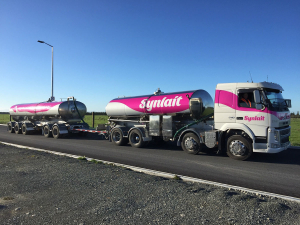
Synlait has swung to second-half profit as operations stabilise, but the dairy processor still posted a $75.4m annual loss.
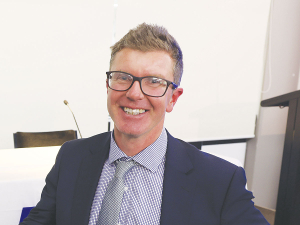
LIC shareholders have elected a new North Island representative to the co-operative's Board, along with five representatives to its Shareholder Reference Group (SRG), following the company's Annual Meeting held in Invercargill.
Farmers across parts of Southland and South Otago are continuing to deal with difficult conditions after a prolonged run of wet weather, with pressure building around feed supply, stock management, pasture damage, farm infrastructure and everyday workloads.
Federated Farmers says it welcomes Labour's commitment to reviewing the Sharemilking Agreements Act, calling on other major parties to do the same.
For Canterbury dairy farmers Sian Meijer and Rick Wobben, wearable technology has become one of their most valuable on-farm tools - helping manage 1850 cows across an expansive, high-performing dairy operation while improving efficiency, mating outcomes and day-to-day decision making.
Fonterra has unveiled its annual results for the 2026 financial year, posting $27 billion in revenue and close to $20 billion returned to New Zealand farmer owners and unit holders.