Fonterra CFO Andrew Murray Resigns
Fonterra Co-operative Group chief financial officer Andrew Murray has resigned to take up a role outside the dairy giant.
 increase font size
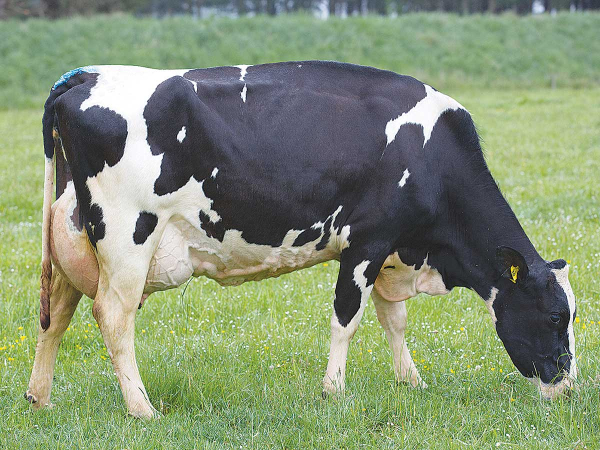 The Co-operative Difference framework was introduced to ensure on-farm practices support the delivery of the co-op’s strategy.
"I'm not what you would consider a Formula One farmer, but I must be doing something right,” says Fonterra farmer Francis Smits, who is quick to point out that he and his wife Regina have a simple set up on their Reporoa farm.
Yet this hasn’t stopped them achieving the top level of The Co-operative Difference since it was first introduced in the 2019-20 season. They are among around 70 farmers to do this.
Francis has been a dairy farmer for the best part of half a century and says that simplicity has always been a key focus. “One of the big things for me is to keep what I do quite simple. I don’t have a flash set up, but it works,” says Francis.
With 130 Friesen cows on their 68ha property, caring for the land is also an important part of what they do.
“We have a stream from a spring that borders the farm. That’s where we get water from so we are very careful to make sure it stays in a good condition.”
Michael Hide, Fonterra’s on-farm excellence director, says The Co-operative Difference framework was introduced to ensure on-farm practices support the delivery of the co-op’s strategy.
“We’re always looking to protect and grow the value of our farmers’ milk,” says Hide.
“The Co-operative Difference helps us stay at the forefront of key issues such as safety and animal wellbeing while also recognising farmers like the Smits who consistently provide the highest quality milk. Ultimately, it means our milk is backed by the quality and sustainability credentials our customers and communities expect.”
Te Tihi level, which translates to “The Summit”, means achieving milk quality excellence for at least 90% of the season on top of meeting the base criteria across five performance areas within the Co-operative Difference framework – Environment, Animals, People & Community, Co-op & Prosperity and Milk.
The Smits have always supplied Fonterra, or its legacy companies, and Francis says there are clear reasons for that.
“I like the co-operative model and Fonterra’s stability has always made us feel secure, which is important. The management seems to be more levelheaded compared to what we had before, and I have confidence that they are doing their best for farmers.”
Francis’ passion for farming started at a young age. When he was just 11, he worked as a relief milker for the farmer down the road.
“Then I left school in 1975 and worked as a farm boy for 8 years,” he says.
Using the skills he learnt during that time, Francis started a 50/50 sharemilking role milking 135 cows. He did that for five years before another five-year stint sharemilking on another property milking 360 cows.
In 1993 Francis and Regina bought the farm they are currently on and haven’t looked back. He says there’s a lot to enjoy about the farming lifestyle.
“I’ve never minded the early starts and I like working outside.”
Fonterra Co-operative Group chief financial officer Andrew Murray has resigned to take up a role outside the dairy giant.

Four candidates have been confirmed for two director positions on Fonterra’s board.
A record farmgate milk price and strong global demand is laying the foundation for continued growth of organic dairy farming in New Zealand.
Waikato milk processor Tatua has again declared a record milk payout to farmer shareholders, leaving other processors in the dust.
Fonterra has unveiled its annual results for the 2026 financial year, posting $27 billion in revenue and close to $20 billion returned to New Zealand farmer owners and unit holders.


National’s pledge to introduce 19 new national standards shows the party is serious about getting Wellington out of farming, Federated Farmers says.
The National Party’s policies to make it easier to grow fresh vegetables, secure reliable water and energy and simplify farm planning are practical changes that will give growers the confidence to invest, according to Horticulture New Zealand (HortNZ).
Fonterra Co-operative Group chief financial officer Andrew Murray has resigned to take up a role outside the dairy giant.
A major move is about to get underway to improve the quality and viability of dairy beef and cattle in NZ.
Veterinarians say changes to the code of welfare for dairy cattle provides a positive foundation for improved cattle welfare across the country.
Today, 15 October, is the International Day of Rural Women, which recognises rural women’s contribution to farming, communities and the environment.