
True Reflection?
A fair question has been raised about how member-funded organisations should conduct themselves when taking a public position on any given issue.
 increase font size
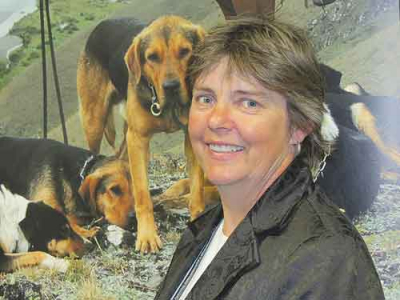 Rural Women NZ president Fiona Gower.
With more women working in farming, more are contracting the disease leptospirosis, says the president of Rural Women NZ, Fiona Gower.
She told Dairy News, at a recent international conference on leptospirosis in Palmerston North, that the changing nature of the workforce on farms and in the rural sector generally means this disease is no longer a probably only for men.
Women are getting to work on farms in their own right or in a partnership, “feeding calves, milking cows, doing work with the stock -- much more hands on these days”.
“That’s why there is more prevalence of women getting the disease. The causes include rats running over the bags of feed where they are feeding calves, or in the milking shed; and there may be something in the woolshed for those doing the dagging and shearing as well.”
Gower says it’s also believed the spread of the disease may be connected to wet weather because it is spread through water. Women cleaning mud or water from homes or from silt around a farm are possible causes of their increased infection rates.
Rural Women NZ and its predecessor, the women’s division of Federated Farmers, have supported research at Massey University into leptospirosis for 40 years and they will continue to do this, Gower says.
“In the 1970s and 80s the women’s division of Federated Farmers gave $150,000 to research on lepto in the dairy and pork industries which led to vaccination. Again in 2007-08 we gave more funding for two PhD students to look at issues in the meat industry, in particular deer. The main reason is because of the harm the disease does in rural communities.”
Heart wrenching stories are told about the disease’s impact on individuals, families, businesses and the whole rural society including schools. Some people have had to quit their jobs.
Rural Women NZ will keep working to raise awareness of lepto in rural areas, Gower says. It is targeting people on farms and rural professionals including health workers.
A fair question has been raised about how member-funded organisations should conduct themselves when taking a public position on any given issue.

Rural Women New Zealand (RWNZ) says it is delighted by the Government’s announcement that it would invest $250,000 in the organisation.
OPINION: About as productive as a politician's taxpayer-funded trip to Hawaii, as cost-effective as an OSPRI IT project, and as smart as the power-company pylon worker, the Hound gives you the NZ Post business strategy:
OPINION: Rural services such as banks, health and postal services have been declining for years, so this mutt was tickled pink to hear Rural Women NZ on national TV slamming the impact of post office closures in rural areas.
Rural Women New Zealand (RWNZ) and Massey University are joining forces to help raise awareness and funds to combat leptospirosis.



LIC shareholders have elected a new North Island representative to the co-operative's Board, along with five representatives to its Shareholder Reference Group (SRG), following the company's Annual Meeting held in Invercargill.
Farmers across parts of Southland and South Otago are continuing to deal with difficult conditions after a prolonged run of wet weather, with pressure building around feed supply, stock management, pasture damage, farm infrastructure and everyday workloads.
Federated Farmers says it welcomes Labour's commitment to reviewing the Sharemilking Agreements Act, calling on other major parties to do the same.
For Canterbury dairy farmers Sian Meijer and Rick Wobben, wearable technology has become one of their most valuable on-farm tools - helping manage 1850 cows across an expansive, high-performing dairy operation while improving efficiency, mating outcomes and day-to-day decision making.
Fonterra has unveiled its annual results for the 2026 financial year, posting $27 billion in revenue and close to $20 billion returned to New Zealand farmer owners and unit holders.
The first major update to the Dairy Cattle Code of Welfare in more than a decade has been released, marking what DairyNZ describes as an important step in ensuring animal welfare standards continue to evolve alongside scientific evidence and on-farm realities.