With winter around the corner, LIC says farm staff are busy tending to bulls to ensure they capture the vital semen needed for New Zealand’s dairy herd.
Through artificial insemination, over 500 bulls have the role of getting millions of dairy cows pregnant each year, by producing five million straws of semen, thus helping maintain our milk supply.
The importance of dairy has arguably never been greater with the Ministry for Primary Industries expecting dairy exports to rise 6.3% to $19.2 billion for the year to June 2020. Domestically, Kiwis consume 400 million litres of milk each year.
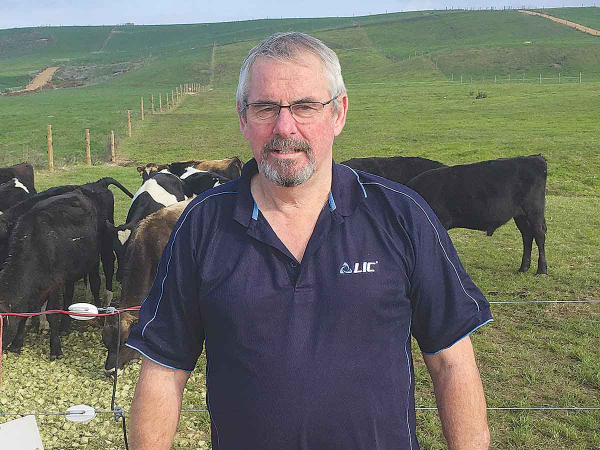
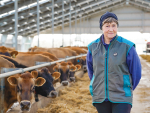
Enabling this supply are bulls farmed by LIC at two farms in Newstead, near Hamilton, and one at Awahuri in the Manawatu. In total over 1,000 bulls are overseen by LIC farm manager Phil McKinnon who leads a team of 21 across all of LIC’s farming operations.
The tending to the animals to ensure continued semen supply and animal welfare means the daily feeding of bulls, some of which weigh in excess of a tonne (1,000kg) with supplement fed during the recent drought.
The team is undertaking regular ‘collections’ of bull semen for winter-supply for farmers doing artificial inseminations in June and July, and for export ahead of the more busy spring mating season from September to December.
McKinnon says his farm team’s biggest challenge in recent weeks has been training the new bull calves that arrived on-farm earlier this year.
“These calves are deemed the newest genetics and therefore likely to be among the best available in the industry. They’re referred to as sire proving scheme (SPS) calves because the worth of their genetics is yet to be ‘proven’ to the industry.”
McKinnon says the first focus for the newest intake of SPS bull calves, numbering about 220, is orientating them with their new surroundings and their roles.
With collections from these young bulls scheduled to begin in June the clock is ticking, says McKinnon.
However, his team is on track to ensure semen gets on-farm for cows to get in-calf this year and ensure milk keeps flowing.