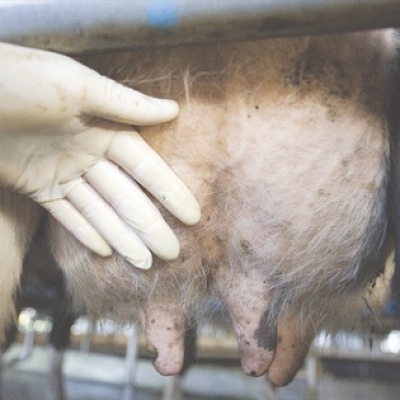
Mastitis is inflammation of a cow’s mammary glands and udder tissue.
It usually occurs as an immune response to bacterial invasion of the teat canal by various bacteria present onfarm, and can also occur as a result of chemical, mechanical or thermal injury to the cow’s udder.
Milk-secreting tissues and various ducts throughout the udder can be damaged by bacterial toxins, and sometimes permanent damage to the udder occurs. Severe acute cases can be fatal, but even in cows that recover there may be consequences for the rest of the lactation and subsequent lactations.
The illness is, in most respects, a complex disease affected by a variety of factors: it can be present in a herd sub-clinically where few, if any, symptoms are present in most cows. Practices such as close attention to milking hygiene, the culling of chronically infected cows and effective dairy cow nutrition to promote good cow health are essential to help control herd mastitis levels.
Mastitis treatment and control is one of the largest animal health costs to the dairy industry and markedly affects cow welfare. Losses can arise from:
- Milk thrown away due to contamination by medication or being unfit to drink.
- A reduction in yields due to illness and any permanent damage to udder tissue.
- The extra labour required to tend to mastitis cows.
- The costs of veterinary care and antibiotics.
- The cost of reduced longevity due to premature culling.
- Grading due to high bulk somatic cell count (SCC) in the milk.
Most mastitis problems are either calving related environmental problems, characterised by a high number of clinical cases in the spring, and/or contagious, which usually result in a rising cell count later in the season.
The contagious form of bacteria is Staph aureus which is easily transmitted from cow to cow via milkers’ hands and liners, so as the season progresses the number of infected cows goes up.
Some good tips for keeping this form of bacteria at bay:
- Spraying every teat, every day and every milking.
- Wear milking gloves.
- Avoid hosing down around cows when cups are off.
- Where possible milk your high cell-count cows last.
Keeping the herd cell count low in the autumn can present challenges because as production volume drops, cells become less diluted and cell count rises. There is no benefit to treating high cell-count cows in late lactation so along with low producers they should be dried-off early and treated with dry cow therapy.
Many of the chronically infected mastitis cows cannot be fixed so I recommend culling cows which have had three or more clinical cases during the season as well as cows which have had high SCC over two consecutive seasons using dry cow therapy.
Mastitis is a complex issue and every situation is slightly different on any given farm. So how you treat it can depend on a number of variables. But the key message is to remain vigilant in detecting cases and carry out good dairy hygiene practices at all times of the year.
• Phil Fleming is LIC FarmWise consultant
This article first appeared in Getting the Basics Right 2015 edition