Pāmu Silver Stabilizer Dairy Beef Genetics Open to Farmers
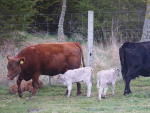
A major move is about to get underway to improve the quality and viability of dairy beef and cattle in NZ.
 increase font size
 Pamu Farms chief executive Steven Carden.
The chief executive of Pāmu Farms of NZ (formerly Landcorp) says producers of alternative dairy foods need to evolve in how they farm and what they produce.
Steven Carden says Pāmu's focus on these opportunities in alternative dairy foods, such as those made from organic cow milk, sheep milk and deer milk, is expected to make a growing contribution to the business over time.
The company is pleased that core premiums from milk increased by over $1 million on last year, due partly to a focus on organic, grass-fed and winter-milk dairy.
“This is an exciting time to be in the dairy industry,” Carden says.
The Government will get a $5 million dividend from Pāmu for the year ended June 30, 2018.
The company declared a net profit after tax of $34.2 million – down $17.7m (34%) largely due to smaller gains from biological assets (forestry and livestock) and a higher tax liability.
The result has been helped by a rise in prices achieved by core dairy and livestock businesses, and an ongoing move into premium products to “transition Pāmu beyond commodity products which fluctuate greatly in price,” Carden says.
“For example, positioning Pāmu’s products to align with growing consumer demand for ‘alternative’ dairy foods is hard work but we’re starting to see the results.”
Recognising the huge potential for alternative dairy, Pāmu recently launched Pāmu deer milk, which won a Grass Roots Innovation Award at Fieldays 2018 and is getting positive reviews from the food trade.
“Innovation within and beyond the farmgate means we are operating beyond our traditional farming model that requires sustained investment in our people and their wellbeing. It also means diversifying our income streams,” he says.
Exciting times
Steven Carden says this is an exciting time to be in the dairy sector with its challenges and changes, including Pāmu's objective of reducing its environmental footprint.
Huge innovation is taking place in the dairy industry and many opportunities exist for people to participate.
“We are getting our organic dairy into SE Asian markets, connecting with these consumers and building a value proposition around the clean, environmentally friendly, government-owned safe food which Pāmu can provide to Chinese consumers,” Carden says.
Pāmu has in the past talked about scaling back its dairying depending largely on where its dairy farms are located.
For example, on farms in Canterbury, where there are environmental issues, it will look at alternative land uses, e.g. alternative crops; overall Carden foresees a gradual decline in cow numbers
“We are pushing hard into regenerative, biologicals and organics, but I don’t see us re-converting dairy farms to other uses unless there is an easy way of retrofitting a dairy shed so that it’s suitable for, say, sheepmilking.”
Greenhouse gas emissions are key to Pāmu's thinking about how to become a carbon neutral organisation. Climate change and its impacts are seen as likely to hit Pāmu severely sooner than anticipated.
“Climate shifts in the northern hemisphere are a precursor to what we will see in the south. So part of our strategy is directed at preparing our business to deal with this,” he says.
A major move is about to get underway to improve the quality and viability of dairy beef and cattle in NZ.
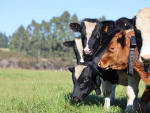
High country stations, mixed sheep and beef farms, Māori-owned farms, corporates and family operations are among the nine commercial farms taking part in the Livestock Innovation Farming Transformation programme, known as LIFT.
Pāmu has welcomed Taranaki student Paige Burston as its newest First Foundation Scholar, supporting her journey towards a career in agriculture and animal science.
State farmer Pāmu is bracing for a $30 million hit from soaring farm input costs this financial year.
Pāmu has released its FY26 Integrated Annual Report, reporting a Net Operating Profit of $113 million, more than double the $49 million recorded in FY25.


Farmers are being encouraged to rethink how they manage waste on farm with the launch of ruralwastesorted.co.nz, a new website bringing together practical tips, real farmer experiences and resources.

New Zealand Winegrowers (NZW) is celebrating the India-New Zealand Free Trade Agreement (FTA) coming into force today, bringing New Zealand wine improved access to one of the world’s fastest-growing economies.
New Zealand’s red meat sector has welcomed the India-New Zealand Free Trade Agreement taking effect, which removes India’s 33% tariff on New Zealand sheepmeat.
More than 95 per cent of New Zealand’s forestry and wood exports to India can now enter tariff free as the New Zealand-India Free Trade Agreement comes into force today.
Federated Farmers is backing Feilding High School’s call to keep Agriculture and Horticultural Science as a standalone subject in Year 11.
Food and fibre exports have returned a billion- dollar bonus to the country.