He says the rainfall around the regions has been sporadic with 50mm of rain falling on one farm and nothing on another a few kilometres away.
Dairy News has been told that two farms in Taranaki on opposite sides of the road have had the same experience - rain on one dairy farm and none on the other just metres away.
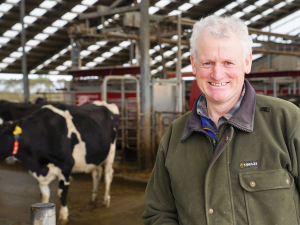
Catto has travelled around the regions in both islands in the last week or so and says most people can deal with a summer drought.
"But autumn droughts are the most challenging because the growing window is shrinking - more so in some areas than others - and there is less time to build covers for winter feed and autumn pasture. And there is no magic answer," he says.
Catto says from what he's seen the Grey Valley on the West Coast is dry, while in south Westland the situation is not too bad. He says Hawke's Bay has had good rain but around Palmerston North there has been no rain. He says the situation is similar right across the country.
The use of nitrogen fertiliser is normally seen as one of the main ways to get pasture to grow quickly, but Catto says farmers should remember that fertiliser is a growth accelerator, and they need to be cautious when applying it when a drought ends.
He says the key thing is, when you get rain, the plants are trying to recover first and so there will be plenty of nutrients and nitrogen there to support the initial growth.
"One of the key messages is that you don't need to rush out and put nitrogen the day or next day after it rains. You have several weeks before you need to put it on, so there is no fear that you have missed the bus by not putting N on straight away," he says.
Catto also warns against putting nitrogen on new pasture just after the rains, saying there is a risk of nitrate poisoning which will damage the pasture. He adds that cool and cloudy days are when there is the highest risk.
The other key message from Warwick Catto is for farmers to divide their pastures into three groups: those that will recover quickly, those that will take longer to recover, and those that are slow and may never recover.
"The obvious thing is don't spend any money on those that won't recover from a nutrition perspective. Put your investment in those that will recover because that is where you'll get your best return," he says.
The other point Catto makes is that farmers don't need to rush out and get a soil test after a drought. He says a test taken a year or two ago should be an adequate indicator of fertility.
Overall, Catto says farmers should err on the side of caution and not use N until the pasture starts to pick up and can utilise the extra fertiliser.