
Ballance Returns to Profit, Announces $18.2m Rebate
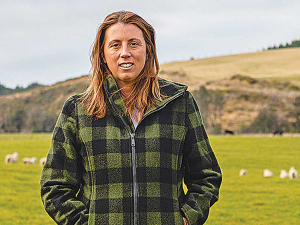
Ballance Agrinutrients chief executive Kelvin Wickham says despite a tough year, he is pleased the business has returned to profit.




 increase font size
 Kelvin Wickham
OPINION: If there's one thing farmers understand better than most, it's uncertainty.
You can do everything right, then a late frost, a weather event, or a sudden market shift rewrites the season overnight. Farming has always required resilience, but right now the level of global uncertainty facing New Zealand agriculture feels different in both scale and speed.
Whether it be geopolitical tensions or shifting trade dynamics, the goalposts are moving faster than many of us have experienced before.
We're operating in what leadership experts call a VUCA environment: volatile, uncertain, complex and ambiguous. But while the acronym may be relatively new, the mindset required to navigate it is not. Farmers have been managing VUCA conditions for generations.
When seasons are unpredictable, farmers return to fundamentals. They focus on what they can control - soil health, pasture resilience, animal welfare and long-term productivity - rather than chasing every short-term signal.
The same principle applies at an industry level.
At Ballance, our focus remains on helping farmers grow sustainably while building farming systems for the future. Market conditions may shift, regulations evolve, and global events create disruption, but clarity of purpose provides stability when everything else feels uncertain.
Certainty doesn't come from predicting the future perfectly, but from having a clear direction that allows you to adapt without losing momentum.
Farmers know there's no such thing as a perfect season. The goal therefore is resilience.
When we view pasture management, a resilient pasture isn't necessarily the highest producing in ideal conditions, it's the one that performs consistently through drought, heavy rain, and temperature swings.
Diversity, strong root systems, and careful management help it recover faster when conditions change.
The same thinking applies to farm business planning.
Global uncertainty highlights how interconnected agriculture has become. Fertiliser production relies heavily on energy markets, shipping costs depend on geopolitical stability, global consumer confidence.
Farmers who continue investing in soil fertility and efficiency, as well as using data driven decision-making are often better positioned when markets stabilise again. In other words, resilience must be built before you need it.
During challenging periods, one of the most important roles leaders play, whether you're a rural professional or farm owner, is one of reassurance.
Farm teams, families, and rural communities take cues from those around them. Acknowledging uncertainty honestly, while reinforcing shared goals and values, helps prevent reactionary decision making driven by stress rather than strategy.
Farmers already understand this instinctively. When a tough season hits, neighbours check in, share information and support each other. That collective resilience is one of rural New Zealand's greatest strengths. The same principle applies across the sector as a whole. Communication and collaboration help everyone make better decisions when things are unclear.
Farming, like any business, is necessarily about prioritisation and responding to changes beyond your control.
Weather forecasts change. Markets fluctuate. Global politics shift.
You can't control the rain, but you can prepare the soil. You can't influence global tensions, but you can strengthen the resilience of your farming system. You can't eliminate uncertainty, but you can build certainty into the decisions you make every day.
In a world where headlines change by the hour, focusing on the fundamentals, healthy soils, efficient nutrient use, strong planning, and connected communities becomes more important than ever.
New Zealand farmers have navigated uncertainty before, from economic reforms to droughts and pandemics. Each time, resilience, innovation and long-term thinking have carried the sector forward.
The current global environment is another reminder that while uncertainty may be unavoidable, preparedness is not. Certainty ultimately is about having the confidence that whatever comes, you've built a system strong enough to respond.
And that is something New Zealand farmers have always done exceptionally well.
Kelvin Wickham, chief executive officer, Ballance Agri-Nutrients
Ballance Agrinutrients chief executive Kelvin Wickham says despite a tough year, he is pleased the business has returned to profit.

With forecasters advising El Niño conditions will develop through winter and strengthen into spring and summer, Ballance Agri-Nutrients is encouraging farmers and growers to think ahead about nutrient planning and be prepared to work around challenging weather conditions.
OPINION: As a country that prides itself on being a trading nation, New Zealand's transport infrastructure has a critical role to play in supporting future growth and resilience.
OPINION: New Zealand agriculture has always been built on partnerships.
New Zealand’s reliance on imported urea could soon be a thing of the past.


Red meat farmers are welcoming Labour’s plan to review the Emissions Trading Scheme and not to campaign on pricing agricultural emissions.
Where any worker in the kiwifruit industry is mistreated, we expect the authorities to take action.
Mid Canterbury Federated Farmers arable chair, Bevan Lill, said Beef + Lamb NZ data indicated that for the last six years, the average arable return on investment was about 0.8% while inflation ran about 4% - so the average arable farm was going backwards at about 3% a year.
Seed and grain companies share the concerns of arable farmers about the viability of their sector, says Seed and Grain New Zealand chief executive Dr Sarah Clark.
The New Zealand Institute of Forestry (NZIF) says unnecessary changes to New Zealand’s Emissions Trading Scheme (NZ ETS) will seriously erode investor confidence and result in significant reductions in forest planting rates.
For the first time in a quarter of a century, Federated Farmers has something positive to say about the Labour Party’s climate change policy leading into a general election.


OPINION: The same mainstream media muppets that brought you Jacindamania in 2017 have been flat out pimping for the Opportunities…
OPINION: Your old mate reckons the atrocious way farmers in the UK are treated by their lords and masters in…




