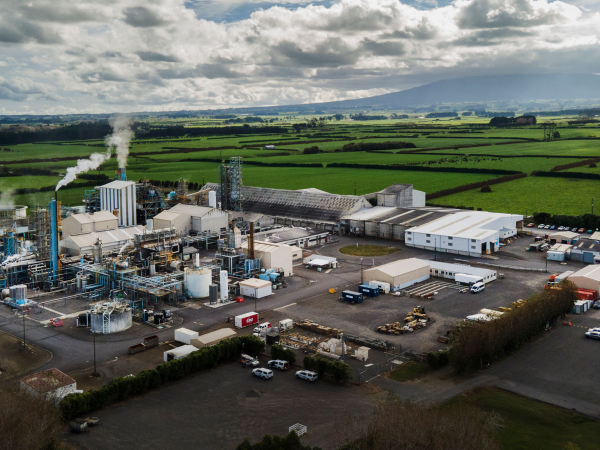
One of New Zealand’s largest fertiliser plants could be forced to shut down for four months as uncertainty looms over gas supply.
The Kapuni urea plant in Taranaki is owned by farmer-owned co-operative Ballance Agri-Nutrients and has been operational since 1982.
It employs around 120 people, manufactures approximately one third or 260,000 tonnes of New Zealand’s urea annually, specifically for use as a nitrogen-rich fertiliser.
Ballance announced this afternoon that it is planning for a short-term shutdown of its Kapuni plant of up to four months if an affordable gas supply cannot be secured.
Ballance CEO Kelvin Wickham says the business is planning for a range of eventualities and working to keep options open should it not secure gas before its current contract ends on 30 September.
“While New Zealand’s gas market is dynamic, the increasing pace of declining gas supply and the impact of this on price will continue to pose challenges for the energy sector and for New Zealand.
“Although we remain optimistic about securing short-term supply, we’re also pragmatic and planning for other outcomes. Right now, it’s prudent to plan for a short-term shutdown.
Read More:
“We recognise the significant impact even a short-term shutdown would have on our employees, shareholders, the wider agricultural sector and the Taranaki regional economy,” he says. “Like many businesses we’re impacted by dwindling New Zealand gas supplies.
“We’ve been working hard to secure a reliable gas supply agreement at a price that is affordable for the business and our shareholders as New Zealand farmers and growers,” he says.
Ballance’s current gas supply agreement expires at the end of September and without a reliable and affordable supply, the co-op is unable to keep the plant operational.
Contingency planning has been a strong focus for Ballance to ensure spring runs smoothly for New Zealand farmers and growers.
“We’ve secured contingency supplies of nitrogen for farmers and growers for spring and our industrial customers have sourced alternative supplies for their GoClear customers, keeping New Zealand’s trucking fleet on the road,” says Wickham.
Wickham emphasises the vital role of soil nutrients in driving New Zealand’s economic prosperity through food and fibre exports, with around 41% of the country’s agricultural exports enabled by Ballance fertiliser.
“While this situation is disappointing, we’re fortunate our business is in a strong underlying position and we’ve factored various scenarios into our forward planning.”