Wool Impact Signs Partnership With ASB To Back Strong Wool Growth
Wool Impact and ASB have signed a new partnership with the bank set to provide financial backing to support the revitalisation of New Zealand's strong wool industry.
 increase font size
 Nathan Penny
Dairy prices are low and likely to stay that way a while longer, according to the latest ASB Farmshed Economics Report.
"After a drought-driven false dawn earlier this year, prices are at their lowest in five years," says ASB's rural economist Nathan Penny.
"This is driven by a potent mix of domestic production getting a second wind and demand remaining weak. However, we still expect production to slow down to the point where demand can catch up, just later than previously expected."
ASB has cut its forecast for the 2015-16 season to $5.70/kgMS as well as adopting Fonterra's lowered 2014-15 milk price forecast of $4.50/kg MS.
Penny says it also now expects the RBNZ to cut the OCR this year, most likely by 25bp in each of September and October.
"The lower interest rate outlook has let some of the hot air out of the NZD, and it has started to fall against most major currencies. Also in the end, the NZD never reached its threatened parity with the AUD. If we do see the NZD weaken over the year, the lower NZD will support farmers' export returns in NZ dollars and make NZ products more competitive in international markets."
Wool Impact and ASB have signed a new partnership with the bank set to provide financial backing to support the revitalisation of New Zealand's strong wool industry.
Fonterra says its interim results show continued momentum in its performance, with revenue of $13.9 billion in the first half of the 2026 financial year.
A solid recovery of global dairy prices this year makes a $9.50/kgMS milk price almost a shoo-in for this season.
Fonterra has slashed another 50c off its milk price forecast as global milk flows shows no sign of easing.
A $10 milk price remains on the cards for this season despite recent softening of global dairy prices.
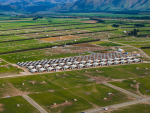

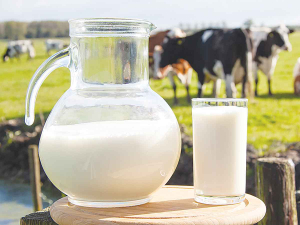
New Zealand dairy farmers are set to be the first in the world to receive access to a new digital physical milk pricing tool that enables them to fix the price for their physical milk.
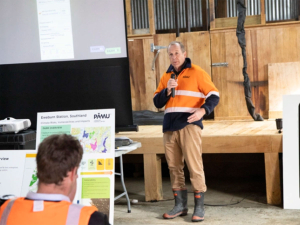
State farmer Pāmu is opening its farm gates this summer in an effort to give the rural sector the opportunity to see how large-scale, multi-system farming is delivering productivity and profitability across New Zealand.
A five-year study has found that the cost of reducing emissions without technology may be significant and unsustainable for Northland dairy farmers.
DairyNZ says Waikato farmers need certainty on Plan Change 1, but they say that certainty must be matched with practical, workable rules and a clear transition that doesn't get ahead of the new resource management system currently under review.
While the Government has moved quickly to make commercial hauliers' lot easier during the current fuel crisis, they appear to be stuck in the creep box when it comes to the agricultural industry.
Waikato farmers have been told that the Government’s new planning system legislation and the region’s Plan Change 1 (PC1) “won’t mesh together very well”.