Open Country Dairy Expands Butter Production with New Plant
The country's second largest milk processor, Open Country Dairy, is building a butter plant at its Awarua site in Invercargill.
 increase font size
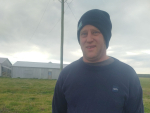
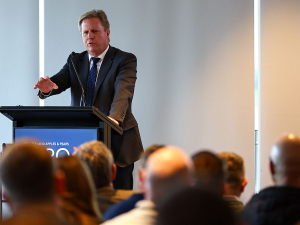
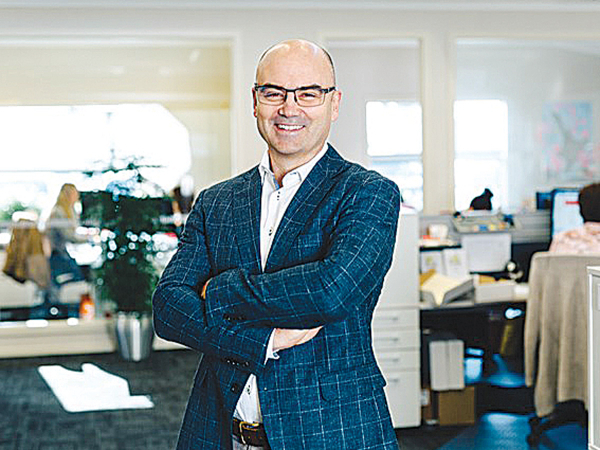 Open Country Dairy chief executive Mark de Lautour.
Open Country Dairy suppliers have received a final payout of $7.37/ kgMS for milk sent to the factories in October and November last year.
Open Country chief executive Mark de Lautour says the final payout was “was at the higher end of our range for the period and reflected that market price improved slightly earlier than we had forecast”.
In his monthly message to farmer suppliers, de Lautour says he expects prices to improve in the coming months.
“We expect further upside in the coming two periods remaining in this milk season, however this is conditional on continued demand – especially following Chinese New Year – and finished product price improvement.”
OCD pays its farmers the full milk price in four periods every 12 months.
The Talley’s-owned business is forecasting a milk price of between $7.50 to $7.80/kgMS for the January period, which covers milk supplied between December last year and January this year. Farmers will be paid in full in March.
For the May period (milk supplied between February and May this year) OCD suppliers can expect a milk price of between $8 and $8.40/kgMS. For September period (June to September supply) Open Country is forecasting between $8.30 and $8.70/kgMS.
Meanwhile, Open Country’s sales team are busy preparing for the Gulfood trade show in mid-February. Held in Dubai, Open Country has a significant presence at this show with the Middle East being a key geographic market for the company.
“While centered around this part of the world, buyers globally attend, so it represents a good opportunity to meet a number of both current and potential customers,” says de Lautour.
The country's second largest milk processor, Open Country Dairy, is building a butter plant at its Awarua site in Invercargill.
When American retail giant Cosco came to audit Open Country Dairy’s new butter plant at the Waharoa site and give the green light to supply their American stores, they allowed themselves a week for the exercise.
Seen a giant cheese roll rolling along Southland’s roads?
Farmers supplying milk to Taupo-based processor Miraka are getting a 2024-25 season base milk price of $10.16/kgMS.
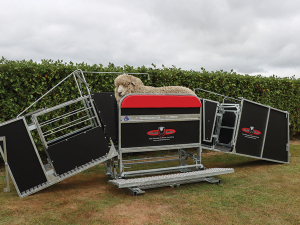
Oamaru-based livestock handling specialist Te Pari has bought Combi Clamp, the New Zealand manufacturer of Combi Clamp manual sheep handlers.
Agriculture Minister Todd McClay has admitted that a scheme bringing workers from Pacific nations to work on orchards has become too hard to navigate but says changes are coming.
A new app designed in New Zealand aims to help sheep, beef and deer farmers capture, analyse and use body condition score data more effectively.
Canterbury farmer Andy Macfarlane has been appointed to the board of AgriZeroNZ, the public-private partnership designed to accelerate the development and deployment of emissions reduction tools for New Zealand farmers.
For over 50 years Mel Ewers has been supporting the apple sector navigate through compliance and quality assurance issues.
The apple sector is enjoying a bumper harvest season.