Inside the Southland Dairy Farm Where Robots and Pasture Work Together
In Dacre, near Invercargill in New Zealand’s South Island, Bruce Dinnington is running a dairy operation unlike any other.
 increase font size
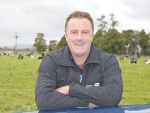
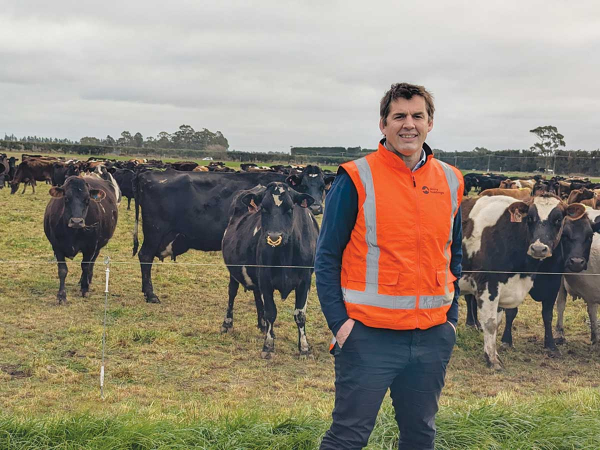 Dairy Holdings chief executive Blair Robinson says the business was very disciplined around a farming system that hasn’t changed in a long time.
Running a tight and self-contained ship is the key to the success of the country's largest dairy farmer, says Blair Robinson, the new man at the helm of Dairy Holdings.
Robinson took on the role when the company's inaugural chief executive officer, Colin Glass, stepped away at the end of May.
He was formerly the Dairy Holdings chief operating officer, a role created eight years ago to help grow the business, focus on farm performance and provide for succession.
From its beginnings with about 30 farms in 2001, the Ashburton-headquartered company now has about 90 farms on its books, 69 of them dairy production and the rest support blocks.
Robinson said that as COO, he initially concentrated on the dairy farms before changes in the executive team saw him pivoting to add the dairy support farms as well.
"It's a big part of our business because we're fully self-contained," he told Dairy News.
"We don't go out to the market for any grazing for our young stock, or for our wintering."
Robinson said the business was very disciplined around a farming system that hasn't changed in a long time. He added that the management was fortunate to have a group of shareholders that was very stable and took a long-term view.
"We follow the pasture curve and the only feed we put on is to get our pasture curve back to where we want it.
"It's a little bit different to many farmers who are bringing in purchased feed to make milk. We're bringing it in to make sure we've got enough grass going forward."
The self-contained model helped Dairy Holdings remain unscathed by the Mycoplasma bovis epidemic and is now helping insulate the company from external price shocks.
Robinson points out that many dairy farms in New Zealand buy in significant amounts of feed - and those input prices "have really jumped up in the last six months".
Robinson says it keeps things simple.
"If we were running a system that was using more purchased feed, it would create more decisions to make during the season."
He said it was a matter of matching pasture supply with pasture demand and stocking rates through the year. Culls are removed early, to ensure enough grass to feed the pregnant cows so they're in good condition by the end of May, and the farm has enough grass for calving in August.
"We're never second guessing how we are going to run the farms.
"All we're trying to do is the same thing we did the prior year, just slightly better."
Robinson adds that the sector has an issue with pasture productivity, with pasture harvested by stock on many farms diminishing, and increasing amounts of purchased feed being used.
"This is and will erode New Zealand's competitive advantage in the global market."
Robinson says Dairy Holdings has been performing well and growing, and there will be no wholesale changes with him at the helm.
The business was not just about milk but was increasingly a people business, with about 450 people now employed, either directly or through its various contractors and sharemilkers.
Growing cows and grass is not easy but finding and retaining good people make it that much easier, he says.
Dairy Holdings currently has eight sharemilkers, 57 contract milkers and 19 farm managers (including dairy and dairy support) as part of the team. It encourages its people to build their own herds and move up through the system, with any direct company employees in areas such as finance and health and safety also able to own animals.
Blair Robinson says Dairy Holdings was very proud of the number of couples - now approaching 60 - who had come through its system and gone on to buy their own farms.
"Three of our sharemilkers bought their own farms last season, which is quite incredible given land prices in Canterbury have jumped up a bit in the last 24 months."
Robinson himself is an equal partner with Mick and Kirsten O'Connor and one other in a 278ha, 1000-cow farm at Burnham. He says the farm has very good soils and irrigation, and benchmarking with others shows the farm has "really good numbers".
But he is not hands-on, except when he comes at weekends to tackle only the "most manual" tasks.
"I just get out of Mick and Kirsten's way. They're the real farmers."
Dairy Holdings has recently divested itself of the remaining three Westland Milk Products supplying farms in the Spring Junction area, to consolidate operations to Canterbury, Waitaki and Southland, supplying only Fonterra.
Blair Robinson says these are the areas where the company sees further opportunities for growth.
It has also beeen selective in buying farms where irrigation costs are likely to remain low.
In Dacre, near Invercargill in New Zealand’s South Island, Bruce Dinnington is running a dairy operation unlike any other.

OPINION: Succession and long-term planning are perennial topics because it is perpetually sidelined on busy farms.
For Taupiri dairy farmers Logan and Sian Dawson, their involvement in the NZ Dairy Industry Awards has been a key catalyst in the growth of their business - the experience helping shape how they approach the farm ownership pathway they are pursuing today.
OPINION: As the general election approaches, political parties are churning out policies in the hope of attracting more votes.
With forecasters advising El Niño conditions will develop through winter and strengthen into spring and summer, Ballance Agri-Nutrients is encouraging farmers and growers to think ahead about nutrient planning and be prepared to work around challenging weather conditions.


Federated Farmers says it welcomes Labour's commitment to reviewing the Sharemilking Agreements Act, calling on other major parties to do the same.
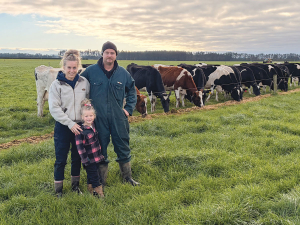
For Canterbury dairy farmers Sian Meijer and Rick Wobben, wearable technology has become one of their most valuable on-farm tools - helping manage 1850 cows across an expansive, high-performing dairy operation while improving efficiency, mating outcomes and day-to-day decision making.
Fonterra has unveiled its annual results for the 2026 financial year, posting $27 billion in revenue and close to $20 billion returned to New Zealand farmer owners and unit holders.
The first major update to the Dairy Cattle Code of Welfare in more than a decade has been released, marking what DairyNZ describes as an important step in ensuring animal welfare standards continue to evolve alongside scientific evidence and on-farm realities.
Ravensdown shareholders have elected Jane Montgomery and Kate Acland to the Ravensdown Board for three-year terms, following a closely contested director election.
Federated Farmers says new legislation replacing the Resource Management Act will cut red tape, unlock investment and help grow New Zealand's export-led economy, after the Planning Bill and Natural Environment Bill passed their third reading in Parliament yesterday.