Cyclone Gabrielle: Hawke's Bay Orchardists Still Recovering
Three and a half years on from when Cyclone Gabrielle hit Hawke's Bay, some orchardists in the region are still receiving counselling to help them deal with the trauma they suffered.
 increase font size
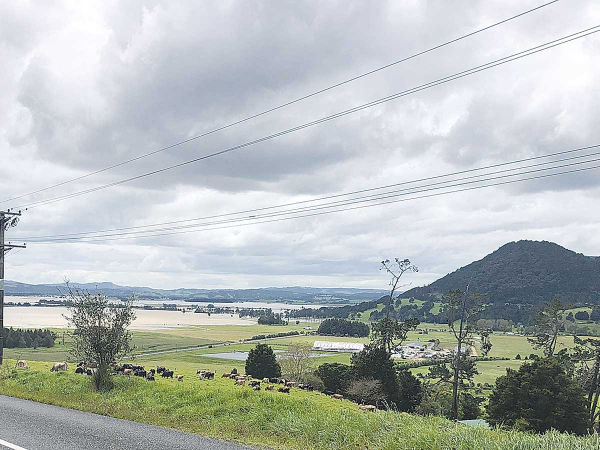 Many dairy farms in Northland remain without power.
Rural towns completely cut off with no or limited electricity, water, food and telecommunications, blocked roads, flooded and wrecked homes and buildings, paddocks and orchards turned into lakes.
And even worse, the tragic loss of life in both urban and rural areas.
And the Ministry for Primary Industries (MPI) last week said it would take a week before the full impact of Cyclone Gabrielle is known.
The storm left a path of destruction severely testing the true resilience of rural communities in the upper, central and East Coast of the North Island. The rural town of Wairoa on the East Coast has been among worst hit.
Cyclone Gabrielle is already being described as one of the worst natural disasters to hit NZ.
As Dairy News went to press it was impossible to make contact with some of the worst affected areas because cell phone communications were down. At the same time various local and central government agencies along with industry organisations were scrambling to get a handle on the extent and scale of the damage. Some of the scenes coming out of rural areas were harrowing to say the least and vividly shown on national television and newspapers.
Nick Story, MPI’s director – rural communities and farming support told Dairy News that the full impact of it may take a week or more to get clarity on.
He says the dairy regions have been badly hit and up to 150 farmers in Northland either couldn’t milk their cows due to power outages or had to dump milk because it could not be collected due to multiple road closures.
Story says it’s still too early to get an accurate figure on stock losses, but says there are clearly many. He says efforts are being made to get generators to farmers because getting the power back on in isolated areas may take quite a while.
“We are working with the NZ Veterinary Association to produce guidance for farmers to help them with whatever animal welfare issues may come up. A key issue is to ensure that animals are fed and have clean water as soon as possible,” he says.
Story says there are major problems for commercial growers and orchardist who have seen floodwater rising above their trees and vines and inundating vegetable crops. He says some meat processing plants have been flooded and that’s added to the woes of farmers who were trying to destock.
He says the while this storm is bad, it’s the compounding effect of this and other storms, including cyclone Hale, that have hit the same regions in the past six months. Tairawhiti in particular has been hammered and damage from previous storms has not been repaired.
Three and a half years on from when Cyclone Gabrielle hit Hawke's Bay, some orchardists in the region are still receiving counselling to help them deal with the trauma they suffered.

Testing confirms H5 bird flu in a single northern giant petrel, found dead on a remote Cape Palliser beach in the Wairarapa, says Dr Mary van Andel, the Ministry for Primary Industries' (MPI) Chief Veterinary Officer.
The apple sector is working with the Government to unlock access to two key markets that could bring millions in revenue for apple growers.
A Palmerston North shearer has been sentenced to six months' community detention and 12 months' supervision after being found to have physically abused three lambs while shearing them.
OPINION: A simpler, clearer, more effective Recognised Seasonal Employer (RSE) scheme.


Federated Farmers has welcomed new rural policies released by ACT, saying they align closely with its own election priorities.
Rural Contractors NZ says proposed changes to land transport rules for agricultural vehicles are a welcome response by the Government to out of date regulations which have seen members hit with huge fines.
Alliance is calling for final applications for its 2027 Graduate Programme, with applications closing on Sunday 25 October.
Decades piloting planes has ensured vet and farmer David Hayes is focused on safety. So, after a serious accident while welding on farm, he is sharing his experience so others can learn from it.
Canterbury milk processor, Synlait Milk has confirmed Leon Fung as its chief executive officer.
OPINION: Making it easier to collect rainwater and use it to grow crops and livestock is a no brainer.