Federated Farmers Backs Year 11 Agricultural Science
Federated Farmers is backing Feilding High School’s call to keep Agriculture and Horticultural Science as a standalone subject in Year 11.
 increase font size
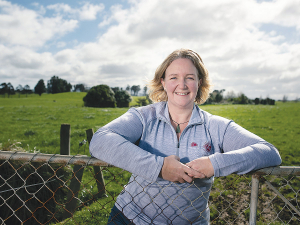
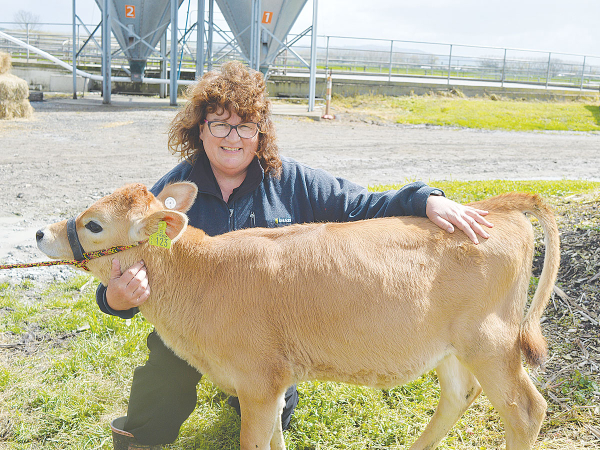 Ngatea farmer, Julie Pirie says students, who are from town and have no experience on a farm, come to the farm for five nights a week during the calving season.
From August each year a special group of 'helpers' descend on Julie and Brian Pirie's farm at Ngatea in the Hauraki Plains.
They are primary school students from nearby Ngatea Primary School and until mid-October their job is to choose a pet calf, clean them, brush them and lead them around a special course.
In mid-October the calves are washed and taken by the students to the annual calf club day at school, where the calves and students compete in an obstacle course. They are also judged on leading, rearing and conformation. Ribbons and prizes are awarded to winning students.
Julie Pirie say between 10 and 15 students, who are from town and have no experience on a farm, come to the farm for five nights a week.
They end up competing with about 50 other students who come from farms around the district. The Piries milk 900 cows on a 274ha (eff) property.
Pirie had the idea to start her own calf club on farm around 15 years ago when she was serving as a trustee at the school.
"I heard that five students were pulled up for poor behaviour and their excuse was that they were bored and had nothing to do," she told Dairy News.
"I remember seeing an article about someone starting a calf club to keep students occupied. I thought, let's bring them to our farm."
She says the experience has been rewarding and she believes that the programme has been making a difference to the students.
"We've had children from disadvantaged backgrounds coming here, being given an opportunity to occupy themselves with an activity and then getting rewarded with ribbons on calf club days for their efforts in looking after the calves.
"It is boosting their self-esteem. For example, one girl feared calves when she first came out here, now she's right into it."
Calf club in New Zealand have been around for over 100 years ago. The earliest recording of a calf club event was in 1911 when the Boys and Girls Agricultural Group began in Otago. Pirie says the natural partnership of children and young animal was encouraged, as farmers recognised the benefits of children being responsible for training and caring for a young animal.
In regions around the country, the enthusiasm of farming parents, combined with local schools, gave life to calf clubs.
Today, many dairy farmers and their children look back with affection at the time they spent selecting, feeding and training calves for calf club and the events continue to be held each year in many rural schools and communities across New Zealand.
Federated Farmers is backing Feilding High School’s call to keep Agriculture and Horticultural Science as a standalone subject in Year 11.

Pāmu has welcomed Taranaki student Paige Burston as its newest First Foundation Scholar, supporting her journey towards a career in agriculture and animal science.
Kaikōura families affected by July's severe storm have found a practical solution to a problem that's kept some children away from regular schooling for weeks: a washed-out section of Inland Kaikōura Road, which has stopped the local school bus from running its usual route.
Special courses for secondary school teachers to help excite kids about agriculture and horticulture are now being run at Massey University.
The Government has announced a new rural scholarship designed to back emerging primary sector leaders.

As part of its Election 2026 coverage, Rural News asked political parties how they would help pull the arable sector out of the doldrums. Here's what they said:
Farmers are being encouraged to rethink how they manage waste on farm with the launch of ruralwastesorted.co.nz, a new website bringing together practical tips, real farmer experiences and resources.
New Zealand Winegrowers (NZW) is celebrating the India-New Zealand Free Trade Agreement (FTA) coming into force today, bringing New Zealand wine improved access to one of the world’s fastest-growing economies.
New Zealand’s red meat sector has welcomed the India-New Zealand Free Trade Agreement taking effect, which removes India’s 33% tariff on New Zealand sheepmeat.
More than 95 per cent of New Zealand’s forestry and wood exports to India can now enter tariff free as the New Zealand-India Free Trade Agreement comes into force today.
Federated Farmers is backing Feilding High School’s call to keep Agriculture and Horticultural Science as a standalone subject in Year 11.