$10/kgMS milk price tipped for strong 2025/26 season start
The 2025-26 season is set to start on a high and a $10/kgMS opening forecast milk price isn't being ruled out.
 increase font size
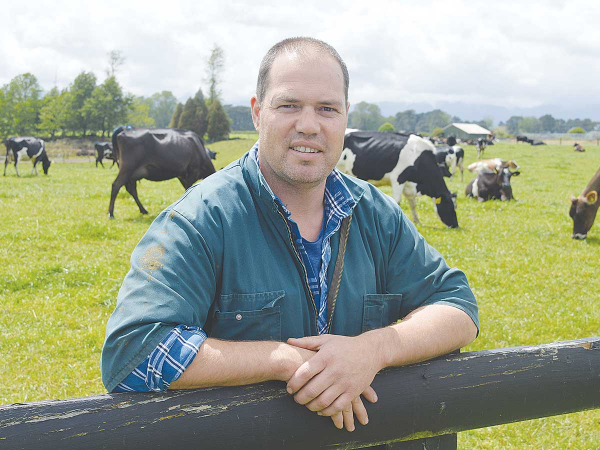 Fonterra Co-operative Council chair James Barron says a diverse range of products and markets has allowed the co-op to respond to disruptions around the globe.
Fonterra's council chair says the co-operative's third quarter results show the benefits of having a business of scale.
Fonterra Co-operative Council chair James Barron says a diverse range of products and markets has allowed the co-op to respond to disruptions around the globe.
"The results show again the benefits of joining together to form a co-operative of scale," says Barron.
"Utilising all of our diverse range of products and markets to respond to disruptions across the globe continues to underpin our co-op's performance."
Fonterra's third quarter result was a mixed bag: for nine months ending April 30, total normalised EBIT was $825 million, down $134 million, reflecting lower sales volumes, continued pressure on margins from the significantly higher milk price, on-going Covid-19 disruptions and the rapid decline of the Sri Lankan Rupee.
This was also reflected in Fonterra's net profit, down $131m to $472m.
The co-op's businesses in Greater China and Asia Pacific suffered due to Covid and Sri Lankan unrest. However, its Americas and Middle Eastern business performed very well.
The co-operative copped am $81 million hit in the key market of Sri Lanka, which has been facing political turmoil.
A rapid decline of the Sri Lankan rupee means it takes more Sri Lankan rupee to pay for Fonterra product purchased from New Zealand, which is sold in US dollars.
Sri Lanka is one of the few countries in the world where Fonterra collects and processes milk.
According to its website, since 1997, Fonterra Brands Lanka has been collecting milk from its local farmers for set and stirred yoghurt, drinking yoghurt, fresh milk and flavoured milk. Currently, milk is collected from 4,500 local dairy farmers. Sri Lanka is also a key market for milk powder from NZMP.
While Sri Lanka impacted Fonterra's APAC business, the co-operative's Africa, Middle East, Europe, North Asia and the Americas division (AMENA) continued to deliver a strong performance.
Normalised EBIT for AMENA was $406 million, up 30% due to improved gross margins in the ingredients channel, and a strong performance from the Chilean business.
However, Fonterra also took a hit in its Greater China divisions, thanks to Covid lockdowns in key cities.
In Greater China, ingredients continued to benefit from increased sales of higher margin products. However, normalised EBIT was down 17% to $317 million, due to continued pressure on margins from the higher milk price, particularly in foodservice, as well as the Covid-19 lockdowns.
Hurrell says he expects the impact of the lockdowns to show up in our fourth quarter results.
"Aside from some supermarkets, all restaurants and other food outlets were closed in Shanghai in early April to contain the Omicron outbreak.
"While restrictions have started to ease, a number of food outlets remain closed, while other cities across China are facing Covid-19 restrictions.
"The impacts of this, and the disruptions to supply chains, have been felt across the market are reflected in our Greater China sales volumes which are down on the same time last year."
The 2025-26 season is set to start on a high and a $10/kgMS opening forecast milk price isn't being ruled out.

After 20 years of milking cows, Northland farmer Greg Collins is ready to step into the governance side of dairy.
Fonterra farmers are pleased with their co-operative's interim results, says Co-operative Council chair John Stevenson.
Fonterra shareholders are concerned with a further decline in the co-op’s share of milk collected in New Zealand.
Fonterra's proposed sale of its global consumer business could fetch over $3 billion but not all proceeds will end up in the pockets of farmer shareholders.


High country stations, mixed sheep and beef farms, Māori-owned farms, corporates and family operations are among the nine commercial farms taking part in the Livestock Innovation Farming Transformation programme, known as LIFT.
OPINION: New health and safety guidance unveiled by the Government recently provides farmers greater certainty about what is expected of them when managing risks on farm.
The National Animal Welfare Advisory Committee (NAWAC) is seeking public feedback on proposed changes to the Code of Welfare for Rodeos.
A New Zealand initiative supporting farmers to restore the health of grazing landscapes has received international backing through the Regenerative Fund for Nature, a global collaborative fund supporting regenerative agriculture and the communities that produce natural fibres for the fashion industry.
Combine premium New Zealand products, blend in a family ritual and what do you get? A world-class functional drink.
Entries are now open across eleven regions for the 2027 New Zealand Dairy Industry Awards (NZDIA).