Fonterra FY26 Results: $9.69 Milk Price, $3.4bn Profit
Fonterra has unveiled its annual results for the 2026 financial year, posting $27 billion in revenue and close to $20 billion returned to New Zealand farmer owners and unit holders.




 increase font size
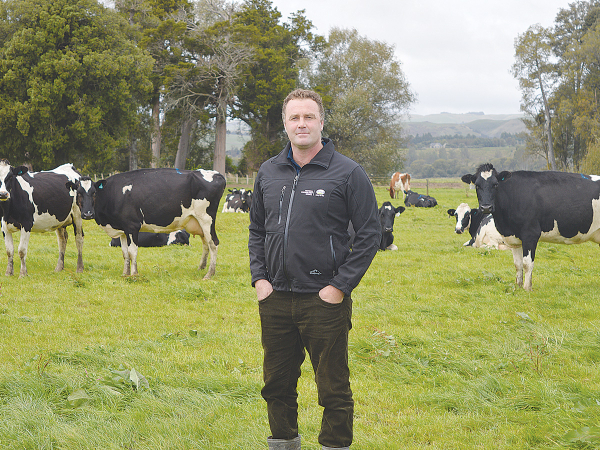 Fonterra Co-operative Council chair John Stevenson.
Fonterra shareholders are concerned with a further decline in the co-op’s share of milk collected in New Zealand.
Last season, the co-operative’s share of NZ milk dropped to 78.1%, below a target of 79%.
Fonterra Co-operative Council chair John Stevenson told the co-op’s annual meeting in New Plymouth yesterday that farmers are concerned.
“Council sees retention of milk as a key measure of success of the introduction of the flexible shareholding capital structure and Fonterra’s revised strategy,” Stevenson says.
Fonterra chairman Peter McBride agreed that its faces increasing competition for both milk and capital at home. However, he says opportunity still exists for the co-op.
“We are and always will be a New Zealand farmer-owned co-op, but we are also a global export business. When considering our strategy, we need to challenge ourselves to look beyond the back fence, and past the here and now.”
He also noted that the world was moving out of an era of trade liberalisation and co-operation and into a world that is more expensive, competitive and volatile. Expectations are evolving and New Zealand milk is becoming scarce, he notes.
“Customers are increasingly calling on us to partner with them to improve their sustainability and innovation capabilities. And there’s even more focus on sustainability from banks, regulators, and from a market access perspective.
“The cost of capital has increased, and many industries – including agriculture and our bankers– face higher capital requirements.
“In this new global context, Fonterra also faces increasing competition for both milk and capital here at home. That all sounds inherently negative, and it’s certainly not without risk, but the opportunity for us still absolutely exists.
“Demand for dairy continues to grow and, in a rapidly changing world, we are uniquely positioned to capitalise on any shifts.”
McBride says Fonterra has high quality New Zealand milk which is becoming scarce.
“And most critically, we have scale. That gives us great confidence in the future of our co-op. Success will come by focusing on our comparative advantages, simplifying the business to meet that, and then aligning our people to achieve that singular vision.”
Fonterra has unveiled its annual results for the 2026 financial year, posting $27 billion in revenue and close to $20 billion returned to New Zealand farmer owners and unit holders.
Fonterra Co-operative Group has confirmed the independently assessed candidates standing for election to its board in 2026.
Fonterra has revised its Farmgate Milk Price forecast for the 2026/27 season, lifting the midpoint and narrowing the range on the back of improving global dairy commodity prices.
Outgoing Fonterra Co-operative Council chair John Stevenson says that it has been a privilege to represent the co-op's farmer shareholders.
OPINION: Succession and long-term planning are perennial topics because it is perpetually sidelined on busy farms.



LIC shareholders have elected a new North Island representative to the co-operative's Board, along with five representatives to its Shareholder Reference Group (SRG), following the company's Annual Meeting held in Invercargill.
Farmers across parts of Southland and South Otago are continuing to deal with difficult conditions after a prolonged run of wet weather, with pressure building around feed supply, stock management, pasture damage, farm infrastructure and everyday workloads.
Federated Farmers says it welcomes Labour's commitment to reviewing the Sharemilking Agreements Act, calling on other major parties to do the same.
For Canterbury dairy farmers Sian Meijer and Rick Wobben, wearable technology has become one of their most valuable on-farm tools - helping manage 1850 cows across an expansive, high-performing dairy operation while improving efficiency, mating outcomes and day-to-day decision making.
Fonterra has unveiled its annual results for the 2026 financial year, posting $27 billion in revenue and close to $20 billion returned to New Zealand farmer owners and unit holders.
The first major update to the Dairy Cattle Code of Welfare in more than a decade has been released, marking what DairyNZ describes as an important step in ensuring animal welfare standards continue to evolve alongside scientific evidence and on-farm realities.





OPINION: The same mainstream media muppets that brought you Jacindamania in 2017 have been flat out pimping for the Opportunities…
OPINION: Your old mate reckons the atrocious way farmers in the UK are treated by their lords and masters in…




