Reserve Bank rules bleeding farmers dry - Feds
There are calls for the Reserve Bank to drop its banking capital rules, which Federated Farmers says is costing farmers a fortune.
 increase font size
 Reserve Bank governor Graeme Wheeler.
Dairy remains a key risk to New Zealand’s financial stability says the Reserve Bank.
The bank is reviewing the capital commercial banks must hold as sufficient provision for the dairy industry’s debt.
And it is concerned about housing market vulnerability and bank funding pressures.
Auction prices for whole milk powder have increased 69% since July and Fonterra has raised the farmgate forecast to $6/kgMS, which is likely to return the average dairy farm to profitability, says Reserve Bank governor Graeme Wheeler in his six monthly financial stability report.
“Nevertheless, parts of the dairy sector remain under significant pressure,” he adds.
“In aggregate, dairy farms have reduced costs, but there is significant variation in cost structures across farms. Even with the improvement in dairy payouts, some farms may struggle to achieve profitability, especially given that 20% of farms account for about 50% of overall dairy debt.”
Debt levels have been stretched further as dairy farms have borrowed working capital to absorb operating losses over the past two seasons. High debt levels leave the sector vulnerable to any weakness in dairy prices.
With recent price improvements, credit losses are likely to be lower than suggested by the more severe scenarios in stress tests of banks’ dairy exposures last year, Wheeler says. Nevertheless, problem loans are likely to increase further, as losses take time to materialise.
Therefore, he says, banks should ensure provisions and other buffers are appropriate for expected losses.
There are calls for the Reserve Bank to drop its banking capital rules, which Federated Farmers says is costing farmers a fortune.

ANZ says the latest cut to its floating rates will be welcome news to many of its business and agri customers still feeling the effects of high inflation and interest rates.
Rabobank New Zealand will reduce the variable base rate on its rural loans by 0.5%, effective from 16 October 2024.
OPINION: If ever there was a need to look at rural bank lending, then this is it.
OPINION: Your canine crusader notes that the Reserve Bank forecasts that more than 80% of beef and sheep farmers would be unprofitable if any future emissions pricing on carbon dioxide equivalent hit $150 per tonne.


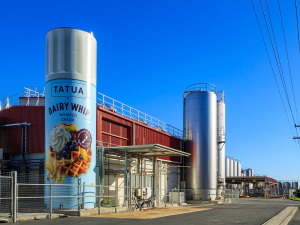
Waikato milk processor Tatua has again declared a record milk payout to farmer shareholders, leaving other processors in the dust.

A Labour-led Government won’t be bringing back the controversial freshwater rules of 2020.
National’s much-touted free trade deal with India featured in the Rural Issues Debate at Mystery Creek, Hamilton on Wednesday night.
New Zealand's 2026-27 freshwater fishing season has opened, with anglers encouraged to head to rivers and lakes over the coming days as conditions look favourable across much of the country.
Central Otago District Council (CODC) has voted against a plan to spread treated sewage sludge from Cromwell and Alexandra on farmland near Lauder, a decision Federated Farmers says reflects strong opposition from rural residents.
Pāmu has released its FY26 Integrated Annual Report, reporting a Net Operating Profit of $113 million, more than double the $49 million recorded in FY25.