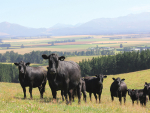
BVD Control Begins Long Before You See A Problem
Bovine Viral Diarrhoea (BVD) is sometimes viewed as a dairy industry issue, but the reality is that the disease can have serious consequences for beef breeding herds as well.




 increase font size
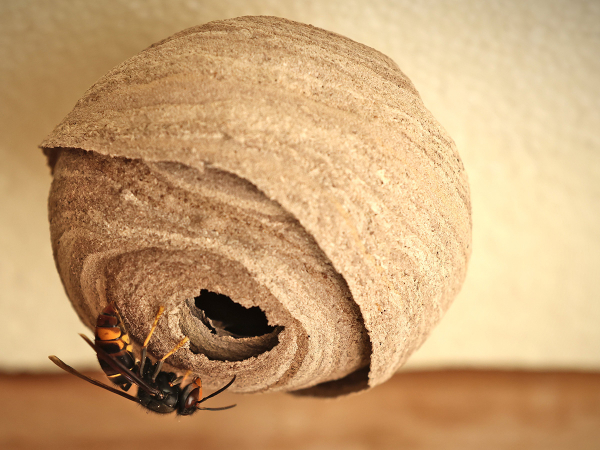 Biosecurity New Zealand wants to hear from anyone who has a suspected hornet specimen, has located a possible nest, or has taken a clear photo.
Biosecurity New Zealand says Kiwis should continue to keep an eye out for yellow-legged hornets (Vespa velutina) over the holiday season.
Mike Inglis, Biosecurity New Zealand Commissioner North, says there has been great response from the public so far, with more than 6,870 notifications.
He says that the Biosecurity New Zealand team will be working over the holiday season to track and eradicate the hornet.
To date, 38 queen hornets have been found and 25 of those hornets were found with nests.
“Our intensive ground surveillance work and operations across Auckland’s North Shore to find hornet nests has been working well with more than 6,540 ground surveys completed, and that will continue as we move through summer," Inglis says.
"Based on overseas experience, the science tells us that we may find more hornets over in the next few months and we’re prepared for that," he adds.
“We now have more than 780 traps in place out to 11km from where the hornets were found in Glenfield and Birkdale. The international experts guiding our response are providing the most up-to-date advice and information about the hornet and that is feeding into our work.”
Inglis says that next month, with the help of visiting hornet experts from the United Kingdom, Biosecurity New Zealand will look to attach advanced trackers to hornets so they can be traced back to nests.
“As the weather continues to warm, hornets can start to make bigger nests high up in trees and this technology from the Netherlands will help us find and destroy them alongside our continuing surveillance work on the ground.
“If the public can continue to keep an eye while they are enjoying their Christmas break, that will help the work we are doing,” says Inglis.
“We’ll continue to adapt our work to what we see over the summer in line with our Technical Advisory Group’s advice. The TAG draws on the expertise from New Zealand scientists and our overseas colleagues with extensive first-hand experience of the hornet.”
Biosecurity New Zealand wants to hear from anyone who has a suspected hornet specimen, has located a possible nest, or has taken a clear photo.
You can report sightings:
Bovine Viral Diarrhoea (BVD) is sometimes viewed as a dairy industry issue, but the reality is that the disease can have serious consequences for beef breeding herds as well.

Election years are always a concerning time for farmers, according to DairyNZ chair Tracy Brown.
Testing confirms H5 bird flu in a single northern giant petrel, found dead on a remote Cape Palliser beach in the Wairarapa, says Dr Mary van Andel, the Ministry for Primary Industries' (MPI) Chief Veterinary Officer.
Bovine Viral Diarrhoea (BVD) is sometimes viewed as a dairy industry issue, but the reality is that the disease can have serious consequences for beef breeding herds as well.
Four years since it was first detected in New Zealand, researchers and growers now know much more about management of maize pest fall armyworm (FAW).



National’s much-touted free trade deal with India featured in the Rural Issues Debate at Mystery Creek, Hamilton on Wednesday night.

New Zealand's 2026-27 freshwater fishing season has opened, with anglers encouraged to head to rivers and lakes over the coming days as conditions look favourable across much of the country.
Central Otago District Council (CODC) has voted against a plan to spread treated sewage sludge from Cromwell and Alexandra on farmland near Lauder, a decision Federated Farmers says reflects strong opposition from rural residents.
Pāmu has released its FY26 Integrated Annual Report, reporting a Net Operating Profit of $113 million, more than double the $49 million recorded in FY25.
Meat Industry Association data, released alongside the Red Meat Sector conference in Wellington, shows export value climbing across the US, China, UK and Canada.
Applications are set to open for the 2027 Zanda McDonald Award, a trans-Tasman award recognised for identifying and fast-tracking talented young leaders in agriculture and agribusiness.



OPINION: The same mainstream media muppets that brought you Jacindamania in 2017 have been flat out pimping for the Opportunities…
OPINION: Your old mate reckons the atrocious way farmers in the UK are treated by their lords and masters in…




