Fonterra FY26 Results: $9.69 Milk Price, $3.4bn Profit
Fonterra has unveiled its annual results for the 2026 financial year, posting $27 billion in revenue and close to $20 billion returned to New Zealand farmer owners and unit holders.
 increase font size

FONTERRA AND the Department of Conservation (DOC) are a year into their 10 year partnership to improve the Waituna catchment and marked the moment with a Community Open Day today (July 25).
The open day was a chance for the local community to see the work being undertaken at Waituna by Fonterra and DOC and in conjunction with Ngai Tahu, the Southland District Council and Environment Southland.
Students from Gorge Road School took part in activities including demonstrations with freshwater scientists, a live fish tank display of local freshwater species and a BBQ lunch. Attendees also got the chance to hear about plans for catchment over the next 12 months, suggest ideas and sign-up for future volunteer opportunities.
Fonterra Living Water project manager, Nicola Toki, says the focus of the event was on celebrating community involvement, but she also wanted people to understand how the work being undertaken at Waituna contributed to restoring this important wetland and the health of Southland's waterways.
"In the first year our focus has been on monitoring and science. We've got to get this right to ensure the whole project sets off in the right direction and can make a real difference," she says.
"We've also identified that protecting and enhancing remaining wetland fragments on private land can have a significant effect on the health of the catchment and will be working with our farmers to protect these areas."
Eel habitat study launch
Earlier in the year, the Fonterra and DOC launched its first flagship project in the catchment– a scientific research study into eel habitats with the Cawthron Institute.
DOC commercial partnerships director Geoff Ensor says, "Eels are an important part of the wetland landscape. The project will produce a traffic light system to help famers ad the public make decisions about how to protect crucial wetland habitat for eels."
Ensor says the first year of the partnership laid the foundations for initiatives scheduled for the next 12 months that would begin to make changes to the health of the catchment.
"Now that we have key parts of the science and measurement in place, we can really get out hands dirty - working with farmers to protect wetland fragments on their properties, trialling different pasture types to reduce phosphorous losses, installing and monitoring two passive filters to reduce nitrogen and phosphorous loss and working with the community to plant along various banks and waterways," he says.
Working with farmers
There are about130 farms in the Waituna catchment and 36 of these are Fonterra farms. Toki says that farmers have been very supportive of the partnership's efforts and are actively involved.
"Our farmers are doing great work already, fencing waterways and taking a hands-on approach to understanding nitrogen leaching risk. Our aim is to complement and enhance these activities with robust science to support decision making," she says.
The Awarua-Waituna wetlands cover 3500 hectares, including the 1350 hectare Waituna Lagoon. It is listed as a wetland area of international significance by the Ramsar Convention, an international treaty promoting the conservation and sustainable use of wetlands around the world.
About the Fonterra DOC partnership
The Fonterra DOC partnership involves similar work with local communities to improve water quality at four other catchment sites in significant dairying regions. The other Fonterra DOC catchments are Kaipara Harbour, Firth of Thames, the Waikato Peat Lakes and Waihora-Lake Ellesmere.
Fonterra has unveiled its annual results for the 2026 financial year, posting $27 billion in revenue and close to $20 billion returned to New Zealand farmer owners and unit holders.
Fonterra Co-operative Group has confirmed the independently assessed candidates standing for election to its board in 2026.
Fonterra has revised its Farmgate Milk Price forecast for the 2026/27 season, lifting the midpoint and narrowing the range on the back of improving global dairy commodity prices.
Outgoing Fonterra Co-operative Council chair John Stevenson says that it has been a privilege to represent the co-op's farmer shareholders.
OPINION: It seems Canterbury processor Synlait is still in the doldrums.


Federated Farmers says it welcomes Labour's commitment to reviewing the Sharemilking Agreements Act, calling on other major parties to do the same.
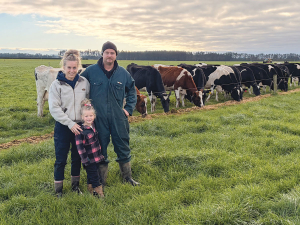
For Canterbury dairy farmers Sian Meijer and Rick Wobben, wearable technology has become one of their most valuable on-farm tools - helping manage 1850 cows across an expansive, high-performing dairy operation while improving efficiency, mating outcomes and day-to-day decision making.
Fonterra has unveiled its annual results for the 2026 financial year, posting $27 billion in revenue and close to $20 billion returned to New Zealand farmer owners and unit holders.
The first major update to the Dairy Cattle Code of Welfare in more than a decade has been released, marking what DairyNZ describes as an important step in ensuring animal welfare standards continue to evolve alongside scientific evidence and on-farm realities.
Ravensdown shareholders have elected Jane Montgomery and Kate Acland to the Ravensdown Board for three-year terms, following a closely contested director election.
Federated Farmers says new legislation replacing the Resource Management Act will cut red tape, unlock investment and help grow New Zealand's export-led economy, after the Planning Bill and Natural Environment Bill passed their third reading in Parliament yesterday.