Fonterra CFO Andrew Murray Resigns
Fonterra Co-operative Group chief financial officer Andrew Murray has resigned to take up a role outside the dairy giant.
 increase font size
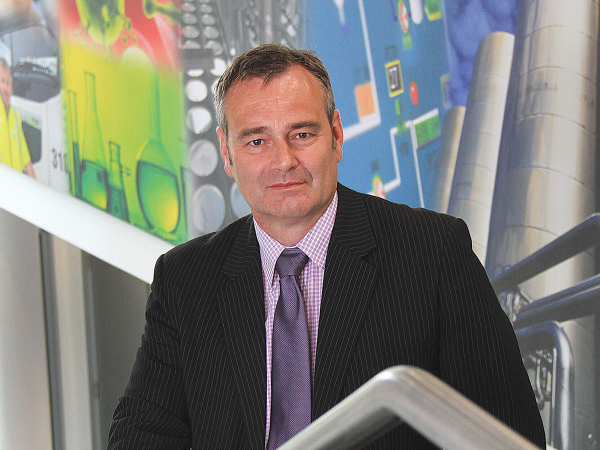 Jeremy Hill, Fonterra’s chief technology officer
Common sense and good human judgement are still a key requirement for the super highly qualified staff working at one of New Zealand's largest and most important research facilities - Fonterra's R&D Centre at Palmerston North.
The centre employs more than 350 staff from 46 countries of whom nearly a third have PhDs. It's a unique hub of excellence and innovation which had its beginning in 1927 and now, nearly a century later, continues to discover new ways to produce world-class products from the more than five million NZ cows.
The innovation from this establishment is legendary and it continues to produce new products and or ingredients that meet the demands of customers and consumers.
Professor Jeremy Hill is Fonterra's chief technology officer who has a role in recruiting staff and says it won't always be those PhDs but for those who have what he calls 'trade craft' with excellence in science and engineering.
"That's a starting point or prerequisite. We also want people who have the right ability to work both on their own and collegially in teams and those teams are not just your immediate colleagues, but obviously across different organisations in our case different countries because we must operate way beyond the confine of NZ to do our work," he says.
Hill says people who work at the Fonterra R&D facility have got to have broader skill sets than just science, technology, engineering and relationship skills. He says they need people who are truly innovative who can think beyond where we currently are and put disparate pieces of information together.
"Like, put one and one together and come up with a lot more than two. We don't need all out staff to be like this, but we need enough of them to drive our innovation," he says.
All this begs the question, how do you find such people? Hill says track record - what they have done in the past - is a good predictor of the future. He says they look at people who have been innovative early in their career. He says young people obviously bring the latest, greatest skills in terms of their education and development. And they are 'digital natives' so ICT-based technology is second nature to them.
"But we are also looking for people who are mid-career onwards who... had the opportunity to create a track record, and people from other countries. I once did the A to Z count here and we had someone from Zimbabwe here. We do even allow Australians to work here," he joked.
Hill says Fonterra's R&D centre's close proximity to Massey University and the Riddett Centre is a bonus.
He is an adjunct professor there himself and says not many people are doing PhDs or 'post docs' and it is very easy to move between the two. He says the ability of staff to be good collaborators with other scientists, engineers and technologists is essential.
The advent of AI is of course now on the agenda and Hill likens this to the arrival of the internet, when people weren't sure what that would bring.
He says what they do know is that AI is a very powerful tool and, provided good data is fed into it, there is the opportunity to do things that are beyond the capability of individuals or even groups to do.
But even with all this technology and the results it creates, Hill says the human factor still has a role to play.
"We need to be careful about the answers that technology provides and step back and apply common sense and make sure that the answer is actually the right one," he says.
Fonterra Co-operative Group chief financial officer Andrew Murray has resigned to take up a role outside the dairy giant.

Four candidates have been confirmed for two director positions on Fonterra’s board.
A record farmgate milk price and strong global demand is laying the foundation for continued growth of organic dairy farming in New Zealand.
Waikato milk processor Tatua has again declared a record milk payout to farmer shareholders, leaving other processors in the dust.
Fonterra has unveiled its annual results for the 2026 financial year, posting $27 billion in revenue and close to $20 billion returned to New Zealand farmer owners and unit holders.


National’s pledge to introduce 19 new national standards shows the party is serious about getting Wellington out of farming, Federated Farmers says.
The National Party’s policies to make it easier to grow fresh vegetables, secure reliable water and energy and simplify farm planning are practical changes that will give growers the confidence to invest, according to Horticulture New Zealand (HortNZ).
Fonterra Co-operative Group chief financial officer Andrew Murray has resigned to take up a role outside the dairy giant.
A major move is about to get underway to improve the quality and viability of dairy beef and cattle in NZ.
Veterinarians say changes to the code of welfare for dairy cattle provides a positive foundation for improved cattle welfare across the country.
Today, 15 October, is the International Day of Rural Women, which recognises rural women’s contribution to farming, communities and the environment.