Fonterra Cuts 2026/27 Milk Price Forecast to $9.25
Fonterra has reduced its forecast 2026/27 Farmgate Milk Price.
 increase font size
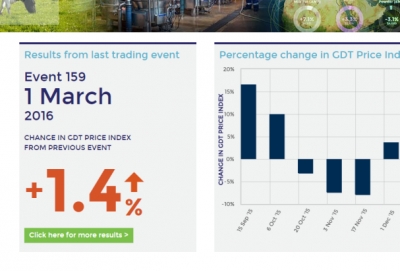
The GlobalDairyTrade price index was up 1.4% over night, with whole milk powder up 5.5%.
The lift follows better sentiment across markets generally, says ASB rural economist Nathan Penny. For example since the last auction, the S&P 500 has lifted around 4%.
The rise was bang on expectations, he says. WMP led the way, posting a 5.5% increase (although WMP remains around 13% lower than as at the end of 2015). Casein recorded the largest increase (up 14.9%), while SMP rose a more modest 1.3%.
ASB is maintaining its 2015-16 and 2016-17 milk price forecasts at $3.90/kgMS and $6/kgMS, respectively.
Key Results from last night' s GlobalDairyTrade Event 159:
AMF index down 8.3%, average price US$3,254/MT; Butter index down 0.5%, average price US$2,811/MT; BMP index down 2.9%, average price US$1,452/MT; Ched index down 0.7%, average price US$2,528/MT; LAC index up 7.9%, average price US$613/MT; RenCas index up 14.9%, average price US$4,569/MT; SMP index up 1.3%, average price US$1,802/MT;
WMP index up 5.5%, average price US$1,974/MT.
Fonterra has reduced its forecast 2026/27 Farmgate Milk Price.
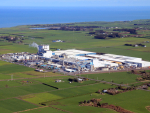
Fonterra's Whareroa site took home the prestigious Directors Award at the co-op's 'Oscars of Manufacturing', while Clandeboye led the way with multiple wins at this year's Best Site Cup.
After 25 years it is the right time to step away, says Colin Glass, the retiring chief executive of New Zealand's largest private corporate dairying company, Dairy Holdings.
RaboResearch senior analyst Emma Higgins expects the 2026/27 dairy season to be another profitable one.
Fonterra is strengthening its foodservice presence in China with the launch of a new cream for professional bakeries at Bakery China 2026 in Shanghai.


Fonterra has reduced its forecast 2026/27 Farmgate Milk Price.
New Zealand dairy farmers are set to be the first in the world to receive access to a new digital physical milk pricing tool that enables them to fix the price for their physical milk.
State farmer Pāmu is opening its farm gates this summer in an effort to give the rural sector the opportunity to see how large-scale, multi-system farming is delivering productivity and profitability across New Zealand.
A five-year study has found that the cost of reducing emissions without technology may be significant and unsustainable for Northland dairy farmers.
DairyNZ says Waikato farmers need certainty on Plan Change 1, but they say that certainty must be matched with practical, workable rules and a clear transition that doesn't get ahead of the new resource management system currently under review.
While the Government has moved quickly to make commercial hauliers' lot easier during the current fuel crisis, they appear to be stuck in the creep box when it comes to the agricultural industry.