Fonterra Cuts 2026/27 Milk Price Forecast to $9.25
Fonterra has reduced its forecast 2026/27 Farmgate Milk Price.
 increase font size
 Agriculture Minister Damien O'Connor.
The Government has announced that it intends to review the dairy quota allocation system.
Agriculture Minister Damien O’Connor says the review would maximise export returns for the country’s dairy industry.
The announcement comes almost two months after New Zealand signed a free trade agreement (FTA) with the European Union and close to a year after the free trade agreement with the United Kingdom was signed.
“The new dairy quotas, which will become available under the recent FTAs, means it’s timely and prudent to take a fresh look at how we allocate dairy export quota,” O’Connor says.
He says he wants to ensure the system works well for everyone, that the value of the quota is maximised, and that opportunities are not missed.
“New Zealand’s trade agreements with the United Kingdom and European Union present new opportunities for New Zealand exporters.”
O’Connor says he knows the dairy industry is seeking to take up the benefits available to them under the new trade agreements with the United Kingdom and European Union.
Access into a number of dairy export markets is controlled through tariff quotas, which provide access into a market for set volumes at a lower or zero tariff.
Dairy export quota allocations are set each year by the Ministry for Primary Industries, and allocated to eligible processors proportional to the milk they collect from farmers. To be eligible processors must collect at least 0.1% of New Zealand’s total milk solids.
New Zealand and the United Kingdom are currently completing processes for the UK-NZ FTA to be ratified. The dairy quotas available under the UK-NZ FTA will initially be allocated under the current quota allocation mechanism outlined in the Dairy Industry Restructuring Act (DIRA) 2001.
It’s expected that New Zealand and the European Union could sign the NZ-EU FTA in 2023, with entry into force possible as early as 2024.
The Government expects to consult on the review of the dairy export quota allocation system in late 2022, with any prospective legislative change being initiated following consultation. The review will cover all dairy export quotas that are allocated by New Zealand under the DIRA, not only the new quotas under the UK-NZ and NZ-EU FTAs.
“The dairy sector continues to be a mainstay for New Zealand with dairy export revenue reaching a record $22.1 billion in the year to June 2022.
“The recent FTAs are going to provide new opportunities for our exporters to grow export revenue even more, boosting New Zealand’s economic security as we recovery from COVID-19,” O’Connor says.
Fonterra has reduced its forecast 2026/27 Farmgate Milk Price.

Politicians calling for New Zealand to withdraw from the Paris Agreement on climate risk damaging two of our gold-plated free trade deals.
A miserable budget that didn’t deliver much for anyone.
The stark realities of the world trade that New Zealand is having to face have been revealed by Trade Minister Todd McClay.
New Zealand and the European Union are closer than ever.

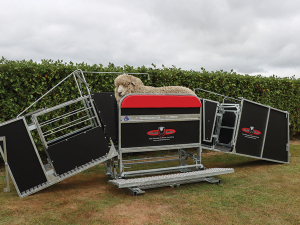
Oamaru-based livestock handling specialist Te Pari has bought Combi Clamp, the New Zealand manufacturer of Combi Clamp manual sheep handlers.
Agriculture Minister Todd McClay has admitted that a scheme bringing workers from Pacific nations to work on orchards has become too hard to navigate but says changes are coming.
A new app designed in New Zealand aims to help sheep, beef and deer farmers capture, analyse and use body condition score data more effectively.
Canterbury farmer Andy Macfarlane has been appointed to the board of AgriZeroNZ, the public-private partnership designed to accelerate the development and deployment of emissions reduction tools for New Zealand farmers.
For over 50 years Mel Ewers has been supporting the apple sector navigate through compliance and quality assurance issues.
The apple sector is enjoying a bumper harvest season.