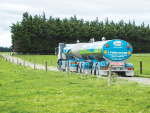
Fonterra FY26 Results: $9.69 Milk Price, $3.4bn Profit
Fonterra has unveiled its annual results for the 2026 financial year, posting $27 billion in revenue and close to $20 billion returned to New Zealand farmer owners and unit holders.
 increase font size

Fonterra has welcomed Horizons Regional Council's approach to implementing its nutrient management requirements.
It says the pragmatic approach would give farmers time to move in the right direction without significant economic risks to farms or to the region.
The council has announced while existing intensive farming in some parts of the Manawatu-Wanganui region will require a consent, these will be granted, with the consent's duration depending on the ability of the farm's owner to reduce nitrogen leaching.
Fonterra's managing director cooperative affairs Todd Muller says the council has taken a realistic approach to mitigate economic risks to the region.
"Nobody argues with the need to improve nutrient losses given their potential impact on waterways, but what caused concern was the proposed pace of change and the immediate impact this would have on many farms, as well as the local economy.
"While the council remains committed to its goals to reduce losses, it has also taken into account the fact that farmers need time to adjust. It has also acknowledged that farms are not beginning from a standing start. Our farmers have already put significant effort into reducing losses and with our support, will continue to make good progress."
Muller agreed with comments by council chairman, Bruce Gordon that farmers had done a huge amount in the past decade to reduce their impact in the region, with dairy effluent compliance rate of 93% among the highest in the country and significant planting and fencing undertaken around waterways.
"We have long recognised the effort put in by farmers and advocated consistently on our farmers' behalf. It is important to acknowledge the council's willingness to engage with Fonterra as well as DairyNZ and Federated Farmers, consider our points of view and take it into account when planning implementation of the One Plan. This is a constructive approach and we are confident we can build on it and get the progress council wants towards its nutrient loss goals. Farmers do recognise the need for change and those in the lead are encouraging others to follow.
"We will keep up the effort and our Supply Fonterra programme is designed to keep that effort focused so farmers are clear on loss risks for nutrients, what they can do to address them and how they can measure progress."
Fonterra has unveiled its annual results for the 2026 financial year, posting $27 billion in revenue and close to $20 billion returned to New Zealand farmer owners and unit holders.

Fonterra Co-operative Group has confirmed the independently assessed candidates standing for election to its board in 2026.
Fonterra has revised its Farmgate Milk Price forecast for the 2026/27 season, lifting the midpoint and narrowing the range on the back of improving global dairy commodity prices.
Outgoing Fonterra Co-operative Council chair John Stevenson says that it has been a privilege to represent the co-op's farmer shareholders.
OPINION: It seems Canterbury processor Synlait is still in the doldrums.


Federated Farmers says it welcomes Labour's commitment to reviewing the Sharemilking Agreements Act, calling on other major parties to do the same.
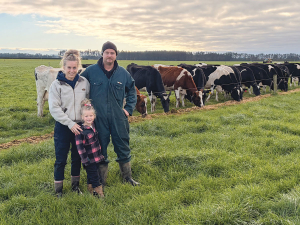
For Canterbury dairy farmers Sian Meijer and Rick Wobben, wearable technology has become one of their most valuable on-farm tools - helping manage 1850 cows across an expansive, high-performing dairy operation while improving efficiency, mating outcomes and day-to-day decision making.
Fonterra has unveiled its annual results for the 2026 financial year, posting $27 billion in revenue and close to $20 billion returned to New Zealand farmer owners and unit holders.
The first major update to the Dairy Cattle Code of Welfare in more than a decade has been released, marking what DairyNZ describes as an important step in ensuring animal welfare standards continue to evolve alongside scientific evidence and on-farm realities.
Ravensdown shareholders have elected Jane Montgomery and Kate Acland to the Ravensdown Board for three-year terms, following a closely contested director election.
Federated Farmers says new legislation replacing the Resource Management Act will cut red tape, unlock investment and help grow New Zealand's export-led economy, after the Planning Bill and Natural Environment Bill passed their third reading in Parliament yesterday.