Milk Powder Prices Prop Up Farmgate Milk Price
Milk powder prices are keeping farmgate prices up, helping processors offset the dip in milk fat prices.
 increase font size
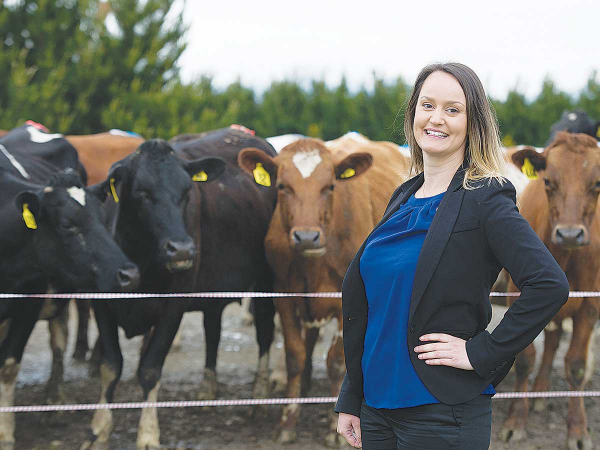 Rabobank senior agricultural analyst Emma Higgins.
Global dairy prices continue to break records.
The overnight Global Dairy Trade (GDT) auction saw another solid rise in prices across all products offered on the platform.
RaboResearch senior agricultural analyst Emma Higgins says lower milk production and fall-out from the Ukraine conflict are pushing prices further up.
Whole milk powder prices jumped 5.7% to US$4757/MT; skim milk powder prices rose 4.7% to US$4481/MT.
Butter, cheese and anhydrous milk fat (AMF) also recorded price rises; cheddar prices rose a whopping 10.9%.
Butter, AMF and Cheese prices have pushed higher into unchartered territory.
“This morning’s GDT auction saw soaring prices for dairy commodities, propelled by dwindling milk supplies, market uncertainty around the fall-out from the Ukraine crisis and ultimately what the combination will mean for global dairy trade,” says Higgins.
She notes that the milk supply situation in several key export regions continues to deteriorate. New Zealand milk production was down 6.1% year-on-year (YOY) in January 2022, while US milk flows took a hit of 1.6% YOY in the same period too.
The Ukraine conflict is also making markets nervous.
Higgins says although the physical fighting in Ukraine is localised, the effects of war will be far reaching and have a ripple effect on global communities and economies.
“Clearly it will be the Ukrainian and Russian people who will pay the most – be it physically, psychologically or economically. Still, we must consider the flow-on implications for global markets, and potential reverberations for our food producers.”
Russia and Ukraine are significant players in global trade of major commodities: grains, energy and metals. Combined, both countries are major exporters of grain (24% of global wheat, barley, corn), oil (5% of crude oil), natural gas (35% market share in Europe) and raw materials for fertiliser manufacturing (23% of world ammonia; 17% of potash; 14% of urea; & 10% of phosphates).
“These commodities are being swept up in the fighting – either physically or via the results of crippling sanctions on Russia.
“Rabobank anticipates more upside to come for global prices of grain, oil, natural gas and fertiliser over time. The flipside is that we also expect the same for food prices and inflation.”
Milk powder prices are keeping farmgate prices up, helping processors offset the dip in milk fat prices.
OPINION: With 10,500 dairy farms, New Zealand continues to punch above its weight around the world.
A milk glut around the world shows no sign of easing, putting downward pressure on farmgate milk prices for the next few months.
Fonterra has reduced its forecast 2026/27 Farmgate Milk Price.
New Zealand dairy farmers are set to be the first in the world to receive access to a new digital physical milk pricing tool that enables them to fix the price for their physical milk.



Now in its fourth year, the 2026 Fencing Industry Awards, formed part of the proceedings of the FCANZ Conference, held in Nelson during August.

DairyNZ deputy chair Cameron Henderson has been re-appointed unopposed for another term.
OPINION: The stats speak for themselves.
Farms across the upper North Island are trialling different pasture mixes as part of a research programme that aims to build greater resilience into farming systems.
Election years are always a concerning time for farmers, according to DairyNZ chair Tracy Brown.
The Ballance Farm Environment Awards are coming to the West Coast of the South Island.