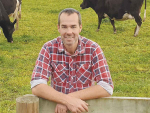
Cameron Henderson Reappointed Unopposed as DairyNZ Deputy Chair
DairyNZ deputy chair Cameron Henderson has been re-appointed unopposed for another term.
 increase font size
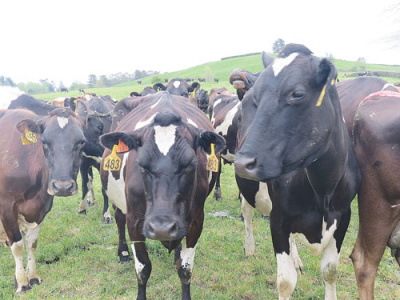
DairyNZ are ‘working through’ the cost-sharing process for the industry share of eradicating Mycoplasma bovis, says BLNZ general manager policy and advocacy Dave Harrison.
“To come up with a fair approach we have been making use of an independent panel,” he told Rural News in a joint statement from both industry-good bodies.
“We have had initial advice and are providing feedback. Once the process has finalised, a recommendation will go to our respective boards and be shared with farmers.
“Given this is a sensitive and important process, we can’t comment on the specifics until it has been agreed and approved by our respective boards.”
The cost of the eradication programme is reckoned at $886 million over 10 years.
The Government will pay 68% of that and the two levying bodies, DairyNZ and BLNZ, will pay 32% (about $278m).
But just exactly how it will be split between them remains under discussion. Earlier this year dairy industry sources said an 80/20 split between dairy farmers and beef farmers would be fair. However, beef farmers were pushing for a 90/10 split, pointing out that dairy farms are at the centre of the outbreak.
DairyNZ deputy chair Cameron Henderson has been re-appointed unopposed for another term.
Farms across the upper North Island are trialling different pasture mixes as part of a research programme that aims to build greater resilience into farming systems.
Election years are always a concerning time for farmers, according to DairyNZ chair Tracy Brown.
Most dairy regions around the country have had a pretty good season so far says Tracy Brown.


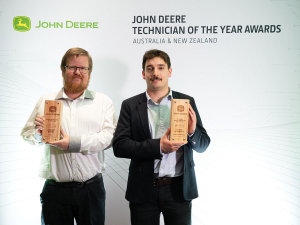
Leading John Deere technicians and apprentices from New Zealand and Australians were recognised at the recent sixth annual JD Technician of the Year Awards, held in Brisbane.
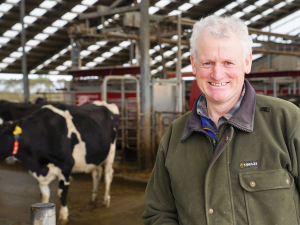
In Dacre, near Invercargill in New Zealand’s South Island, Bruce Dinnington is running a dairy operation unlike any other.
A free online platform aggregating governance vacancies across rural and regional New Zealand has been launched.
Environment Minister Nicola Grigg has announced details of a new rural plastics recycling scheme.
Agricultural drone operators say that a government decision to allow lower-risk drone work without certification won’t lower standards but drive innovation and efficiency.
OPINION: Warning bells are ringing in the arable sector.