Lanaco and Blueair Launch World-First NZ Wool Air Filter
New Zealand wool is reaching new heights as air filtration companies move away from synthetic products to biodegradable alternatives.
 increase font size
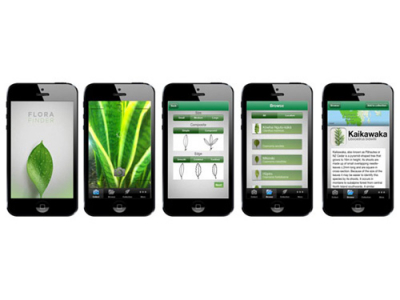 New Zealand farmers now have a new weapon in the fight against the noxious velvetleaf weed: the camera on their iPhone.
New Zealand farmers now have a new weapon in the fight against the noxious velvetleaf weed: the camera on their iPhone.
Identifying one of the world’s worst weeds is set to become much easier with the launch of Flora Finder - Weed, a new smartphone app that can detect the aggressive velvetleaf weed that has affected many arable crops in New Zealand. Its outbreak has been associated with contamination of fodder beet seed varieties imported into the country.
The app, available for iOS devices, has more than 100 common weed species in its database. Flora Finder is an electronic field guide that uses visual recognition software to help users identify plants from photographs of their leaves and access expert advice.
Flora Finder - Weed is a joint project between the University of Otago and Kiwi app developer, MEA, with support from WWF-New Zealand and The Tindall Foundation.
According to Dr Graham Strong, commercialisation manager at Otago Innovation – the commercialisation arm of the University of Otago, “the app is designed to quickly identify the most common weeds, along with native trees and shrubs. This represents a real step-change in a battle against weeds that has existed since the advent of organised agriculture”.
Gabriel Engel, CEO of MEA, says that Flora Finder is a prime example of how apps are changing the way we deal with real-world problems: “Flora Finder makes everyday people part of the solution. With this app, we have placed the solution to one of the farming industry’s biggest pests in the hands of the people who are most directly affected.”
If the app identifies a plant as velvetleaf, users should follow the Ministry for Primary Industries’ advice at http://www.mpi.govt.nz/protection-and-response/responding/alerts/velvetleaf
Otago Department of Botany senior lecturer Dr Janice Lord, says Flora Finder – Weed was developed to support famers and land managers in weed control which was a significant concern to agricultural and environmental sustainability.
“Weeds cause millions of dollars of damage to our pastures, crops, and gardens each year. Weedy plants are also a great threat to New Zealand’s parks, reserves, coasts, bush remnants, wetlands and alpine areas.”
The base Flora Finder technology was developed in 2013 and is expanding to include native, naturalised and exotic plants from across the entire country.
“Even if for some reason the app can’t identify the plant, users can take a photo and through the app send it to the Botany Department and we’ll identify it for them,” says Dr Lord.
In the case of velvetleaf, this service will prove especially valuable in winter when these plants are dead.
“The leaf image recognition function would not work well in this instance, so the added ability of the app to connect the user with an expert means velvetleaf could be identified from other features such as seed heads, even if leaves are not present,” she says.
“With Flora Finder you become an instant expert in identifying NZ plants – it’s like having the world’s most famous plant experts in your pocket ready to help you when you need them.”
New Zealand wool is reaching new heights as air filtration companies move away from synthetic products to biodegradable alternatives.
Generative AI in the workplace, trials in the field, and industry-relevant research took centre stage at this year’s Grape Days events in Central Otago, Hawke’s Bay and Marlborough.
Classified as an unwanted organism under the Biosecurity Act, the invasive weed velvetleaf can be resistant to many herbicides, making it difficult to control, while statistics note it has the potential to reduce yields by up to 70%.
Tracing has indicated that the source of the first velvetleaf find of the 2025-26 crop season, in Auckland, was likely maize purchased in the Waikato region.
Velvetleaf (Abutilon theophrasti) is an annual broad-leaved herb, originating in China, that can grow between 1 and 2.5 metres tall, with large heart-shaped leaves and yellow-orange flowers.



Now in its fourth year, the 2026 Fencing Industry Awards, formed part of the proceedings of the FCANZ Conference, held in Nelson during August.
DairyNZ deputy chair Cameron Henderson has been re-appointed unopposed for another term.
OPINION: The stats speak for themselves.
Farms across the upper North Island are trialling different pasture mixes as part of a research programme that aims to build greater resilience into farming systems.
Election years are always a concerning time for farmers, according to DairyNZ chair Tracy Brown.
The Ballance Farm Environment Awards are coming to the West Coast of the South Island.