
NZ Food Safety Boss on Balancing Speed and Risk in Approvals
Striking a balance between meeting the needs of industry to speed up approval time for products but on the other hand ensuring that risks are properly assessed.
 increase font size

Northland's dairy farmers have received qualified praise for their increased compliance with farm dairy effluent resource standards but there's still plenty of room for improvement, those doing the monitoring say.
The latest Northland Regional Council monitoring figures for the 2012/13 milking season show almost 80% of the region's 978 dairy farms were either fully compliant with their resource consent conditions and or rules, or had only minor non-compliance.
Operations director Tony Phipps says particularly pleasing for the council was a 30% drop in significant non-compliance, which fell to nearly 200 farms compared with close to 300 farms reported 12 months earlier.
He says in recent years many of the region's farmers have invested heavily in improvements to their effluent disposal systems and it's pleasing to see that outlay starting to pay off.
"Having said that, there are still too many Northland dairy farms where effluent management is not done well and isn't accorded the high priority it should be. Effluent management is a crucial element in modern farming and is vital to protect the water used by all Northlanders."
Phipps says the regional council – and now the industry itself – are putting considerable effort into improving farm dairy effluent management.
"These figures will continue to improve as new/upgraded infrastructure continues to be installed on farms and farmers are coming to grips with management of their new infrastructure."
Phipps says the council believes the recent positive trend indicates it's on the right track and says it will continue with a number of initiatives including:
• One-on-one follow-up visits to all significantly non-compliant farms
• One-on-one visits to farms where requested by their owners
• Development of effluent publications and resources for farmers
• Promotion of Effluent Management Plans tailor-made to each farm
• Taking a lead role in the Northland Effluent Improvement Project Group.
Meanwhile, he says as well as poor performance by some farmers, the robustness of Northland's farm dairy effluent testing regime is also a factor in the region's high non-compliance figures relative to other parts of New Zealand.
He says the NRC regime is among the most comprehensive in New Zealand and reflects the importance its councillors are according efforts to improve regional water quality.
"Our programme is based around on-the-ground visits to every single dairy farm in the region (978 last year) without any prior notice during the busy milking period from mid-August to late November, when any problems are most likely to occur."
He says in contrast, some other regions:
• Warn farmers of planned inspections in advance, contrary to nationally agreed protocols, and effectively allowing any problems to be addressed before monitoring staff visit
• Only visit a portion of the farms in their region – in one case less than a third of them
• Rely on aerial sweeps of dairy farms via helicopter, rather than physically visiting them to check for compliance
• Monitor farms at times of the year when conditions are drier and more favourable
Striking a balance between meeting the needs of industry to speed up approval time for products but on the other hand ensuring that risks are properly assessed.

OPINION: Succession and long-term planning are perennial topics because it is perpetually sidelined on busy farms.
OPINION: The stats speak for themselves.
Farms across the upper North Island are trialling different pasture mixes as part of a research programme that aims to build greater resilience into farming systems.
Election years are always a concerning time for farmers, according to DairyNZ chair Tracy Brown.


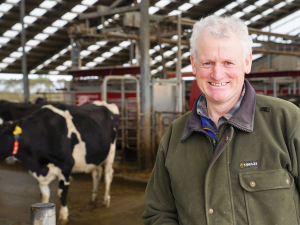
In Dacre, near Invercargill in New Zealand’s South Island, Bruce Dinnington is running a dairy operation unlike any other.

A free online platform aggregating governance vacancies across rural and regional New Zealand has been launched.
Environment Minister Nicola Grigg has announced details of a new rural plastics recycling scheme.
Agricultural drone operators say that a government decision to allow lower-risk drone work without certification won’t lower standards but drive innovation and efficiency.
OPINION: Warning bells are ringing in the arable sector.
Farmgate lamb prices are down by 8%, beef cattle by 4.5% and farm expenditure up by 4.2%.