Rural NZ Welcomes $8.5m Government Health Package
Rural New Zealand is welcoming the Government’s recent package of rural healthcare initiatives.
 increase font size
 Rural New Zealanders could see their delivery frequency reduced to a minimum of three days per week.
Changes to New Zealand’s postal service has left rural communities disappointed.
Last week, the Ministry of Business, Innovation and Employment (MBIE) announced that the Government had approved changes to the Postal Deed of Understanding between the Crown and New Zealand Post (NZ Post).
MBIE says the changes, which were first proposed in 2024, aim to make sure New Zealanders have ongoing access to the mail service while providing flexibility for NZ Post to operate the mail service in a commercially sustainable way.
Under the changes to the deed, rural New Zealanders will see their delivery frequency reduced to a minimum of three days per week while those with PO Boxes will see their minimum delivery frequency reduced to twice a week.
The current minimum of 880 total postal outlets will also be reduced to 500 before stepping down to 400 after four years.
The deed states that no rural retail outlets will be closed within the first year of the revised deed coming into effect and that NZ Post must engage with impacted rural communities impacted by any closures after that point.
James Hartley, MBIE general manager, communications, infrastructure and trade, says that NZ Post’s new minimum service obligations are reflective of how New Zealanders use the postal service.
“New Zealanders are sending fewer letters than ever before,” he says.
Hartley says that currently, the average delivery point receives fewer than two letters each week compared to 7.5 in 2013 when the Deed was last reviewed.
“Despite being used less, NZ Post has been required to maintain a network designed for much higher volumes,” he adds.
However, Sandra Matthews, national president of Rural Women New Zealand, says the cuts mark a step backwards for rural New Zealand.
“They will make life harder for rural people who already face longer travel times, reduced access to services and unreliable digital connectivity,” Matthews says.
She says that rural Kiwis rely heavily on postal services for things like medication, paying bills, receiving essential deliveries, and maintaining business operations.
“For many, frequent, accessible postal services are a necessity,” she adds.
“These changes may reduce some costs to NZ Post, but they certainly won’t help increase productivity or maintain the viability of our regional communities.”
Matthews says that while her organisation acknowledges the commitment under the deed that no rural retail service points would close in the first year, the changes will still force people to travel longer distances to access a postal outlet or shared mail hub, creating a significant barrier.
“This is a particular problem for older and more isolated rural residents, and makes doing business in rural areas even harder,” she says.
“Digital connectivity issues are also far more prevalent in rural areas, where internet coverage and mobile reception can be patchy. This makes rural communities significantly more reliant on physical mail services.”
Business As Usual?
NZ Post chief executive, David Walsh, says the changes give NZ Post the flexibility it requires to continue making changes to bring the mail service in line with the current communication needs.
He says that changes to the deed do not automatically result in operational changes.
“The Deed of Understanding sets out the minimum requirements that NZ Post needs to meet, however, we then make our operating decisions within those boundaries, based on a wide range of factors. Any operational changes will include appropriate engagement with our people and stakeholders in the first instance,” Walsh says.
“For now, there is nothing that Kiwis need to do differently and their mail delivery will continue as usual. NZ Post will proactively communicate future service changes to the public, to ensure that Kiwis know exactly what they can expect from their mail service.”
Rural New Zealand is welcoming the Government’s recent package of rural healthcare initiatives.

Deputy Prime Minister and ACT Party leader David Seymour says advocacy group Rural Women New Zealand (RWNZ) has submitted against a controversial bill without consulting its members.
Women up and down the country are the glue that hold rural communities together, giving so much to so many, says the inaugural Rural Woman of the year award winner Kate Acland.
Rural Women New Zealand has announced the winners of the 2026 NZI Rural Women Business Awards.
Rural Women New Zealand this month submitted on the Draft Mental Health and a Wellbeing Strategy 2026-2036, because a person's postcode should not determine the quality of their mental health support.


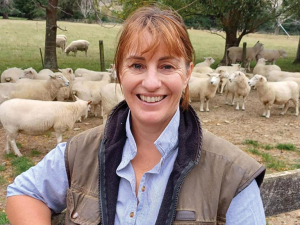
B+LNZ's Wormwise veterinarian Mary Bowron has won the Best Sheep and Beef Vet of the Year Award in recognition of her outstanding contribution to New Zealand’s sheep and beef sector.
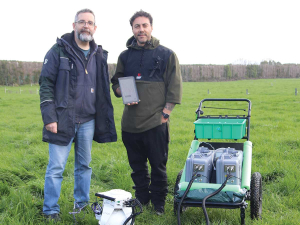
Researchers at Massey University are using a special piece of scientific equipment to improve the measurement of greenhouse gas emissions from pasture soils.
More signs of a booming kiwifruit sector.
OPINION: David Seymour and James Meager's plan to make it easier for farmers and orchardists to operate drones can best be described a 'courageous' move.
New Zealand wool is reaching new heights as air filtration companies move away from synthetic products to biodegradable alternatives.
Opuha Dam's ability to protect South Canterbury communities from major flooding has taken a significant step forward, with Opuha Water Limited (OWL) successfully commissioning a new outlet valve capable of releasing record volumes of water from the dam ahead of a weather event.