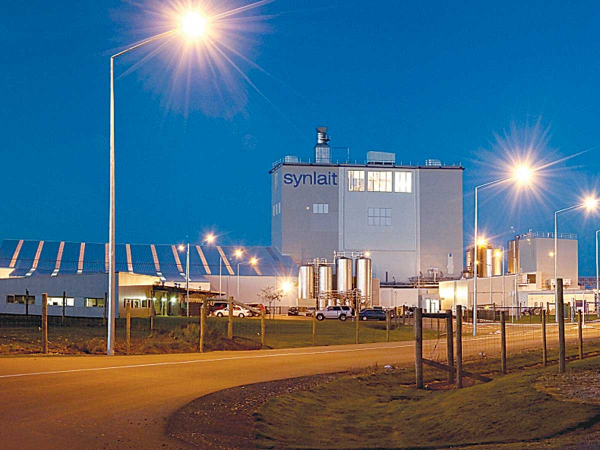
Canterbury processor Synlait last week lifted its 2020-21 forecast payout by 80c to $7.20/kgMS.
Synlait’s national milk supply manager David Williams says the decision is driven by the strong increase in dairy commodity prices over recent months.
The company believes commodity prices will remain around current levels for the remainder of the milk season.
“Despite the wider global uncertainty, dairy commodity prices have remained robust and a higher forecast base milk price will be welcomed by our Synlait farmer suppliers.
“We are grateful for their continued support.”
The stage is also set for another rise in Fonterra’s forecast milk payout following a fifth straight jump in Global Dairy Trade (GDT) prices last month
The last GDT auction pushed flagship whole milk powder prices to a four-year high; prices for skim milk powder, butter and anhydrous milk fat also jumped sharply.
Westpac responded by lifting its forecast milk price for the season to $7.50/kgMS. Fonterra’s last price review in December settled on a price range of $6.70 to $7.30/kgMS.
Westpac senior agri economist Nathan Penny says the lift in its forecast payout comes on the back of surging global dairy prices, particularly at the start of this year.
“Since early November, overall dairy prices have jumped 17.2%, with over half of the lift occurring since the start of the year,” Penny says.
ASB economist Nat Keall says increasingly the risks skewed towards a higher farmgate milk price than its current $7/kgMS forecast.
“Indeed, a farmgate price towards the upper end of Fonterra’s forecast range is very much possibility. We’ll be closely examining the next auction with a view towards adjusting our forecast,” Keall says.
Fonterra chief executive Miles Hurrell says the co-op was monitoring every GDT event.
“We have first-hand knowledge; we know what we have on our books, what we’ve sold and at what prices,” he says.
“’We have the most accurate data which we use to make our decisions on the farmgate milk payout.”
Under DIRA, Fonterra is required to update its forecast milk payout in early March and Hurrell says the co-op could come out before then if warranted.
OCD happy with outlook
The country's second largest milk processor says the "short to medium" outlook for dairy prices look good.
Open Country Dairy chief executive Steve Koekemoer says it is great to see the recovery continue with prices rising again at the latest GDT auction.
"It supports our updated forecast. Our position has not changed, the short to medium term looks good and with NZ now starting to move towards our tail end of the season, I expect buyers to stock up where they can.
"It is certainly looking positive for the dairy sector with overall demand being strong but recent currency movements require us to act cautiously going forward."
The weakening USD will negate some of the price benefits farmers have been receiving. "Although, not an immediate concern for most, it is something that we will keep a close eye on over the coming months," says Koekemoer.