How to make raw milk reliable for calves
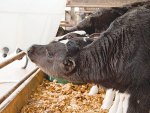
Feeding infected milk is high risk for spreading diseases such as M. bovis.
 increase font size
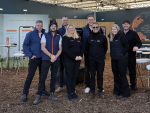
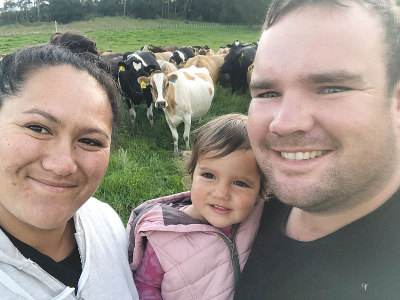 Northland sharemilker Guy Bakewell (right), wife Jaye and daughter Darnell-Jaye on the farm.
Guy Bakewell (31) is a herd owning sharemilker selling raw milk onfarm to help pay off his dairy cows faster.
This Kaipara Young Farmers member is in his second season 50:50 sharemilking 150 cows near Wellsford, Northland.
Bakewell’s enterprise is small by industry standards — the region’s average herd size is 300 cows — so this business studies graduate of Massey University has had to generate extra income.
The farm overlooks State Highway One carrying 15,000 vehicles daily, and he saw this stream as an opportunity to be tapped. In August 2018 he began selling raw milk from a vending machine on the farm.
“We sold 30L on the first day and we’ve sold milk every day since,” said Bakewell. “We sell an average of 100 litres a day.”
The machine is one of 15 in New Zealand selling unpasteurised milk, which “baffles” him because, of the 10,000+ dairy farms in NZ, only 26 are registered as raw milk suppliers.
Herd owning sharemilkers only receive half a farm’s monthly milk cheque so Bakewell’s business idea was driven by economics. “I believe in getting creative and thinking outside the box to make business opportunities work,” he said.
The herd is split in two: about 130 cows are milked once-a-day and their milk is sold to Fonterra; 17 cows in a separate mob supply the vending machine, accessible to customers 24/7.
The raw milk business, known as Bakewell Creamery, is run by Bakewell and his wife Jaye. His parents have also invested in the venture.
“We pay the farm’s owner Duncan Johnson a rate per litre for milk sold through Bakewell Creamery,” said Bakewell.
The milk $100,000 dispensing machine is housed in a small purpose-built, transportable shop at the front of the farm. The milk is sold for $3/L. Reusable glass bottles can be bought from a second vending machine for $5.
Bake well says he wanted a stronger connection with consumers of his milk who are “grateful and appreciative,” he says. He uses social media to market the business and is looking into expanding his customer base, noting that Auckland is not far away.
Current regulations prevent the company from setting up raw milk vending machines in Auckland.
“Until the rules change, our only option to get our fresh milk into Auckland fridges is to bottle it and deliver it. That would be labour intensive,” said Bakewell. “But we’re talking with other companies that deliver to homes in Auckland.”
“One option could be that a bottle of our raw milk is included in produce boxes,” he said.
In their venture the Bakewells have been guided by Richard Houston, who started Village Milk in Golden Bay in 2012 using a vending machine from Italy.
• Brad Markham is communications manager for NZ Young Farmers.
Feeding infected milk is high risk for spreading diseases such as M. bovis.
Arran Trust has recalled specific batches of its Arran Farm brand raw (unpasteurised) drinking milk following concerns the product may contain Campylobacter.
Henderson Dairy is recalling specific batches of its Farm Fresh Raw Milk as the product may contain Listeria.
OPINION: Is it time for the Government to re-look at regulations pertaining to the sale of raw milk?
Two unregistered raw milk operators have been fined for trying to circumvent the rules that regulate the sale and supply of raw milk.
Esther Guy-Meakin has been announced as the new chief executive of the New Zealand Meat Board (NZMB).
According to a progress report on the Aotearoa Horticulture Action Plan (AHAP), New Zealand's horticulture sector is making real progress on the big issues facing growers.
A team effort that is paying dividends for the wider New Zealand economy.
A strong sense of community involvement is what propelled the Federated Farmers' North Canterbury president Bex Green to the honoured title of the Feds' Advocate of the Year 2026.
The country's second largest milk processor is warning against 'complacency' during a review of competition regulations in the dairy sector.
Oamaru-based livestock handling specialist Te Pari has bought Combi Clamp, the New Zealand manufacturer of Combi Clamp manual sheep handlers.