New Rural Recycling Scheme to Replace Voluntary Farm Plastics Programmes by 2027
Environment Minister Nicola Grigg has announced details of a new rural plastics recycling scheme.
 increase font size
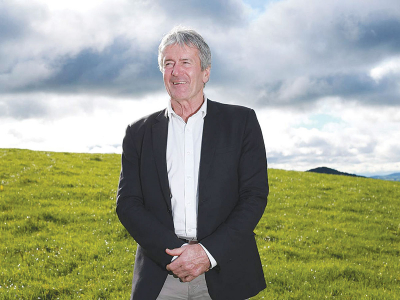 Damien O’Connor.
Real money and real commitment in the government’s Budget will help farmers make necessary changes to their farming systems, says the Minister of Agriculture, Damien O’Connor.
He told Dairy News the key areas for change are water quality, new expectations in animal welfare and the possibility of agriculture being part of the emissions trading scheme (ETS).
Farmers are understandably concerned and need access to more information and the alternatives that will enable them to farm profitably, O’Connor says.
“In the budget $122 million has been apportioned to improve the monitoring and extension systems in MPI, upgrade Overseer to make it a more effective and useful tool and then support them directly by getting that information to them.”
O’Connor says no one expects farmers to change overnight -- a radical expectation seen in the 1980s that should never be repeated.
The government has long highlighted the changing expectations of New Zealanders and our overseas customers on the environment, animal welfare and traceability, O’Connor says.
“This is about explaining how we produce the finest food for customers and the international obligation we committed to in the 1990s to reduce emissions. Now we need to start assessing that on farm as well.
“These are all challenges but NZ farmers have shown they’re the most innovative and adaptive in the world and the government has in this budget provided a whole lot of money to develop the tools to assist them in that transition.”
Dairy payouts haven’t met the expectation of farmers who have borrowed money for production systems, O’Connor says. Profit margins have been too slim to allow farmers to be as resilient as they would like to be.
Dairy farmers have been told of market volatility and international pricing for many years “but resilience hasn’t been built into every farm system”.
“Farmers are passionate about improving their production and their situation on farm,” O’Connor says. “We need to assist them into a more resilient and sustainable position that allows for fluctuations in international commodity prices and the changing climate.”
New rules for dairy farming may be prompting some farmers to either change their systems or use their land for other purposes. So the government, through MPI, is looking at ways it can help them.
The ‘Wellbeing Budget’ emphasised health -- especially mental health. Farmers are naturally stressed by many things, notably changing prices and climatic changes. O’Connor says the government will support them.
“We have a rural proofing policy in government that obliges us to consider the needs of rural areas. And mental health is one of the most acute needs in the regions, where people are often in greater need of support than people in urban areas.”
The government plans to spend $12.3m over four years to strengthen NZ’s biosecurity system.
Environment Minister Nicola Grigg has announced details of a new rural plastics recycling scheme.

For the first time in a quarter of a century, Federated Farmers has something positive to say about the Labour Party’s climate change policy leading into a general election.
The Ballance Farm Environment Awards are coming to the West Coast of the South Island.
Climate, nature and animal wellbeing make up Fonterra's refreshed sustainability roadmap released last week.
There's been widespread support from the primary sector for the Government's announcement on changes to freshwater farm plans that come under the Natural Environment Bill, which is now set to replace the existing RMA.

Federated Farmers has welcomed new rural policies released by ACT, saying they align closely with its own election priorities.
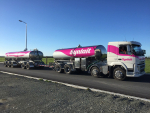
Rural Contractors NZ says proposed changes to land transport rules for agricultural vehicles are a welcome response by the Government to out of date regulations which have seen members hit with huge fines.
Alliance is calling for final applications for its 2027 Graduate Programme, with applications closing on Sunday 25 October.
Decades piloting planes has ensured vet and farmer David Hayes is focused on safety. So, after a serious accident while welding on farm, he is sharing his experience so others can learn from it.
Canterbury milk processor, Synlait Milk has confirmed Leon Fung as its chief executive officer.
OPINION: Making it easier to collect rainwater and use it to grow crops and livestock is a no brainer.