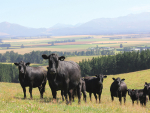
BVD Control Begins Long Before You See A Problem
Bovine Viral Diarrhoea (BVD) is sometimes viewed as a dairy industry issue, but the reality is that the disease can have serious consequences for beef breeding herds as well.
 increase font size
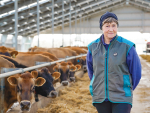
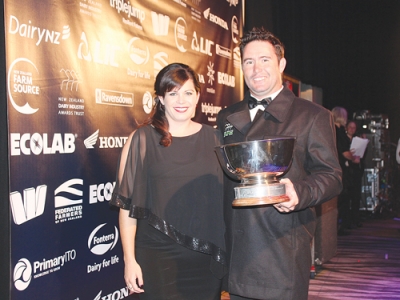 Farm Manager of the Year James Foote and wife Louise with his trophy.
The 2015 New Zealand Farm Manager of the Year, James Foote (30), has a drive and thirst for knowledge.
“He’s farming a hard and challenging farm. He’s done a lot of repairs and maintenance just to get things to an operational state and his management systems are very good,” head judge Richard Jones, a Southland farmer, says.
Foote played semi-professional rugby for 10 years and is now contract milking 425 cows at Miranda for Russell and Ces Evans. He won $27,900 in prizes.
“The life skills and disciplines from his previous career as a rugby player have given him a great grounding in dairy farming,” Jones says. “He has a strong focus on improvement and does a SWAT analysis each six months and he focuses on turning a weakness into a strength. We found that very refreshing.
“He has a clear plan to go 50% sharemilking in 2016 and we are sure he will do that,” Jones says. Foote also won the Fonterra Farm Source Farm Management Award.
The runner-up, Canterbury/North Otago’s Mark Cudmore, won $12,600 in prizes and is another career changer with a great attitude. “He got chucked in the deep end and was involved in the conversion of the farm he manages at Cheviot.”
Northland’s Karla Frost won third place in the farm manager contest, winning $8000 in prizes. Frost is managing the Northland Agricultural Research Farm. “It’s far more complicated than running a normal farm because of the trials they run and she has got it nailed,” Jones says. Frost also won the Meridian Energy Leadership Award and the Westpac Financial Planning & Management Award.
The judges criticised farm management entries as being fixated on production, not profit. In this they differed from most of the winners in other categories, who were focused on operating profitable systems.
Jones says on most higher-input farms the focus is still on production over profit. “Only one of the contestants we judged was prepared to accept lower production because the feed costs outweighed the profitability.
“We’d speculate that the majority of these farms would make an operating loss this year and that was being accepted. You can’t blame the managers, but the farm’s key performance indicators hadn’t changed to fit the environment.”
Bovine Viral Diarrhoea (BVD) is sometimes viewed as a dairy industry issue, but the reality is that the disease can have serious consequences for beef breeding herds as well.
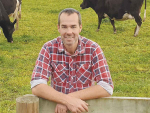
DairyNZ deputy chair Cameron Henderson has been re-appointed unopposed for another term.
Are you ready for El Nino? That’s the question asked by Beef+Lamb NZ’s Ian Tarbotton who leads B+LNZ’s farm extension service.
New Zealand's pest problem has reached crisis point, according to Federated Farmers' second National Pests Survey, which shows farmers are spending more money and effort on control — yet pest numbers keep climbing faster than they were two years ago.
I've written a series of articles for Rural News, starting with 'The Basics of Grazing', then 'Stock Handling', followed up by 'Evaluating Stock Condition'.



LIC shareholders have elected a new North Island representative to the co-operative's Board, along with five representatives to its Shareholder Reference Group (SRG), following the company's Annual Meeting held in Invercargill.
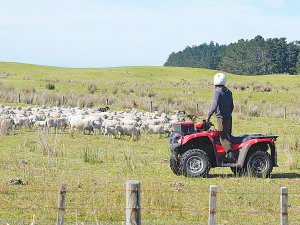
Farmers across parts of Southland and South Otago are continuing to deal with difficult conditions after a prolonged run of wet weather, with pressure building around feed supply, stock management, pasture damage, farm infrastructure and everyday workloads.
Federated Farmers says it welcomes Labour's commitment to reviewing the Sharemilking Agreements Act, calling on other major parties to do the same.
For Canterbury dairy farmers Sian Meijer and Rick Wobben, wearable technology has become one of their most valuable on-farm tools - helping manage 1850 cows across an expansive, high-performing dairy operation while improving efficiency, mating outcomes and day-to-day decision making.
Fonterra has unveiled its annual results for the 2026 financial year, posting $27 billion in revenue and close to $20 billion returned to New Zealand farmer owners and unit holders.
The first major update to the Dairy Cattle Code of Welfare in more than a decade has been released, marking what DairyNZ describes as an important step in ensuring animal welfare standards continue to evolve alongside scientific evidence and on-farm realities.