Mark Hooper Joins NZPork Board as Independent Director
Rural leader Mark Hooper has been appointed as an independent director to the NZPork board, bringing extensive farming, governance and advocacy experience to the role.
 increase font size
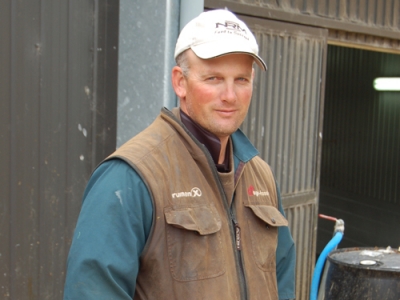 Chris Lewis, Federated Farmers.
We've heard the disappointing news on payout levels. Fonterra has updated its milksolids price down to $4.40 for this past season.
With two co-ops announcing a higher payout figure for 2015-16 though, it gives me a little bit of confidence things might get better a lot quicker as we go into next year. Time will tell and I can only budget on realities at this stage.
We talk a lot about what is causing the payout to be so weak. There are the Russian issues, a growing Middle East war and ISIS disrupting supply lines, Europe having a great production year and the US output trucking along nicely.
And of course here in New Zealand we have been seeing a massive volume increase of 3-4% each year, sustained for the past few years.
Short term, there is a question about what pressure our production is putting on the remaining firm markets. Part of the present market weakness is because of Chinese importers miscalculating world dairy supply. They thought there was going to be a shortage and bid up to secure supply. They now have to refrain from bidding to let their overstocked inventory run down.
A few years ago, when we had a big drought in Waikato, and supply dropped, the markets were paying more. So maybe farmers will decide to tighten their belts this year, buy less supplement and milk fewer cows – their own individual decisions, albeit with the bank manager looking over their shoulder. It will be interesting to see how and if the markets respond to any production fallback.
They do keep a close eye on us. When I was overseas a few years ago, on a supply chain look at products, the traders and overseas buyers and sellers of products told me they read all our rural papers online and got reports on the latest dairy statistics in New Zealand every day. That was their job.
They had to work out how to make a dollar from doing business with us and pick where our industry was heading with the weather, milk supply, grass growth, business trends, environment issues, water rights and so on. I was surprised how much they knew and in their interest in the minute details of our industry from offices thousands of miles away.
Of course there are the acknowledged macro drivers in the market. Cheap oil is now leading to even cheaper grain because it is no longer needed for biofuel in the US. And there is the growing appetite for animal protein in many parts of Asia. Dairy markets will multiply, not just increase, during the next few decades.
The contrary pushes of these big influencers make for increasing volatility. Ten years ago volatility was 5% change a year. Nowadays you need 50% change for it to be regarded as truly volatile.
How do we budget for that? How do we plan our farming systems in the face of such big unknowns?
The next six months are going to be tough. The cost of production is a lot higher than we are getting paid to cover. I don’t need reminding of the issues, as I and many other farmers know them full well. We just need to hunker down and deal with it as best we can, painful as it is, and somehow come out the other end stronger for it.
• Chris Lewis is chair of Waikato Federated Farmers.
Rural leader Mark Hooper has been appointed as an independent director to the NZPork board, bringing extensive farming, governance and advocacy experience to the role.
OPINION: Get offside with New Zealand First leader Winston Peters at your own peril.
Most dairy regions around the country have had a pretty good season so far says Tracy Brown.
Milk powder prices are keeping farmgate prices up, helping processors offset the dip in milk fat prices.



Now in its fourth year, the 2026 Fencing Industry Awards, formed part of the proceedings of the FCANZ Conference, held in Nelson during August.
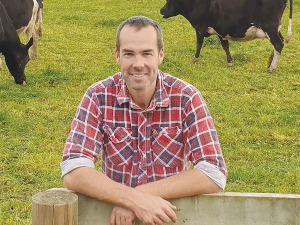
DairyNZ deputy chair Cameron Henderson has been re-appointed unopposed for another term.
OPINION: The stats speak for themselves.
Farms across the upper North Island are trialling different pasture mixes as part of a research programme that aims to build greater resilience into farming systems.
Election years are always a concerning time for farmers, according to DairyNZ chair Tracy Brown.
The Ballance Farm Environment Awards are coming to the West Coast of the South Island.