Suzuki Launches Jimny Horizon
Suzuki New Zealand has announced the arrival of the latest version of its Jimny SUV, the Horizon special edition, a one-off for the local New Zealand market.
 increase font size
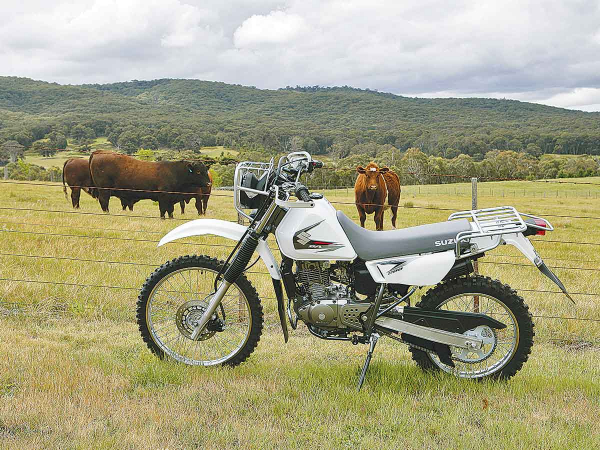 Suzuki Trojan.
The story of how Suzuki's Trojan became one of the most reliable and durable two-wheel farm bikes on the market begins in the early 1970s.
For most farmers, transport has been a key towards more efficient farming practices and as on-farm transport improved, farm sizes increased, to be managed by smaller numbers of staff.
Early attempts at manufacturing farm bikes specifically for New Zealand conditions were rugged, yet very basic. So much so that farmers spent a lot of time either falling off or repairing the early models.
It took several years for farm bikes to become an indispensable tool on most farms, but the Japanese manufacturers took note and started to develop more efficient ways to get around the farm.
Suzuki developed the iconic Mudbug series in the early 1970s with the TF100, 125 and 185 models. These two-strokes were reliable, easy to maintain and most importantly, got farmers around the farm with the minimum of fuss.
Sales boomed in the ‘70s and early ‘80s, right up until when Suzuki introduced the first four wheeled ATV, the LT125.
Farmers immediately grasped the importance of ATVs, offering the ability to be able to carry more, or the convenience of being able to tow a small trailer.
Suzuki has continued the development of farm-bikes and ATVs, including the country’s best-selling farm bike, the DR200 Trojan.
Developed by Suzuki New Zealand, the prototype machine was built in Wanganui, before being shipped back to Japan and being introduced as the DF200ET.
The popularity of this model has seen it become the number one selling 200cc farm bike, built to exacting Japanese quality standards,making the Trojan one of the most reliable and durable two-wheel farm bikes on the market today.
Suzuki New Zealand has announced the arrival of the latest version of its Jimny SUV, the Horizon special edition, a one-off for the local New Zealand market.
While quads and LUVs are a major part of the rural landscape, on many New Zealand dairy farms 2-wheelers continue to be an important part of the logistics puzzle.
Since its launch in the late 1960s, nearly 3.5 million Suzuki Jimnys have been sold worldwide, picking up numerous awards along the way.
Fifty years ago, Suzuki was a pioneer in developing a small Sport Utility Vehicle (SUV) with fourwheel drive capability and low fuel consumption. Suzuki Development of the original Jimny in 1968 and the LJ10 Jimny arrived in 1970 it was the first mass production 4WD in the Japanese domestic mini-car category.
Suzuki was the first on four wheels right back in 1982, when Suzuki importer of the day Rod Coleman developed the successful LT125.


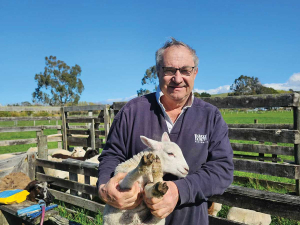
Decades piloting planes has ensured vet and farmer David Hayes is focused on safety. So, after a serious accident while welding on farm, he is sharing his experience so others can learn from it.

Canterbury milk processor, Synlait Milk has confirmed Leon Fung as its chief executive officer.
OPINION: Making it easier to collect rainwater and use it to grow crops and livestock is a no brainer.
As part of its Election 2026 coverage, Rural News asked political parties how they would help pull the arable sector out of the doldrums. Here's what they said:
Farmers are being encouraged to rethink how they manage waste on farm with the launch of ruralwastesorted.co.nz, a new website bringing together practical tips, real farmer experiences and resources.
New Zealand Winegrowers (NZW) is celebrating the India-New Zealand Free Trade Agreement (FTA) coming into force today, bringing New Zealand wine improved access to one of the world’s fastest-growing economies.