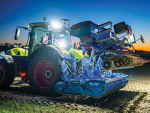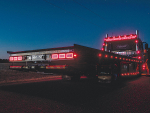
Make your trailer visible at night
With the recent changes to daylight saving and nights drawing in, there is still plenty of traffic on rural roads after dusk.
 increase font size
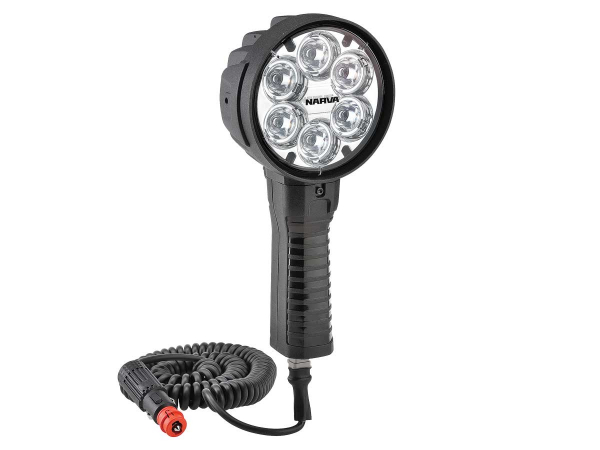
High quality, reliable lighting is essential for anyone involved in agriculture or the great outdoors.
NARVA’s hardy new ‘Colt 1000’ L.E.D Handheld Spotlights are available in corded or a rechargeable battery format, succeeding the popular ‘Colt 100’ handheld halogen spotlight.
The new Colt 1000 is said to be a more robust and reliable night-time light for demanding users, with the corded unit (part no.71001) offering a beam pattern range of up to 285 metres at 1 Lux and 4000 Lumens, while the rechargeable variant (part no. 71000) provides a beam pattern range of up to 244 metres at 1 Lux and 2500 Lumens. The light output for both models comes courtesy of its six high-powered, 3W L.E.Ds, which deliver 5700°K of crisp white light.
The new duo are compact, portable, easy to handle and comfortable, with an ergonomic handle design and a fold-away hook for storage. Heavy-duty casings make them fully sealed and waterproof to IP66 standards to ensure ongoing performance.
The rechargeable unit features a 7.4V lithium battery, offering up to 2.5 hours of constant usage time, while recharging from flat takes only 1.5 hours using the 240V charger included. For off-grid users, additional spare batteries (part no. 71007) are available, while the corded Colt is supplied with a 12/24V accessory plug is included for use across a wide array of vehicles.
With the recent changes to daylight saving and nights drawing in, there is still plenty of traffic on rural roads after dusk.
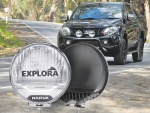
With shortening days meaning the need for good lighting is even more important out on the farm, it might be time to upgrade your illumination.
Originally available with amber lenses only, Narva’s ‘Geomax’ Heavy Duty LED Strobe Beacon light range has been upgraded with the addition of amber/clear, blue and green options.
Narva's new Aeromax LED Rotating Beacons are said to offer big performance and durability.
As small as a pen, so easily popped into a shirt pocket, the new Narva LED Pen Light packs a powerful lighting punch.

OPINION: As the general election approaches, political parties are churning out policies in the hope of attracting more votes.
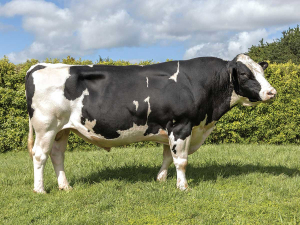
An LIC bull, Tronnoco AR Sadio-ET S3F, bred by Tony and Keri O'Connor of Tronnoco Farming Co Ltd near Timaru, has won the 2026 Mahoe Trophy.
With forecasters advising El Niño conditions will develop through winter and strengthen into spring and summer, Ballance Agri-Nutrients is encouraging farmers and growers to think ahead about nutrient planning and be prepared to work around challenging weather conditions.
In the past, much has been made of the concept of farm to fork, but an Australian expert in food science and marketing with experience in the dairy industry, Dr Angeline Achariya, says the reverse of this slogan is critical to win modern day consumers.
Efficiency is the big one because it tracks back into what is done on farm.
A four year trial has reaffirmed that mixing plantain into dairy pastures can help reduce nitrogen losses to freshwater while maintaining milk production and profitability, say researchers.