Makita Launches GP001G 40VMax XGT Cordless Grease Gun
Power tool manufacturer Makita has released details of its new cordless GP001G 40vMax XGT grease gun, designed as a practical and precise solution for lubrication of the largest machinery.
 increase font size
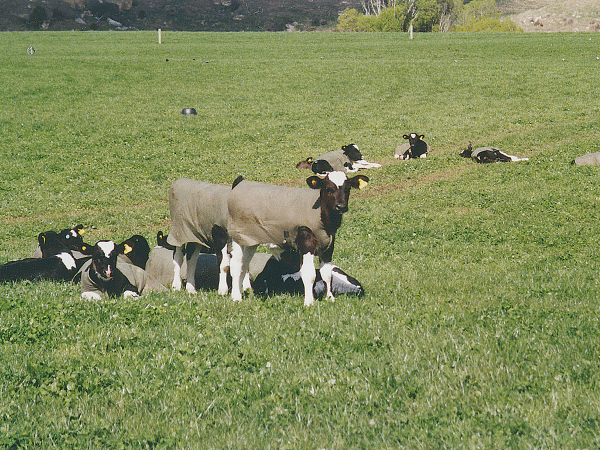 Even the relatively milder winters of New Zealand chill calves so that they do not thrive as well as they should.
The missing link in getting maximum weight gain in your calves may be as simple as keeping them warm, says the Christchurch manufacturer of a range of woollen covers for young livestock.
David Brown, a former South Canterbury farmer, has been marketing his Woolover brand covers for 30 years, producing a range of covers sized for lambs, dairy calves or beef calves, all made with 100% New Zealand wool.
While his major market is in the northern US with their fierce winters, Brown says even the relatively milder winters of New Zealand chill calves so that they do not thrive as well as they should.
Even at 10˚C a newborn calf feels cold, he says.
"As the temperature drops to, say 4˚C the calf is now ill-equipped to absorb its milk intake to best advantage, meaning that at least half of that milk intake is going into just staying warm, as opposed to growing."
Brown acknowledges that farmers, especially in the south, usually house young calves in sheds. While that keeps them "out of the icy blast", it is only a partial solution.
"A lot of those existing sheep farmers exited the industry and the covered yards became their calf rearing facilities, but they're not particularly warm."
Those farmers were doing the best they could with the hand they were dealt.
"It's better than nothing in there, but it's still not damn well warm."
He says there is a definite correlation between having a calf warm and receptive to getting a feed of milk in the morning, as opposed to letting it get cold during the night, even in a shelter.
"The question is, what's the calf feeling like at four o'clock in the morning? It's like you having a Swanndri on, 24 hours. And wool does it best, because it breathes."
Southland farmer Warren MacPherson, a Woolover customer for the past four years, told Dairy News that having initially used them on dairy replacement calves he now uses them on all calves.
"The calves are very active and playful with growth and weight gain obvious. We find calves with Woolover covers can be introduced to outdoor conditions sooner."
MacPherson said he had recently been visiting farms in the UK where he was surprised to find calves coming down with illness from being kept indoors in stuffy conditions, when they would thrive outdoors with covers, even in poor weather.
Brown says his biggest customer in the United States, Busse’s Barron Acres in Wisconsin, raises 9000 calves outside.
“They’ve got the best growth rates of any calves in America because they’re wearing a Woolover.”
On the other hand, Brown says he knew of 4000 calves which died in freezing temperatures on two other large American dairy operations, despite wearing a competing cover of different material. Because those covers did not breathe like wool the calves were wet under the covers and froze to death, he says.
Brown says it will cost a farmer $1500 to $2000 to raise a heifer calf to go into the herd at 18 months, but adding a Woolover adds only $30 over about eight weeks.
He says fifty cents a day is a small price to maximise the growth of that calf and “capture its true potential”.
Even then, the farmer doesn’t have to throw the cover away.
Power tool manufacturer Makita has released details of its new cordless GP001G 40vMax XGT grease gun, designed as a practical and precise solution for lubrication of the largest machinery.

Operating large tractors became more expensive back in March due to the ongoing Strait of Hormuz conflict, meaning contractors had to introduce fuel surcharges and farmers had to adjust their budget forecasts.
Close to the Abel Tasman and Kahurangi National Parks, Motueka is known for apples, pear and kiwifruit orchards, alongside specialised crops such as hops. Indeed, that specialisation, saw the area being the New Zealand centre of the tobacco growing, until the early 1980s.
Can-Am has introduced its 2027 range of side-by-side vehicles (SSV) and all-terrain vehicles (ATV), including the industry leading Defender, the Maverick R and the hugely capable Outlander ATV, incorporating a host of advancements designed to deliver an exceptional riding experience.
With battery tools becoming more widespread and more importantly, productive and reliable, it was only time before we saw augers or post-hole borers.



Federated Farmers says it welcomes Labour's commitment to reviewing the Sharemilking Agreements Act, calling on other major parties to do the same.
For Canterbury dairy farmers Sian Meijer and Rick Wobben, wearable technology has become one of their most valuable on-farm tools - helping manage 1850 cows across an expansive, high-performing dairy operation while improving efficiency, mating outcomes and day-to-day decision making.
Fonterra has unveiled its annual results for the 2026 financial year, posting $27 billion in revenue and close to $20 billion returned to New Zealand farmer owners and unit holders.
The first major update to the Dairy Cattle Code of Welfare in more than a decade has been released, marking what DairyNZ describes as an important step in ensuring animal welfare standards continue to evolve alongside scientific evidence and on-farm realities.
Ravensdown shareholders have elected Jane Montgomery and Kate Acland to the Ravensdown Board for three-year terms, following a closely contested director election.
Federated Farmers says new legislation replacing the Resource Management Act will cut red tape, unlock investment and help grow New Zealand's export-led economy, after the Planning Bill and Natural Environment Bill passed their third reading in Parliament yesterday.