PCE: Treat Environmental Data as Critical Infrastructure
The Parliamentary Commissioner for the Environment, Simon Upton, wants environmental information to be treated as critical national infrastructure.
 increase font size
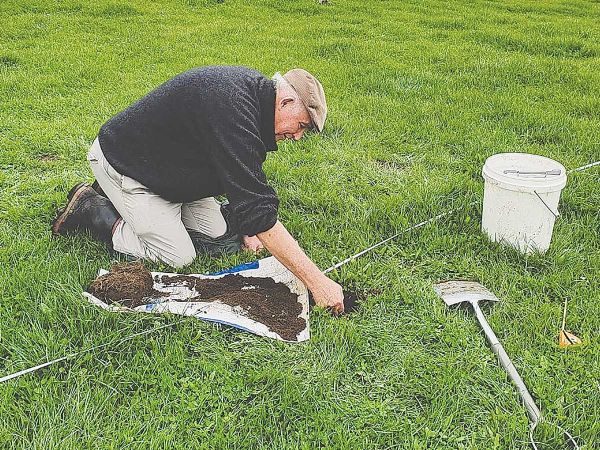 Hill Labs founder Dr Roger Hill played a large role in developing the test.
Hamilton-based Hill Labs has introduced a new test to detect earthworm eDNA levels in soils, claiming that it marks a significant development in soil health assessment.
This test, developed in collaboration with AgResearch, is a New Zealand first and represents the beginning of an array of potential applications to provide real benefits across the agricultural sector.
Earthworms are often seen as indicators of healthy soil because they need good soil conditions to thrive. They also aid in aeration and nutrient mixing. In high-quality soil, a typical New Zealand paddock would usually have earthworm populations exceeding 400 per square metre and 250 per square metre in arable land.
Hill Labs' earthworm eDNA test measures environmental DNA (eDNA) - tiny traces of genetic material left behind as earthworms move through the soil.
Existing methods to assess earthworm populations are labour-intensive and require specialist knowledge, limiting the number of samples and convenience. A typical field visual assessment involves digging down about 20cm with a spade, then taking a second slice about 35cm away to get a clear sample. The soil is broken apart with all worms picked out, counted and the species identified.
The new eDNA test, used in tandem with existing field visual assessments, offers a convenient way to enhance soil health monitoring.
Hill Labs founder and executive director, Dr Roger Hill, played a large role in developing the test.
Hill says soil is the foundation of all life, essential for productive farming, healthy plants, and clean waterways.
"Our new earthworm eDNA test gives farmers an additional tool to better monitor soil health, helping to promote sustainable farming in New Zealand and beyond.
"The biological component of soil health is difficult to measure and measuring earthworms provides a high-level view of a soil's biological health.
"And this successful earthworm eDNA soil test is just the beginning. We're dedicated to exploring the full potential of this technology across different crops and farming methods to support New Zealand's farmers and growers."
Hill Labs scientists, Lisa Hsu and Sara Loeffen, worked closely with AgResearch senior scientist and leading earthworm specialist, Dr Nicole Schon, on this project, with the initial feasibility study funded by the Our Land and Water National Science Challenge via its Rural Professionals Fund.
Schon says that through research they are learning a lot more about soil health and the need to move beyond the limited set of measures and indicators that people used to rely on.
"This provides us with a richer understanding of what we can do to maintain or improve soil health for our primary industries.
"We know that the abundance of earthworms and other biological activity is an important component for healthy soils, and having this new tool for testing the abundance of earthworms via eDNA is going to make measuring soil health easier and more efficient."
The Parliamentary Commissioner for the Environment, Simon Upton, wants environmental information to be treated as critical national infrastructure.
Many winegrowers around the country will be preparing for seasonal nematode assessments this winter, including those that use eDNA to catch their "worm-count".
Last night saw the winners of the 2026 Beef + Lamb New Zealand (B+LNZ) Awards named at a gala dinner at Te Pae Christchurch Convention Centre.
A significant breakthrough in understanding facial eczema (FE) in livestock brings New Zealand closer to reducing the disease’s devastating impact on farmers, animals, and rural communities.
A breakthrough in the understanding of Facial Eczema (FE) in livestock could bring New Zealand closer to reducing the disease’s impact.

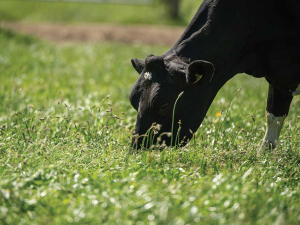
Farms across the upper North Island are trialling different pasture mixes as part of a research programme that aims to build greater resilience into farming systems.
Election years are always a concerning time for farmers, according to DairyNZ chair Tracy Brown.
The Ballance Farm Environment Awards are coming to the West Coast of the South Island.
Most dairy regions around the country have had a pretty good season so far says Tracy Brown.
Rural leader Mark Hooper has been appointed as an independent director to the NZPork board, bringing extensive farming, governance and advocacy experience to the role.