New Reviva Forage Rape Wins Over Dryland Farmers in First Year
It's only just hit the market, but a new forage rape bred for dryland farms has already won the approval of lambs and young cattle both north and south.
 increase font size
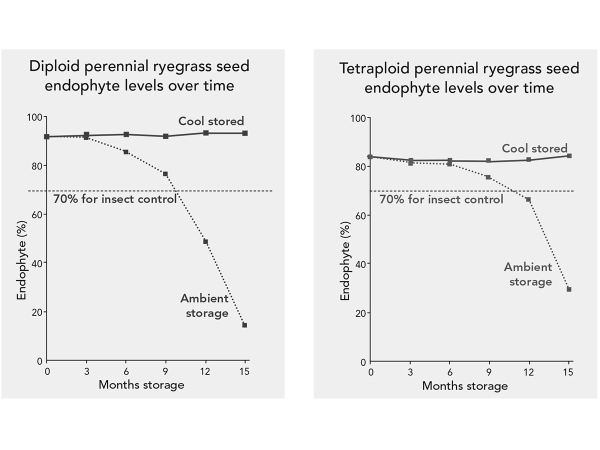
New industry trials confirm what matters most for perennial ryegrass seed this autumn: Cool, dry storage keeps endophyte viability above the 70% commercial threshold, according to pasture specialist Barenbrug.
Anything else risks dead endophyte and weak pasture, it says.
Scientists stored perennial ryegrass seed containing two common endophytes - AR37 and NEA2 - in six bag types under different conditions for 12 months.
The results for both were almost identical.
Only cool storage (4°C, 30% relative humidity) held endophyte viability at 83-92%, matching pre-storage levels.
Ambient storage (15-25°C, 65% relative humidity) dropped it to 54-68%, with most loss in the final three months.
Bag type made almost no difference, researchers concluded.
The study was led by Lincoln University and the Seed Industry Research Centre to find out how storage conditions and packaging affect seed quality and endophyte viability.
"The results are pretty sobering," says Barenbrug sales manager Jason Gardner.
"Buying seed without knowing its storage history is a gamble, and jeopardises what should be a highly profitable, multi-year return on investment."
Elevating the risk is the fact that most seed sold for autumn pasture renewal is at least 12 months old, as the window between harvest and sowing is too brief to process it all.
The findings challenge the industry assumption that ambient storage works fine for a year in New Zealand, Gardner says.
"It doesn't - not if you want reliable endophyte protection against pests and better pasture persistence."
Over 90% of perennial ryegrass seed in NZ contains endophyte.
"The research backs up the care and effort we've made for many years to cool store seed with endophyte in both the North and South Island and continually test and check its quality. Anything other than correct cool storage puts endophyte at risk."
Farmers can protect their investment in autumn pasture renewal simply by asking about the stewardship of their intended seed purchase and making an informed decision.
It's only just hit the market, but a new forage rape bred for dryland farms has already won the approval of lambs and young cattle both north and south.
Keeping cows happy and well fed at home this winter just got easier with the launch of a prolific new annual ryegrass bred to jump out of the ground even faster than its popular predecessor.
Pasture specialist Graham Kerr claims that one hybrid ryegrass in New Zealand continues to dominate industry yield trials, as it has done every year since it was launched in 2021.
It may still be under the radar for many, but one new pasture has been making waves for three different farmers lately.
Anxious about pasture persistence?



Entries opened on Monday, 5 October 2026 for the 2027 New Zealand Dairy Industry Awards (NZDIA), which organisers describe as the nation's biggest celebration of excellence in the dairy sector.
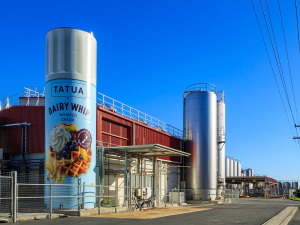
Waikato milk processor Tatua has again declared a record milk payout to farmer shareholders, leaving other processors in the dust.
A Labour-led Government won’t be bringing back the controversial freshwater rules of 2020.
National’s much-touted free trade deal with India featured in the Rural Issues Debate at Mystery Creek, Hamilton on Wednesday night.
New Zealand's 2026-27 freshwater fishing season has opened, with anglers encouraged to head to rivers and lakes over the coming days as conditions look favourable across much of the country.
Central Otago District Council (CODC) has voted against a plan to spread treated sewage sludge from Cromwell and Alexandra on farmland near Lauder, a decision Federated Farmers says reflects strong opposition from rural residents.