Fall Armyworm in NZ Maize: Four Years of Research
Four years since it was first detected in New Zealand, researchers and growers now know much more about management of maize pest fall armyworm (FAW).
 increase font size
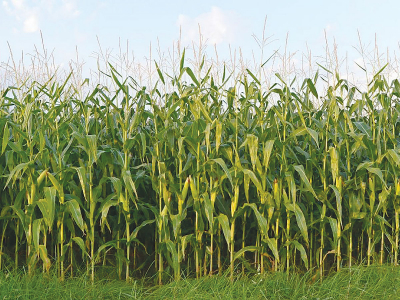 The maize planting window is quite wide.
When is it too late to plant maize? Ian Williams, Pioneer forage specialist explains.
Every year, my colleagues and I get the odd call in early November asking if it is too late to plant maize silage.
We are also asked whether it is worth switching to a shorter maturity hybrid or is it better to stick with the longer hybrid. Fortunately, my friend and colleague, Dr Rowland Tsimba, has researched the subject and so I put some questions to him that are typical of the ones we get asked.
Ian: Rowland, there seems to be conflicting advice around when is the best time to plant maize? Some say as early as possible, others say on Labour Day and others say you can plant maize well into December. Who is right?
Rowland: Not wanting to sound like a politician, the answer is: it depends. While we used to think the earlier planted the better, that was before we had done the research. Some research I did as part of my PhD showed that the planting window in most regions is actually quite wide and the likelihood of achieving the potential yield is the same as long as you plant somewhere in that window.
Ian: But how wide is that planting window?
Rowland: Once again it depends, as it varies from season to season and from region to region. The colder the season or the colder the region, the narrower the window. For most of New Zealand somewhere between the first week in October to the first week in November is ideal.
Ian: If I am a week or two later than my planned planting date, what is likely to happen to yield and will it mean that I will be harvesting a week or two later?
Rowland: The research showed there was a big variation between seasons and between regions. However, our modelling work showed that depending on hybrid maturity, maize planted in late November in Waikato or Manawatu would in a ‘normal’ season drop less than 10% of its potential yield than maize planted in October.
Later planting does not necessarily mean later harvest. It’s important to note that, like any other crop, maize development is driven by temperature. The warmer it is, the faster it grows. Summer and autumn are always warmer than spring so a week or two later planting in a cool spring will often mean only two-three days later harvest. In fact, we did research where we planted maize on October 19 and on November 19. Despite the month’s difference in planting date there was only a 15-day difference to silking, and by silage harvest maturity the difference was just over a week.
However, when considering things at a farm level, you need to take into account any impact that later planting may have on other important farm activities like regrassing. If you plant late and then we have a cool summer and autumn, it may push back your harvest date. This may then mean you have a later regrassing date, which may in turn impact the establishment of your new pasture.
Ian: Ok, then let’s run with that scenario. I’ve planted mid November with a longer maturity hybrid and now it is getting near the end of March and I need to get my maize off and my grass in. What can I do?
Rowland: There are a couple of things you can do. Firstly, you can harvest your maize silage in the low 30% DM range rather than waiting until the mid to upper 30s. Once again, the research work shows there isn’t too much yield loss with taking it a little earlier. Secondly, and in extreme cases, you can raise the cutter bar height on the chopper and leave a little bit of stalk behind. Our research shows you may lose a little yield but you increase the dry matter content and the energy per kgDM, and you get your paddock regrassed on time.
Ian: What about changing hybrids from longer to shorter? Does that work?
Rowland: Of course it works, but I only recommend it as a last resort and by that I mean planting in early December or if you want to harvest by a particular date and the longer hybrid is unlikely to be ready or closer to 30% DM. In many cases, switching to a shorter maturity hybrid may actually result in decreased yield, whereas sticking with the planned hybrid and harvesting it a little earlier may well achieve the desired result.
Ian: If people are still unsure about this or have any questions what should they do?
Rowland: They can contact their local merchant rep or contact us on our helpline 0800 Pioneer.
In summary: the maize planting window is quite wide. A couple of weeks later planting often results in only a few days later harvest. You don’t necessarily lose a lot of yield by planting later. There are a few things farmers can do to bring their harvest forward if the crop is still not quite ready to harvest but the paddock needs to be regrassed.
Only shorten your hybrids as a last resort but talk to your maize seed seller and involve them in the discussion. Ask for advice if you are unsure of what to do.
• Ian Williams is a Pioneer forage specialist. Contact him at This email address is being protected from spambots. You need JavaScript enabled to view it..
Four years since it was first detected in New Zealand, researchers and growers now know much more about management of maize pest fall armyworm (FAW).
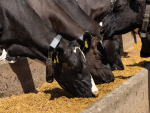
As spring calving cows head into dry-off, the priority shifts to one thing: setting cows up to calve at the target body condition score (BCS).
Modern proprietary cultivars backed by independent data are the strong preferenced for Waikato dairy farmer Mike McGehan when he needs reliable and targeted pasture performance.
Early December marks a key transition for many dairy farmers, as weaned replacement heifers head off-farm to grazing.
I recently had the pleasure of attending an AgFirst event in Hamilton where the results of the 2024-25 Waikato-Bay of Plenty Dairy Financial Survey were shared. Based on a 136ha farm milking 379 cows, average farm profit before tax was $405,892, an incredible 286% increase on the 23-24 season.


Entries are now open across eleven regions for the 2027 New Zealand Dairy Industry Awards (NZDIA).

Safer Farms is urging farmers to make sure everyone working on farm has safe, suitable footwear for the job.
The Government is backing work on a community-led water storage scheme that could irrigate up to 11,000 more hectares of the Poverty Bay flats, Agriculture Minister Todd McClay says.
Agri-tech company Herd-i has become a new all-region sponsor of the New Zealand Dairy Industry Awards (NZDIA), the largest nationwide celebration of excellence in the dairy sector.
Four candidates have been confirmed for two director positions on Fonterra’s board.
Returning to the family dairy farm after playing 20 years of professional rugby around the world is no easy task.